












Space

Space

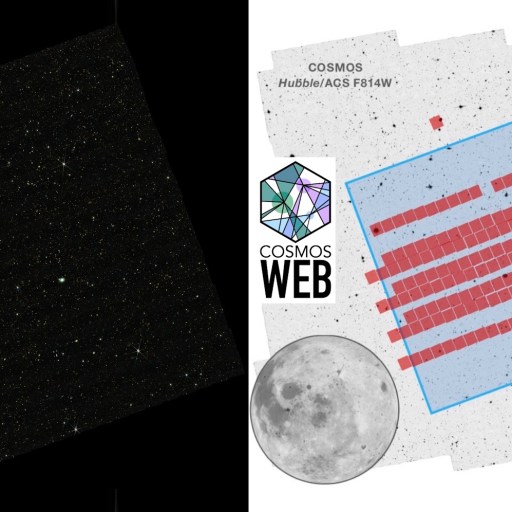
A split image shows a star field on the left and a COSMOS-Web survey area diagram on the right, with labeled NIRCam and MIRI footprints alongside the moon for scale, highlighting galaxies explored by JWST science.
By deeply imaging a large volume of space, COSMOS-Web provides JWST's widest cosmic views. Its gravitational lenses reveal a big surprise.
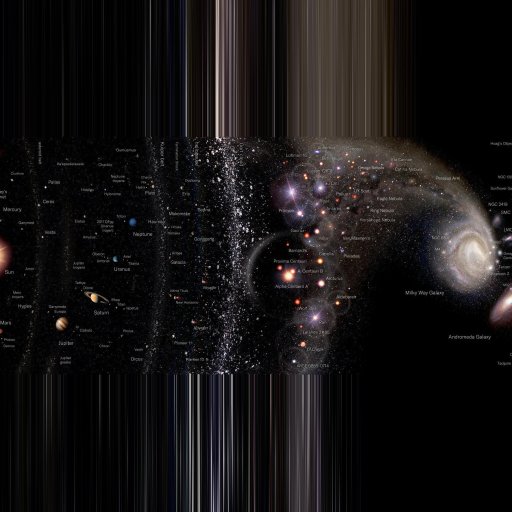
As we look to larger cosmic scales, we get a broader view of the expansive cosmic forest, eventually revealing the grandest views of all.
a red and orange abstract background with lines.
Explanations for the cosmic speed limit often conflate mass with inertia.
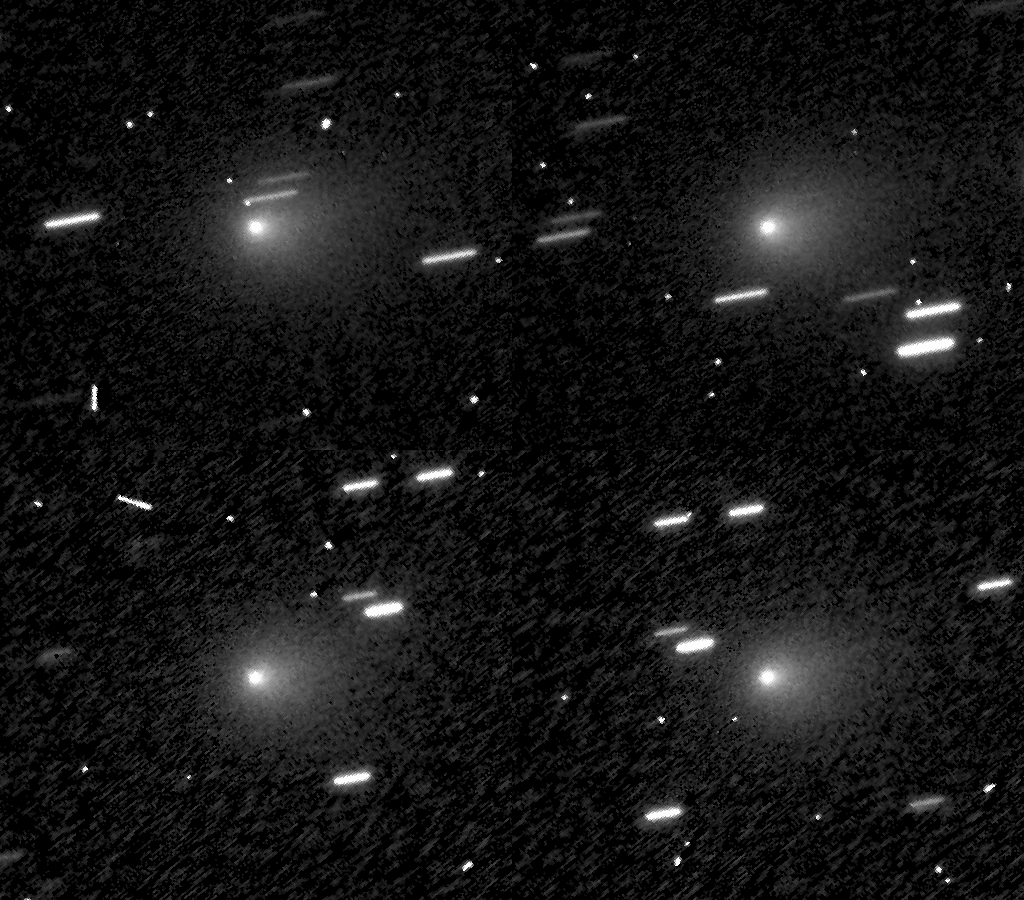
A grainy black and white image shows SPHEREx comet 3I/ATLAS gleaming at the center, surrounded by stars appearing as streaks due to long exposure.
Designed to map galaxies, the SPHEREx mission's first science result is instead about interstellar interloper 3I/ATLAS. No, it's not aliens.
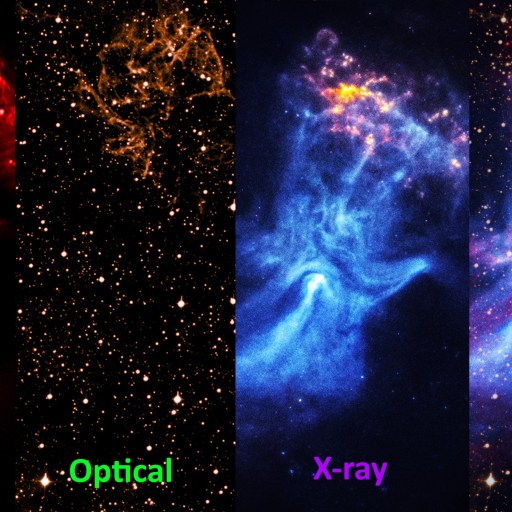
Four images of a nebula, sculpted by a dead star, are shown side by side in radio, optical, and X-ray wavelengths; the fourth composite image reveals the so-called "Hand of God." Each is labeled at the bottom.
In our own Milky Way, a recently deceased star creates a ghostly, hand-like shape in X-rays some 150 light-years wide. Here's how it's made.
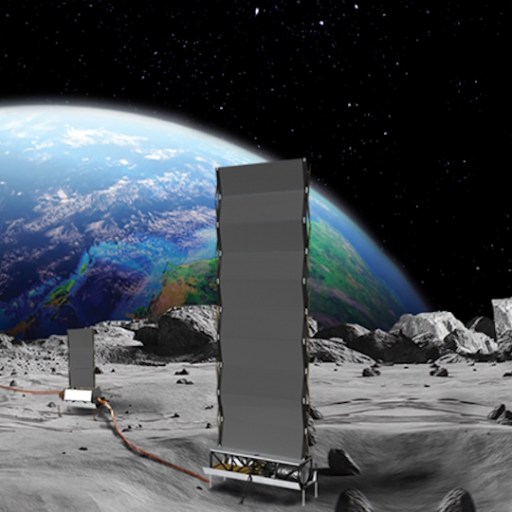
Two tall, rectangular scientific instruments, including a NASA nuclear reactor prototype, stand on the rocky lunar surface with Earth visible in the background against the blackness of space.
There are real concerns with long-term power generation on the Moon; nuclear could be the answer. But for NASA, will the cost be too high?
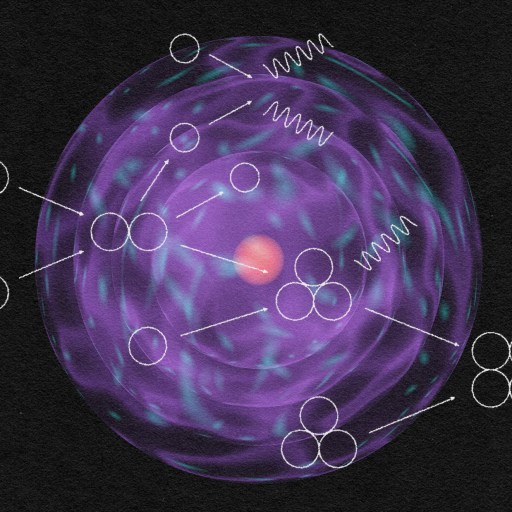
A colorful, abstract scientific illustration with a central glowing sphere, circular patterns, and various lines and circles suggesting quantum connections or uncertainty data points, on a dark background with blue accents.
No matter what it is that we discover about reality, the fact that reality itself can be understood remains the most amazing fact of all.