

















Standard Model

Standard Model

DUNE neutrino detectors Neutrinos are still the most mysterious particle we know of
Nearly 100 years after being theorized, the strange behavior of the neutrino still mystifies us. They could be even stranger than we know.
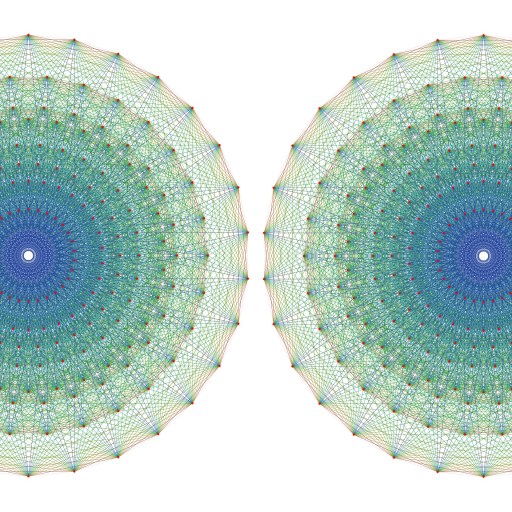
Two identical, intricate, circular geometric patterns with symmetrical, multicolored lines and shapes are displayed side by side on a white background—each subtly reflecting the argument against theory of everything’s promise of perfect symmetry. The argument against the existence of a Theory of Everything
The Holy Grail of physics is a Theory of Everything: where a single equation describes the whole Universe. But maybe there simply isn't one?
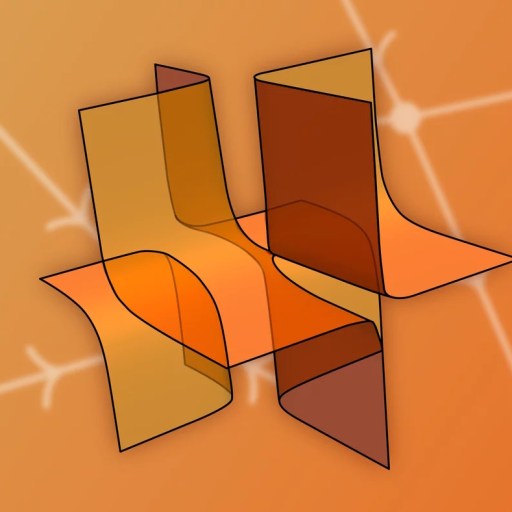
Abstract 3D geometric surface with intersecting translucent orange and brown planes, inspired by the amplituhedron theory of everything, set against a blurred orange background with white network lines. Ask Ethan: Could “positive geometry” unlock the theory of everything?
Since even before Einstein, physicists have sought a theory of everything to explain the Universe. Can positive geometry lead us there?
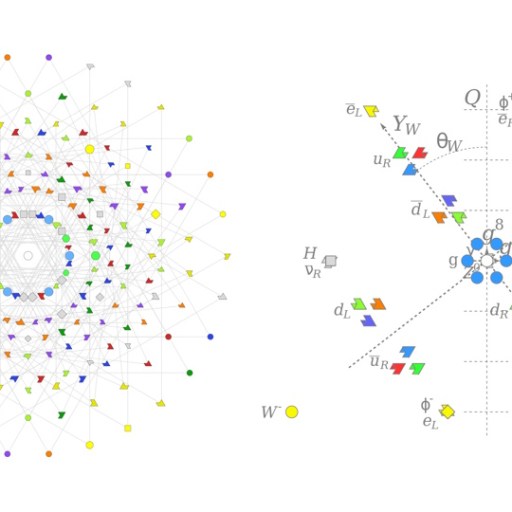
Two diagrams: the left shows a complex, circular, multicolored network; the right displays a theoretical physics diagram with labeled axes and colored particle symbols, capturing the intricate nature of physics hard concepts. No, theoretical physics isn’t broken; it’s just very hard
When you don't have enough clues to bring your detective story to a close, you should expect that your educated guesses will all be wrong.
Two glowing spheres, one red and one green, face each other in space with a wavy line of light—like a particle physics collision—connecting them against a speckled dark background reminiscent of the last collider’s discoveries. How particle physics will continue after the last collider
Will we build a successor collider to the LHC? Someday, we'll reach the true limit of what experiments can probe. But that won't be the end.