- Latest
-
Topics
Philosophy
Mind & Behavior
Business
-
Videos
Latest Videos
 Why Einstein called awe the fundamental emotion If you’ve gotten goosebumps when hearing a story about a stranger’s selfless heroism, or you’ve felt your chest swell at...
 How facing adversity can help you live a deeper, more meaningful life “There would be something very, very empty and meaningless about [a] sort of life with no problems.”
 Can you measure love? 3 experts discuss From neuroscience to philosophy, experts reveal why compassion may be the most important human skill we have.
 How accepting impermanence can end the struggle to “fix” your life “The idea is that we move from a place of wanting the world to conform to what we like [towards]...
 How your cognitive biases lead to terrible investing behaviors “Let me walk you through the biggest traps that you should be aware of that are a danger to your...
 Is free will a fallacy? Science and philosophy explain. Philosophy asks if free will is real. Neuroscience reveals why the answer is more complicated than we expected.
 Why 2025 is the single most pivotal year in our lifetime "We're living in an extraordinary moment in history. We are at a moment here in 2025 where we have world...
 Even AI is self-censoring. Here’s why that matters. If the people controlling AI are biased, the output will also be. Free speech scholar Jacob Mchangama makes the case...
 -
Columns
Columns
 Mini Philosophy Mini Philosophy is a space to explore ideas. It’s where we pause the busyness of life to reflect on ourselves,...
 Starts With A Bang Understand how the universe works with Ethan Siegel.
 Books Big Ideas. Thoughtful Conversations. One Book at a Time.
 The Long Game A Big Think Business column written by investor Eric Markowitz, focused on the philosophy and practice of long-term thinking.
 The Well Exploring life's biggest questions, publication by the John Templeton Foundation and Big Think.
 13.8 A series exploring the beauty and power of science in culture by Adam Frank and Marcelo Gleiser.
 -
Classes
Featured Classes
- My Account
- Sign In
- Membership
- More


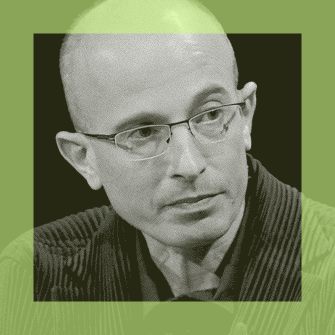


David Bowie’s vision of the internet yet to come
In a 1999 BBC interview, Bowie tells a skeptical Jeremy Paxman, "I don't think we've even seen the tip of the iceberg. I think the potential of what the internet is going to do to society, both good and bad, is unimaginable." When Paxman retorts that the internet is merely a tool, Bowie calls it "an alien life form" and expresses his belief that "it is going to crush our ideas of what mediums are all about."
He knew what he was talking about. The year before this interview he had launched his own internet service provider called BowieNet. More than an ISP, the service also provided access to a dedicated website with exclusive content, including photos of Bowie, a blog, and a news feed. Users were encouraged to create their own websites with the free 5MB of space they were paying for and to participate in live chats with each other and Bowie himself. In effect, it was an early attempt at a social networking site.
His enthusiasm for the internet was so great that he once claimed, "If I was 19 again, I'd bypass music and go right to the internet." Thank the Starman it only came around after he had a chance to be a musician.
You can see the entire interview below. The portion where he discusses the internet starts around the nine-minute mark, though he builds up to the discussion before then while expressing his postmodern understanding of how technology, audience participation, and new ideas about what an artist does were changing music.
David Bowie speaks to Jeremy Paxman on BBC Newsnight (1999)
In this BBC Newsnight interview from 1999 David Bowie talks to Jeremy Paxman about going to meet Tony Blair in stilettos, his alter egos - and makes some inc...No transcript available for this video.