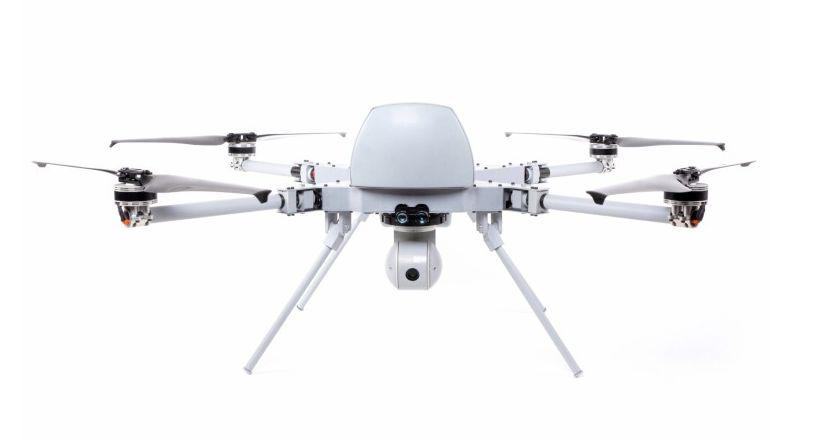


















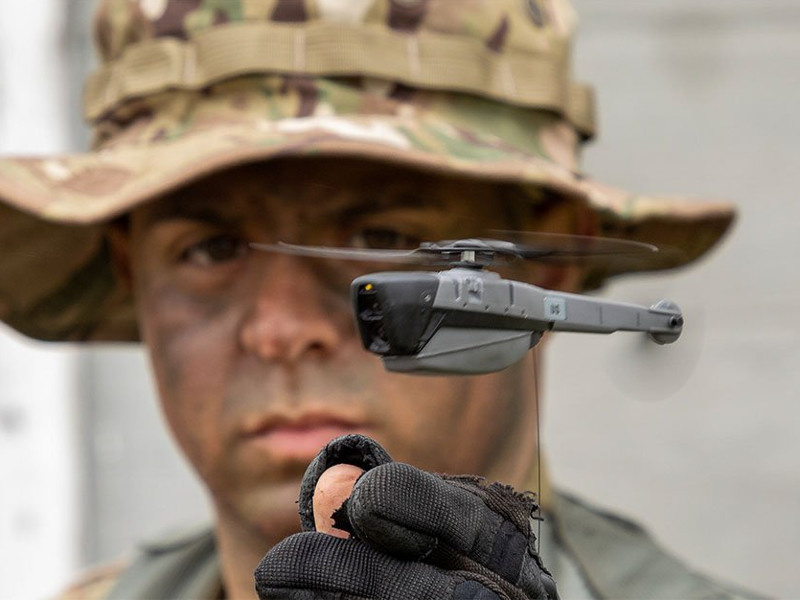
The Black Hornet Personal Reconnaissance System, made by Oregon-based FLIR Systems Inc., is designed to help soldiers scout out nearby terrain and identify enemy soldiers, with features including:
- Night and thermal imaging
- Nearly silent flight
- Top speed of 22 mph and maximum flight time of 25 minutes
- Flies automatically and manually (with handheld controller)
- Video and still-image capture
- Lightweight (1.16 ounces) and small size (6.6 inches)
- Vision-based indoor flying capabilities (without using GPS)
- Can fly during inclement weather
The U.S. Army this year awarded more than $40 million in contracts to FLIR Systems for the tiny personal drones, which the army first started testing in 2016.
“This kind of technology will be a life-saver for us because it takes us out of harm’s way while enhancing our ability to execute whatever combat mission we’re on,” said Sgt. Ryan Subers, who received the training, quoted in an Army statement. “I’m very grateful for technology like this and to be a part of the first unit to use it.”
Introducing the FLIR Black Hornet 3
The main draw of these drones is size — one soldier will be able to carry the entire system along with standard gear. The U.S. Army hopes to eventually equip almost all of its 7,000 squads with at least one of the unmanned aerial vehicles (UAVs).
“This contract represents a significant milestone with the operational large-scale deployment of nano-UAVs into the world’s most powerful Army,” said Jim Cannon, CEO of FLIR Systems. “This contract […] demonstrates the strong and urgent demand for nano-UAV technology offered by FLIR. Protecting U.S. warfighters with our unmanned solutions is a key objective for FLIR.”
The introduction of nano-UAVs also represents the steepening of asymmetric warfare. As combat — at least from the first-world side — becomes more automated and detached from the physical world, it remains unclear how less-equipped soldiers will adapt, if at all. On the other hand, drone technology is getting cheaper, and it’s becoming clear that soon pretty much anyone — not just developed militaries — will likely be able to use drones to surveil, assassinate, or bomb their enemies.
In August of last year, Venezuelan president Nicolas Maduro was nearly assassinated when a U.S.-produced commercial drone detonated a homemade bomb.

Leadership masterclass: Nike, Jordan, and James Baldwin