- Latest
-
Topics
Philosophy
Mind & Behavior
Business
-
Videos
Latest Videos
 Why Einstein called awe the fundamental emotion If you’ve gotten goosebumps when hearing a story about a stranger’s selfless heroism, or you’ve felt your chest swell at...
 How facing adversity can help you live a deeper, more meaningful life “There would be something very, very empty and meaningless about [a] sort of life with no problems.”
 Can you measure love? 3 experts discuss From neuroscience to philosophy, experts reveal why compassion may be the most important human skill we have.
 How accepting impermanence can end the struggle to “fix” your life “The idea is that we move from a place of wanting the world to conform to what we like [towards]...
 How your cognitive biases lead to terrible investing behaviors “Let me walk you through the biggest traps that you should be aware of that are a danger to your...
 Is free will a fallacy? Science and philosophy explain. Philosophy asks if free will is real. Neuroscience reveals why the answer is more complicated than we expected.
 Why 2025 is the single most pivotal year in our lifetime "We're living in an extraordinary moment in history. We are at a moment here in 2025 where we have world...
 Even AI is self-censoring. Here’s why that matters. If the people controlling AI are biased, the output will also be. Free speech scholar Jacob Mchangama makes the case...
 -
Columns
Columns
 Mini Philosophy Mini Philosophy is a space to explore ideas. It’s where we pause the busyness of life to reflect on ourselves,...
 Starts With A Bang Understand how the universe works with Ethan Siegel.
 Books Big Ideas. Thoughtful Conversations. One Book at a Time.
 The Long Game A Big Think Business column written by investor Eric Markowitz, focused on the philosophy and practice of long-term thinking.
 The Well Exploring life's biggest questions, publication by the John Templeton Foundation and Big Think.
 13.8 A series exploring the beauty and power of science in culture by Adam Frank and Marcelo Gleiser.
 -
Classes
Featured Classes
- My Account
- Sign In
- Membership
- More




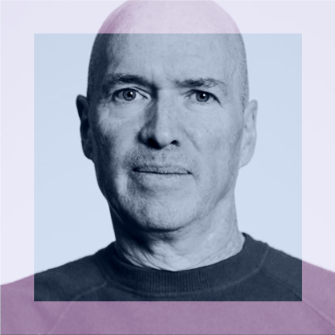
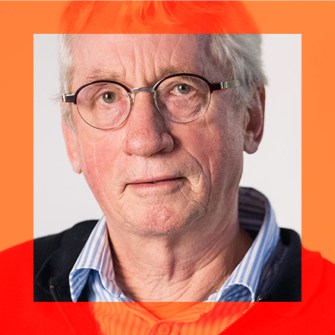
Derek Thompson, senior editor at The Atlantic, has done some impressive research into what makes something popular—much of it outlined in his book, Hit Makers: The Science of Popularity in an Age of Distraction(alternately subtitled "How to Succeed in an Age of Distraction" in the paperback version of the same book).
Thompson explains Loewy's popularity: “[He] had an uncanny sense of how to make things fashionable. He believed that consumers are torn between two opposing forces: neophilia, a curiosity about new things; and neophobia, a fear of anything too new. As a result, they gravitate to products that are bold, but instantly comprehensible. Loewy called his grand theory 'Most Advanced Yet Acceptable'—MAYA. He said to sell something surprising, make it familiar; and to sell something familiar, make it surprising."
Thompson's article (and book) explores an old philosophical question: Why do people like what they like? If the answers were easy, every start-up company would succeed, every marketing agency would know exactly what to do, the hit-or-miss factor would disappear. People would know exactly how to make a viral video, instead of just floating it out there and wondering if it will catch fire.
Thompson's theories on popularity—summarized in this 50-minute video from Talks at Google—make sense, but I was struck by a new video he recorded for Big Think, piggybacking on his research about popularity.
In the video, titled “Are you cool or are you crazy?" (posted below), Thompson says:
Coolness is “a measured positive rebellion against an illegitimate mainstream, or societal norm."
He illustrates that idea by pointing to a dress code where, in some private schools, boys have to wear coats and ties. A measured rebellion against the code would be to loosen one's tie or unbutton your top button, moves that would generally be considered “cool" by peers (but probably not by the dean).
“But it's not cool to go to school naked, or dressed like some weird superhero," Thompson says, because those aren't measured rebellions, but outright rebellions, “and that's not considered cool." He says the rebellion can't be crazy or “insane" if it's to be considered cool. Coolness, he contends, involves bending the rules as far as they'll go without necessarily breaking them.
And then there are those one might say are among the “coolest" figures in U.S. history, precisely because they “broke the rules" in the process of making America great in the first place—the original settlers who rebelled against the king and the church in England; the rebels who fought the revolution and wrote the Declaration and Constitution; and anyone who has fought for civil rights and social justice ever since, including today.
Cool? Depends on how you define it. But they're certainly heroes.
Here's Thompson's latest video on the definition of cool:
[youtube https://www.youtube.com/embed/mFLVZzcrLuc?feature=oembed]
Meanwhile, Steven Quartz, a professor of philosophy and cognitive science at Cal Tech, literally wrote the book on cool. In this interview with MSNBC, Quartz discusses his book, Cool: How the Brain's Hidden Quest for Cool Drives Our Economy and Shapes Our World.
And Quartz discusses the “Quest for Cool" in this WNYC podcast:
Still more cool resources:
- The Science of Cool (Mysterious Universe)
- How to be cool, according to science (The Week)
- The science behind being cool (MSNBC)
- The New Cool: Can Coolness Be Studied Like a Science? (Daily Beast)
- The hidden science behind what makes something “cool" (Rooster)
- Science of Cool (Lost in Science)
- Coolness: An Empirical Investigation (Academia)
- WonderCon 2018's Science of Cool Panel (Pixelated Geek)
Finally, here's James Dean, who was cool long before anybody thought about studying the science of it:
[youtube https://www.youtube.com/embed/utl28fFUgw8?feature=oembed]
The post So, You Think You're Cool? appeared first on ORBITER.
No transcript available for this video.