Big Think

Monthly Issue April 2026

The Energy Transition

In this monthly issue, we examine how our understanding of energy — and how we source and use it — is evolving.
1 episode 11 articles

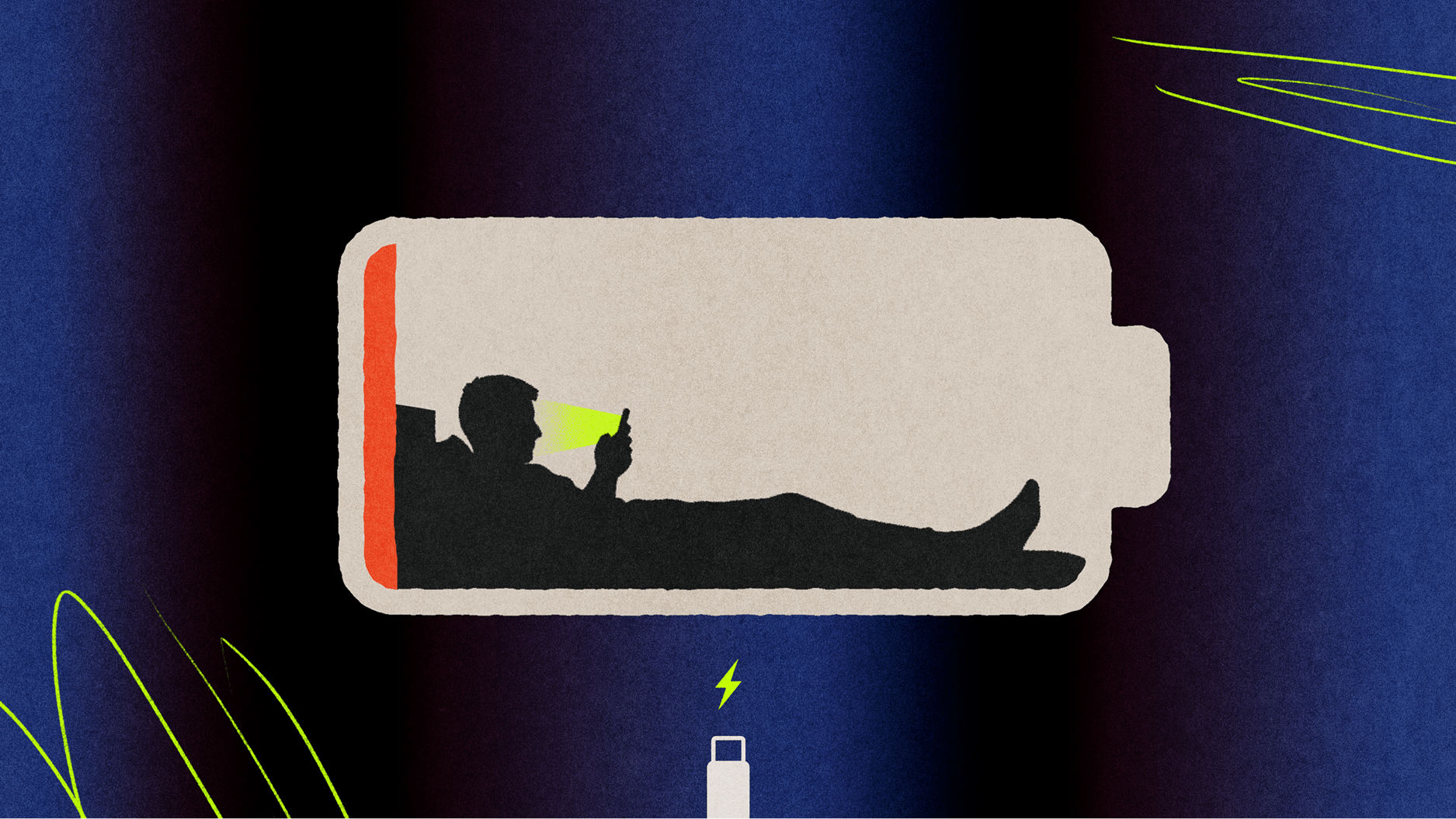
Why rest alone doesn’t restore energy

Your energy doesn’t work like a battery — and treating it that way may be why you still feel tired even after a break.
A physicist explains what the Kardashev scale gets wrong

The famous framework ranks civilizations by energy use — but ignores a critical factor that can halt their progress.

The China factor in the great progression of the next 25 years

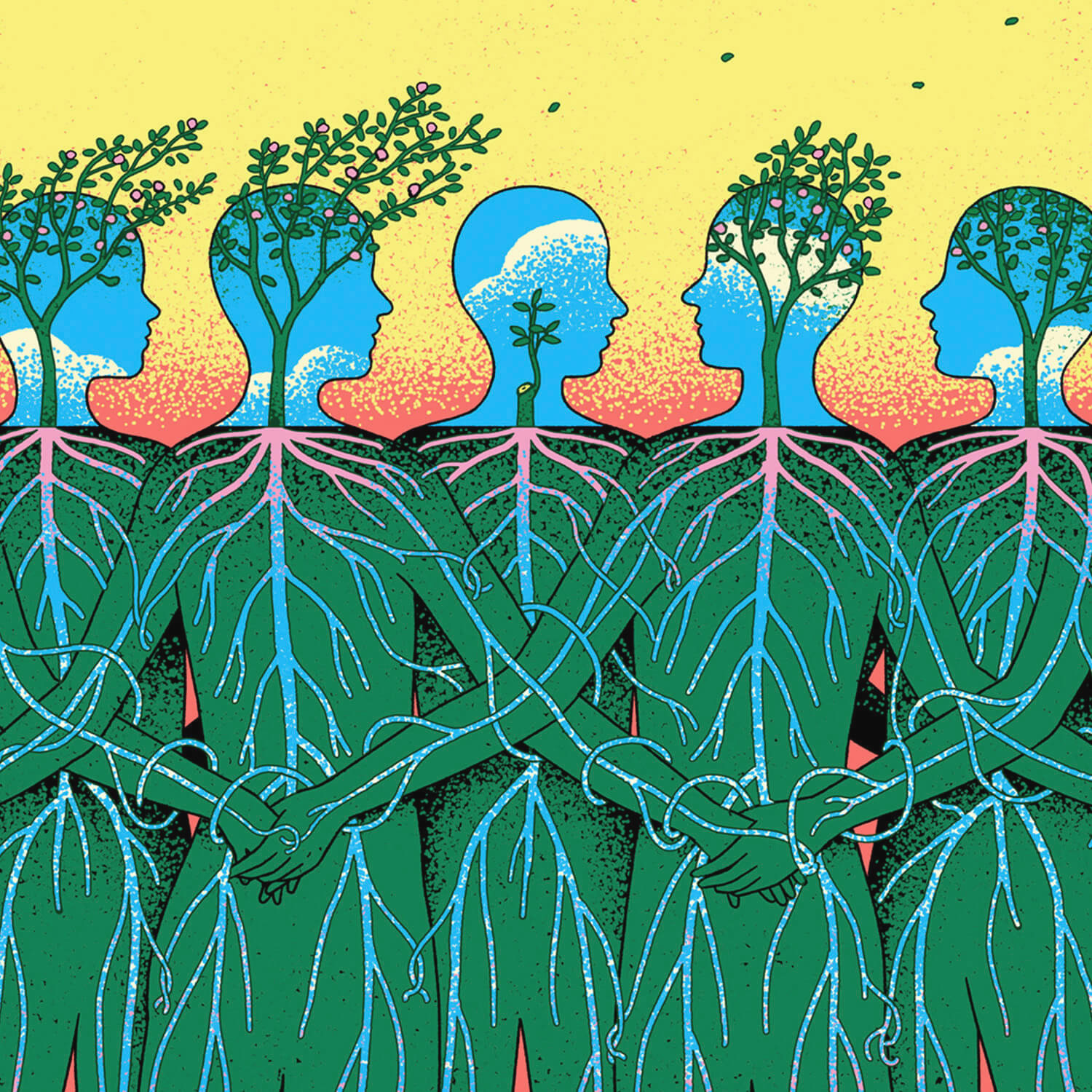
A firsthand look at China’s material progress and clean-tech revolution -- and what could happen if we let an authoritarian state steer AI's future.

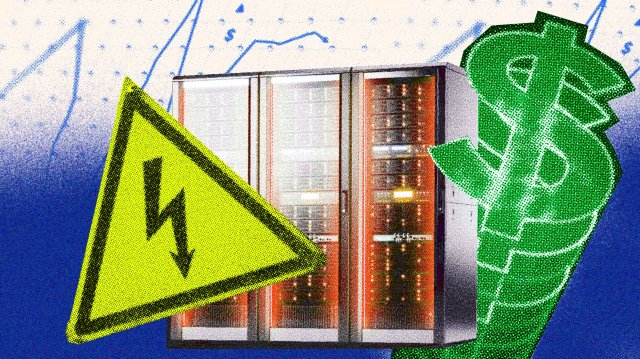
The power grid is breaking. Can it fix itself?
A new generation of self-healing tools could make the U.S.'s aging power grid far more resilient against modern threats.

Grant Mulligan

Night view of a city skyline with illuminated skyscrapers and a bridge, home to a self-healing power grid, all reflected in the water below.
Black text on a light background reads "Explore our LIBRARY" with "Explore" in large font and "our LIBRARY" in smaller, uppercase font underneath.

What would you like to learn more about? We have thousands of videos from the world’s biggest thinkers to help you dive deeper into any subject.

Pause the busyness of life to reflect on ourselves, our relationships, and the Universe.
a painting of a group of men standing next to each other. 5 ways ancient Persia shaped our modern world
From landscaped gardens to road systems, the Persians were among the first to create many things we still enjoy today.
A photo of a woman with her face blanked out is taped to a background filled with handwritten writing. She wears a pink top and gold hoop earring, her hand resting near her collarbone. Philip Pullman: The thing every writer needs to overcome
"I will not reason and compare: my business is to create."

A person looks out an airplane window at a cloud shaped like a brain in the sky, with a contemplative expression. The “rawdogging” trend: A new term for an ancient practice
TikTok gave an old practice a terrible name. Neuroscience explains why it actually works.
A sliced onion bulb with roots and stem, illuminated from behind and set against a black background, resembles the delicate layers of daffodils in bloom. The daffodil’s guide to outliving the winter
What a fragile flower can teach us about resilience, death, and becoming someone new.
Intimate interviews with the world’s biggest thinkers.
A detailed orange image of the Sun shows its surface texture and sunspots, against a black background.
10mins
The solar revolution turning sunlight into synthetic fuel
“10 years ago, my colleagues and I looked at the prognosis for climate change, and it looked pretty hopeless. There really was no way out. But something happened – something good.”
An older woman with long gray hair wearing a dark jacket and shirt sits against a plain, light background, looking slightly toward the camera.
20mins
Rome’s triumph was the ancient world’s most effective piece of propaganda
Mary Beard uncovers the spectacle of the Ancient Roman parade, the Roman Triumph.
Digital illustration of a human head in profile showing a translucent brain with layered neural pathways, set against a blue gradient background.
25mins
Reboot your mind for flow, unanxiousness, and resilience
“We can use neuroscience and tools from psychology to learn how to take advantage of anxiety.” From Zen Buddhism to flow state, these 3 experts explain how to hack your brain.
A middle-aged man in a navy suit and light blue shirt gestures with his right hand while sitting against a plain light background.
7mins
The hidden reason smart people stop growing
Shark Tank’s Robert Herjavec breaks down why the traditional idea of mentorship is not only outdated, but actively getting in the way of your growth.
The Universe is out there, waiting for you to discover it.
A colorful nebula with a bright center and symmetrical, wing-like clouds of gas and dust extends outward in space, as seen in a JWST reveal that uncovers stars and galaxies in the universe beyond. Ask Ethan: What’s the biggest misconception in astronomy?
Many facts are well-known to professionals, but are unappreciated or even rejected outright by the public. "How stars work" takes the cake.
universe bulk volume brane dimension The idea of “theories of everything” may be fundamentally wrong
For decades, theorists have been cooking up "theories of everything" to explain our Universe. Are all of them completely off-track?
Antimatter rocket with a glowing blue exhaust travels through deep space, showcasing the marvels of interstellar travel amid distant galaxies and stars. Only antimatter provides the energy we need for interstellar travel
Our dream of journeying to other star systems has a big obstacle to overcome: the vast interstellar distances. Can antimatter get us there?
Image of a galaxy cluster with bright yellow galaxies at the center, surrounded by blue regions representing dark matter in deep space—a striking view often used for dark matter cosmic test MOND studies. Dark matter passes a new cosmic test, while MOND fails

On cosmic scales, only dark matter (or something equivalent) gives us the Universe we observe. Now, the Sunyaev-Zel'dovich effect agrees.
Big ideas. Thoughtful conversations. One book at a time.
Book cover titled "MUSKISM: A Guide for the Perplexed" by Quinn Slobodian & Ben Tarnoff, featuring a plume of smoke rising against a blue sky—a striking visual that hints at the enigmatic essence of muskism. Elon Musk, SpaceX, and the rise of “sovereignty as a service”
As SpaceX slashes launch costs, governments are gaining new capabilities, while potentially outsourcing their sovereignty to Musk's private empire.
Split image: left side shows a pencil sketch of a person's lower face, while the right reveals a painted portrait's lower face and neck with a red beaded necklace and ruffled collar—capturing hints of why we talk funny. The surprising reason why Americans sound, well, American
Long before today's debates, immigration was already transforming the American accent into something distinctively its own.
Black-and-white photo of Jan Morris, an older person seated on a bed, smiling with a typewriter in front. The book cover text reads: "Jan Morris, a life, Sara Wheeler. Jan Morris, and the struggle between coherence and uncovering another’s inner life
Jan Morris's biographer confronts the limits of storytelling while trying to capture a life defined by contradiction and reinvention.
Silhouette of a human head in white with a small red figure appearing to move or climb inside, set against a black background—illustrating how our brains shape our selves. There is no you in your brain — your identity is a “society of the mind”

Your sense of self isn’t located in a single part of the brain — it emerges from a complex interplay of cognitive processes that change over time.
Learn business from the world’s biggest thinkers.
Book cover for "Anchored, Aligned, Accountable" by Aiko Bethea, featuring gold stacked stones on a blue background and a subtitle about transforming lives and work by overcoming the false urgency myth. The false urgency myth, and why we confuse busyness with importance
Our obsession with speed and productivity creates unnecessary pressure that quietly fuels burnout and anxiety.
Book cover of "Design Love In: How to Unleash the Most Powerful Force in Business" by Marcus Buckingham, featuring bold "design love in" text and colorful, intersecting lines on a sleek black background. The best leaders don’t share traits. They do this instead.
Leadership isn’t about mastering a fixed set of skills, but creating the meaningful, human-centered experiences that inspire others.
Two stylized trees with intertwined roots and branches stand against a gradient background, symbolizing resilience, with floating leaves above them and abstract dark clouds overhead. What 1,000-year-old companies know about resilience

Long-lived companies show that resilience comes not from individual toughness, but from the strength of the systems around us.
Book cover of "The Algorithm" by Jon McNeill, featuring a bold red background with yellow patterns that evoke the complexity of the algorithm, along with striking white and black text. The 5-step algorithm that’s transforming legacy companies
Inside GM’s race to build the electric Hummer lies a powerful lesson in speed, simplicity, and the operating system required for exponential growth.
The world, seen sideways.
World map showing global oil reserves, rare earth elements deposits (yellow dots), and major shipping routes and chokepoints, with oil reserves highlighted by pink circles of varying sizes. The Strait of Hormuz is today’s energy chokepoint. China is tomorrow’s.
As the global economy moves beyond oil, the strategic importance of the world’s most critical hydrocarbon chokepoint is likely to decline rapidly.
A map of the United States showing the most popular paint color in each state, with names of various gray, blue, and neutral shades labeled over the corresponding states. How the modern world turned gray (and why color may be coming back)
The ideology, economics, and psychology behind the modern world's draining of color from homes, cars, and everyday objects.
Historic map illustration of the city of Tenochtitlan, surrounded by water, with labeled features and detailed buildings, from the early colonial period in Mexico. Ghost map: Europe’s first glimpse of Tenochtitlan shows a city already destroyed
This 1524 map of the Aztec capital was a window into an exotic otherworld — and largely a fiction.
A group of people stands and plays cricket in an urban park at dusk, with city buildings, trees, and illuminated streetlights in the background. We saved the world once — we can do it again

The ozone hole was going to destroy life as we know it, but an unprecedented global effort fixed the problem.
Where science meets the human story.
A split image explores the nature of life, with a gray rock on a dark background on the left and a colored microscopic view of a cell—hinting at intelligence—in vivid detail on the right. Why organisms are more than machines
Sixty years ago, a little-known philosopher challenged how science understands life. His perspective is finding new relevance in the age of artificial intelligence.
Three planets are silhouetted against deep space with a bright red star and nebula clouds in the background. Aerial aliens: Why cloudy worlds might make detecting life easier
Astronomer Lisa Kaltenegger spoke with Big Think about how "the colors of life" could leave detectable traces on distant planets.
A cylindrical space habitat with green landscapes and rivers, viewed from inside; two moons and a bright sun-like object are visible through large windowed sections. The next great leap in evolution may lie beyond Earth
NASA’s Caleb Scharf talks with Big Think about life’s long experiment in expansion.
A smiling man with short dark hair wears a button-up shirt, standing in front of a purple, splattered-texture background. David Kipping on how the search for alien life is gaining credibility
Big Think spoke with astronomer David Kipping about technosignatures, "extragalactic SETI," and being a popular science communicator in the YouTube age.