





Test Special Issue

Game Change

Do elite athletes really make elite employees?

Sports, we tend to assume, offer a sharp-edged reflection of business life in microcosm — leadership under pressure, the winning mentality, valuable lessons drawn from loss. It’s all there. Just kick back with a beer and a pizza and watch your pathway to workplace success unfold on game day. Well, it turns out that the connections are often far more nuanced than we might have presumed. Do elite athletes really make elite employees? What’s the connection between Swedish pragmatics in soccer and a thriving startup culture? Have you factored in the difference between “wicked” and “kind” environments (and what does that even mean)? We investigate all of these pivotal tangents, and much more, in this Big Think special collection of essays, interviews, and curated book excerpts. Forget everything you’ve been told about the synergies between sports and business. It’s time to rewrite the rules.

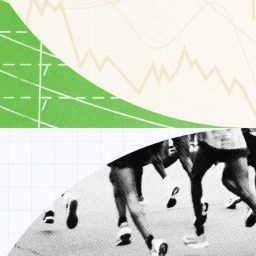
Blue background with the words "Game Change" in white, surrounded by strategic game symbols and graphs in the background.
Presented by
John Templeton Foundation
A person walks barefoot on a slackline stretched high above the ocean, with one arm raised for balance and cliffs visible at each end.
5mins
“If you ask a computer, it will say, most of the time you want to either be raising or folding, right? You want to take an aggressive action or quit. I think this is a great metaphor for lots of things in real life, too.”
Close-up of a person's face with brown eyes and freckles, next to an abstract blue and white pattern resembling tree branches and lightning.
7mins
A neuroscientist, a psychologist, and a psychotherapist discuss how emotions are stories built from old experiences.
Unlikely Collaborators
An artist's rendering of the nasa jupiter spacecraft.
The Juno spacecraft, orbiting and imaging Jupiter since 2016, is still succeeding. Without a further extension, the mission now faces death.
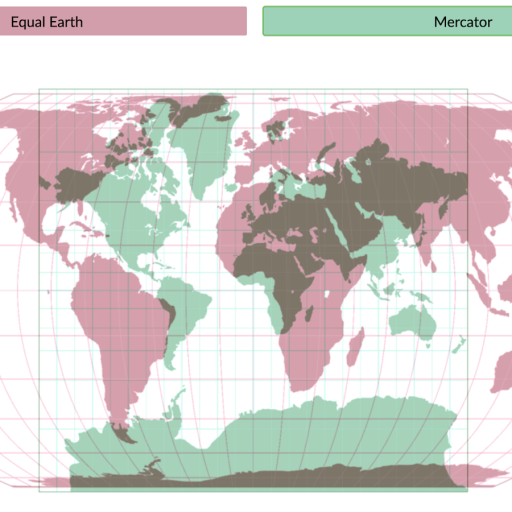
A world map comparing landmass outlines of the Equal Earth projection in pink and Mercator projection in green, with grid lines overlaid.
The African Union argues that the Mercator projection distorts the continent, both in size and global attention.
An open book, symbolizing dangerous books, burns with flames rising from its pages against a black background, its fiery reflection shimmering on a glossy surface.
In "That Book Is Dangerous," author Adam Szetela examines the rise of the “Sensitivity Era” in publishing and how outrage campaigns try to control what books authors can write and readers can read.
Book cover of "The Intelligence Explosion: When AI Beats Humans at Everything" by James Barrat, featuring a robot hand holding a globe, with the text "an excerpt from" reflecting the rise of AI.
The predictions of evolutionary theorists and current advances in “multimodal AI” offer strong clues to the future of employment.
An artist's impression of a cluster of stars.
With several seemingly incompatible observations, cosmology faces many puzzles. Could early, supermassive stars be the unified solution?
The image shows the book cover for "The Contemplative Leader" by Patrick Boland, with his name prominently displayed next to the text “an excerpt from” on a split pale blue and beige background.
A contemplative approach to leading others can help us accept the tension of not always knowing how things will play out.
A painted woman's face is seen upside down on the left, looking at a large gray rock on the right, with a blue sky and clouds in the background.
2mins
What separates a disciplined life from a virtuous one? Psychologist Sarah Schnitker says the answer lies in your purpose.
As we look to larger cosmic scales, we get a broader view of the expansive cosmic forest, eventually revealing the grandest views of all.
a red and orange abstract background with lines.
Explanations for the cosmic speed limit often conflate mass with inertia.
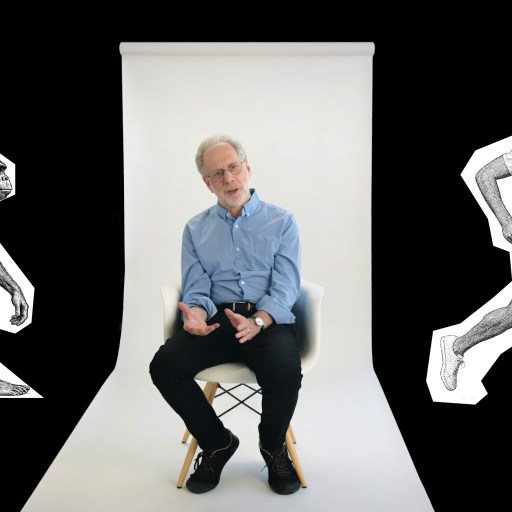
A man sits on a chair in a photo studio, flanked by black-and-white illustrations of an early human ancestor on the left and a modern man running on the right.
1hr 13mins
“Nothing about human behavior makes sense except in the light of culture and in anthropology, and we need to understand the cultural component to our behaviors as well.”
An abstract animation of white, textured patterns symmetrically forming on a blue and black background evokes the mysterious dance of dark energy, subtly hinting at its weakening presence as if guided by the precision of DESI.
The Universe isn't just expanding; the expansion is accelerating. If different methods yield incompatible results, is dark energy evolving?
Book cover of "The Story of CO2 Is the Story of Everything" by Peter Brannen, featuring themes like fire and human evolution, alongside the text “an excerpt from” on a light blue background.
In this excerpt from "The Story of CO2," Peter Brennan explains how changes in the Earth's ecosystem led to fire, which in turn led our ancestors to become the "fire apes."
Collage featuring "THE NIGHTCRAWLER" text, a black-and-white photo of a person, tree roots reminiscent of smart forests, and code fragments, all overlaid on a gray grid background.
Welcome to The Nightcrawler — a weekly newsletter from Eric Markowitz covering tech, innovation, and long-term thinking.
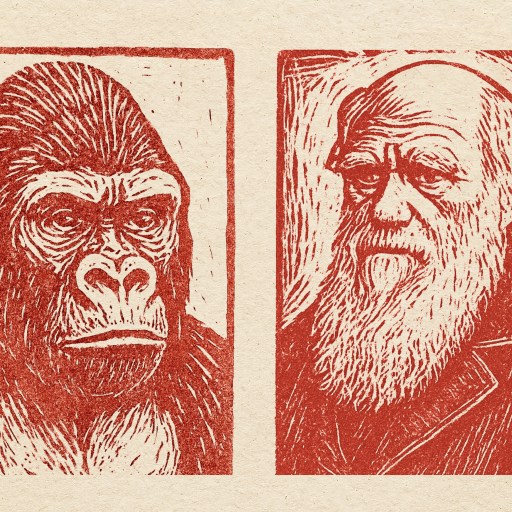
Two red-toned, woodcut-style portraits side by side: one of a gorilla and one of an older man with a beard, on a beige background.
7mins
“The idea of evolution by natural selection is, for me, probably the most beautiful idea in biology.”
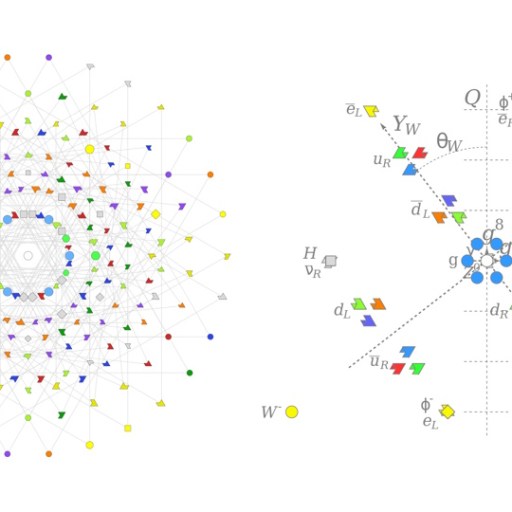
Two diagrams: the left shows a complex, circular, multicolored network; the right displays a theoretical physics diagram with labeled axes and colored particle symbols, capturing the intricate nature of physics hard concepts.
When you don't have enough clues to bring your detective story to a close, you should expect that your educated guesses will all be wrong.
A person with long blonde hair wearing a beanie and plaid jacket looks upward outdoors; a transparent geometric square overlay is centered on the image.
2mins
Happiness researchers Robert Waldinger MD, Tal Ben-Shahar PhD, and Peter Baumann explain why the happiest people aren’t happy all the time.
Unlikely Collaborators