
Test Special Issue

Game Change

Do elite athletes really make elite employees?

Sports, we tend to assume, offer a sharp-edged reflection of business life in microcosm — leadership under pressure, the winning mentality, valuable lessons drawn from loss. It’s all there. Just kick back with a beer and a pizza and watch your pathway to workplace success unfold on game day. Well, it turns out that the connections are often far more nuanced than we might have presumed. Do elite athletes really make elite employees? What’s the connection between Swedish pragmatics in soccer and a thriving startup culture? Have you factored in the difference between “wicked” and “kind” environments (and what does that even mean)? We investigate all of these pivotal tangents, and much more, in this Big Think special collection of essays, interviews, and curated book excerpts. Forget everything you’ve been told about the synergies between sports and business. It’s time to rewrite the rules.
Blue background with the words "Game Change" in white, surrounded by strategic game symbols and graphs in the background.
Presented by
John Templeton Foundation
A woman's black and white portrait is centered, crafted by AI creators. An abstract geometric background with orange, black, and yellow segments featuring cube patterns surrounds the photo.
The founder of GenZ Publishing joins Big Think from the infinitely unfurling confluence of print and digital.
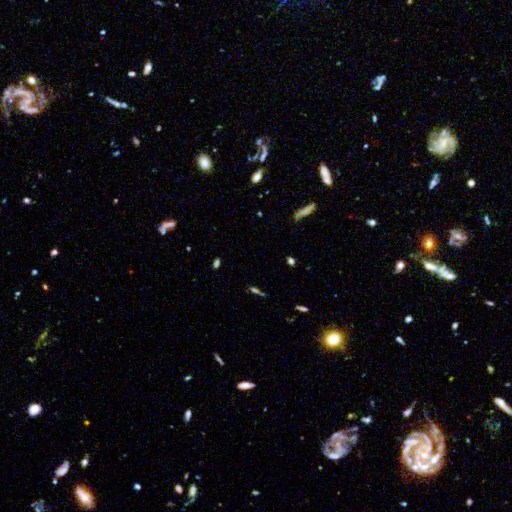
A vast view of deep space, captured in one of NASA's most important images, displays numerous galaxies of varying shapes and colors against a dark backdrop scattered with distant stars.
The Hubble Space Telescope, launched in 1990, was originally seen as a colossal mistake. This one image, taken in 1995, changed everything.
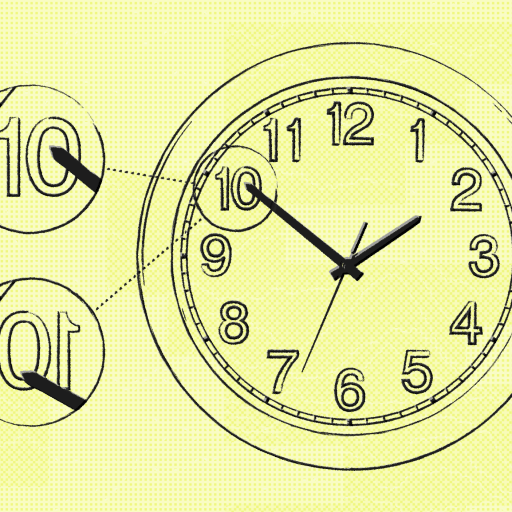
Illustration of a clock showing 10:10 with zoomed-in views highlighting both '10' markings, on an orange background.
Surprisingly, multimodal large language models struggle to read time on analog clocks.
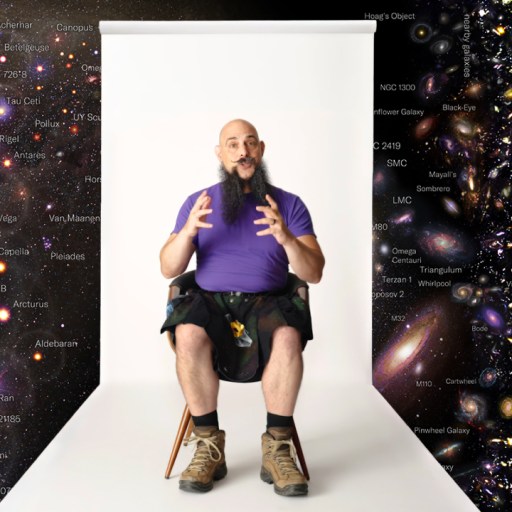
A person sits in front of a white backdrop, surrounded by a cosmic map with galaxies and celestial objects.
2hr 18mins
"Asking the question of, "Where did the entire universe come from?" is no longer a question for poets and theologians and philosophers. This is a question for scientists, and we have some amazing scientific answers to this question."
lab leak SARS-CoV-2
In theory, scientists could've produced a deadly virus that accidentally infected lab workers. In practice, we know that didn't happen.
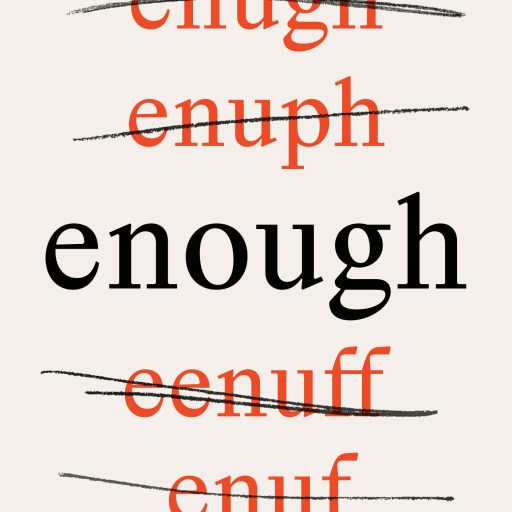
The word "enough" stands boldly in black at the center, with incorrect spellings like "enugh," "enuph," "enuff," and "enuf" crossed out in red above and below, subtly highlighting the quirks of English spelling.
In "Enough Is Enuf," Gabe Henry traces the history of simplified spelling movements and the lessons they teach us about language.
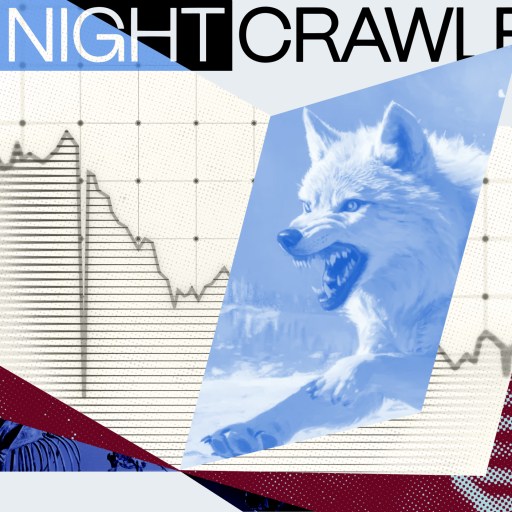
Collage of a snarling wolf, a stock market graph, and abstract shapes, overlaid with the bold text "The Night Crawler" hints at de-extinction possibilities.
Welcome to The Nightcrawler — a weekly newsletter from Eric Markowitz covering tech, innovation, and long-term thinking.
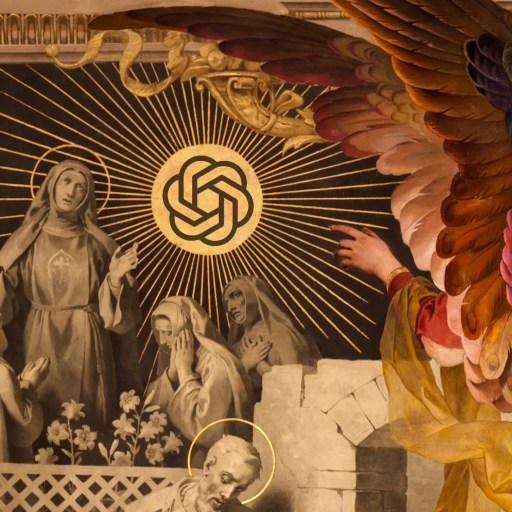
A mural shows an angel pointing toward a golden emblem, with rays emanating. Monks stand in reverence below, surrounded by flowers and architectural details.
13mins
"What would a totalitarian society that is not well disposed to our own do if it had God-like power? We don't wanna find out."
uranium oxide oklo nuclear reactor
Planets can create nuclear power on their own, naturally, without any intelligence or technology. Earth already did: 1.7 billion years ago.
An older man with a white beard sits in a room, wearing a light blue shirt, hands clasped together. Bookshelves and artwork are visible in the background.
One of the most original and optimistic thinkers in America sketches some big ideas about what's possible with AI in the next 25 years.
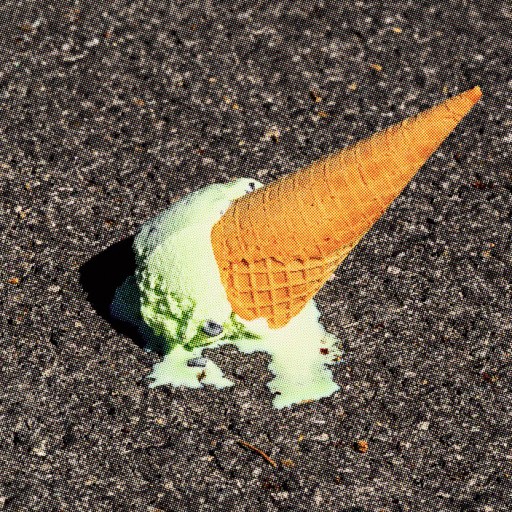
A hint of pessimism drips from the upside-down mint ice cream cone melting on the asphalt, a sweet reminder that some delights are meant to slip away.
Pessimissts are never disappointed, but are they also kinder?
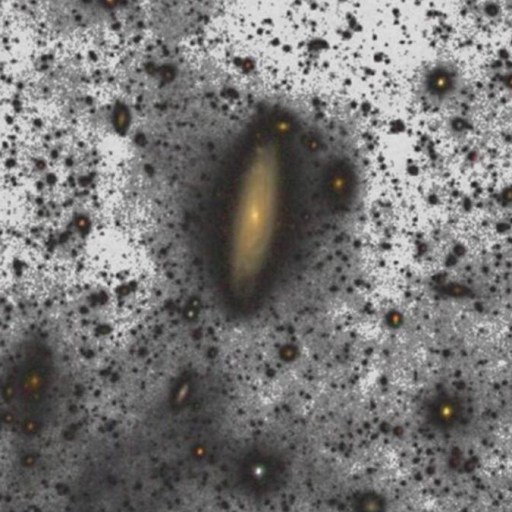
The spiral galaxy, surrounded by dim stars and interstellar dust, stands out against a dark background, shining brighter than astronomers once imagined.
The most famous Hubble images show glittering stars and galaxies amidst the black backdrop of space. But more was captured than we realized.
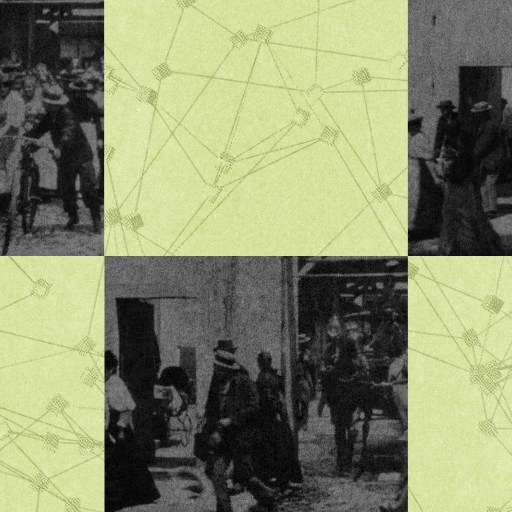
People in early 20th-century attire gather outside a building, as an intriguing green geometric pattern overlays the scene. This blend of classic and modern elements evokes the innovative spirit of AI art.
Hugo-winning author Ken Liu explores what early cinema and Chinese poetry can teach us about AI's potential as a new artistic medium.
In a futuristic setting, a medical professional in scrubs interacts with a holographic heart and data display, showcasing their understanding of AI to enhance patient care.
By looking outside the current wave of hype, we can create a framework for weighing up the practical impact of AI on any business.
Diagram of the universe's expansion with grid patterns and cosmic elements, framed by "Consensus or Crisis?" in white text on black background. This visual encapsulates how cosmology changed from 2000 to 2025, highlighting key theories and discoveries.
25 years ago, our concordance picture of cosmology, also known as ΛCDM, came into focus. 25 years later, are we about to break that model?
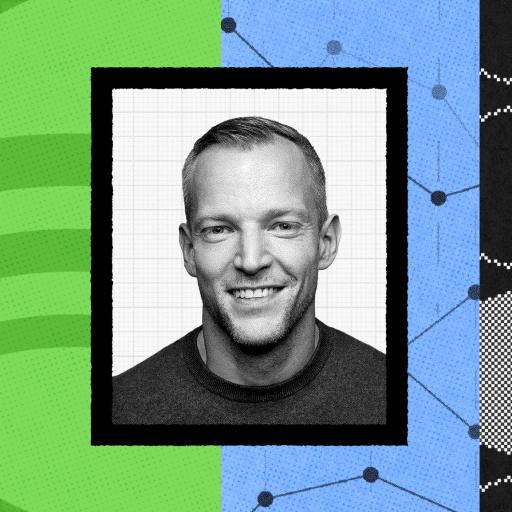
A smiling person in a black and white photo is set against a vibrant, Spotify-themed background with abstract patterns and shapes.
Spotify's Co-President, CPO and CTO chats with Big Think about the science of discovery, Swedish innovation, C-suite podcasting, and more.
Several microphones facing forward against a blue background with the text "Agents of Conflict" above them.
11mins
"These days, no national news network is trusted by more than half of American adults. And that's a problem."
planetary nebulae
In around 7 billion years, we expect the Sun to run out of fuel, dying in a planetary nebula/white dwarf combination. Is that for certain?
Split-panel collage of illustrations with partial faces of four historical figures, featuring diverse expressions and art styles, separated by colored lines. Each face reveals a hint of misunderstood philosophy, inviting viewers to ponder the unseen depths behind their enigmatic gazes.
That Nietzsche quote might not mean what you think it does.