




Test Special Issue

Game Change

Do elite athletes really make elite employees?

Sports, we tend to assume, offer a sharp-edged reflection of business life in microcosm — leadership under pressure, the winning mentality, valuable lessons drawn from loss. It’s all there. Just kick back with a beer and a pizza and watch your pathway to workplace success unfold on game day. Well, it turns out that the connections are often far more nuanced than we might have presumed. Do elite athletes really make elite employees? What’s the connection between Swedish pragmatics in soccer and a thriving startup culture? Have you factored in the difference between “wicked” and “kind” environments (and what does that even mean)? We investigate all of these pivotal tangents, and much more, in this Big Think special collection of essays, interviews, and curated book excerpts. Forget everything you’ve been told about the synergies between sports and business. It’s time to rewrite the rules.

Blue background with the words "Game Change" in white, surrounded by strategic game symbols and graphs in the background.
Presented by
John Templeton Foundation
Susan Schneider, in a business suit, smiles at the camera, with a green patterned background behind her.
A conversation with Dr. Susan Schneider on the AI risks we’re not talking about and why the fixation on AGI is misplaced.
A young girl with light brown hair sits with her knees drawn up, looking down, illustrated blue teardrops on her face—capturing a quiet moment that reflects why humans cry.
In this excerpt from "When Everyone Knows That Everyone Knows…," Steven Pinker examines how crying may have evolved as part of a suite of emotional expressions aimed at strengthening social bonds.
A book cover for "The Storyteller’s Advantage" by Christina Farr is displayed next to the words "an excerpt from" on a split purple and light gray background, reminiscent of the style favored by Alexis Ohanian.
Alexis Ohanian didn’t treat his relationships with the media as purely transactional — and his star rose in spectacular fashion.
As we gain new knowledge, our scientific picture of how the Universe works must evolve. This is a feature of the Big Bang, not a bug.
A white candle with smoke rising from its wick is shown on the left; on the right, two men wearing aprons stand talking in front of a café menu.
Workplace community is too often dismissed as an HR initiative, when in reality it’s the key to driving business results through frontline employee performance.
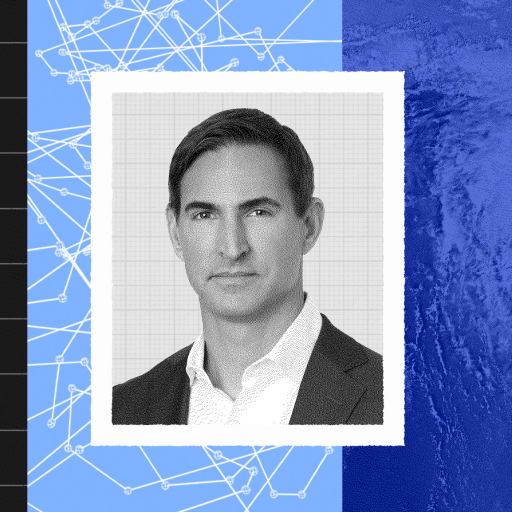
Black-and-white portrait of a man in a suit centered between a grid, network lines, and a swirling blue pattern evoking a hurricane, symbolizing the dynamic power of predictive intelligence.
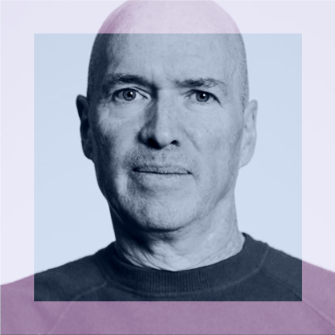
Brian Gumbel — President and Chief Operating Officer (COO) at Dataminr — explores the cutting edge of real-time information analysis.
most distant
The universe is filled with unlikely events, but it is also full of ways to fool ourselves.
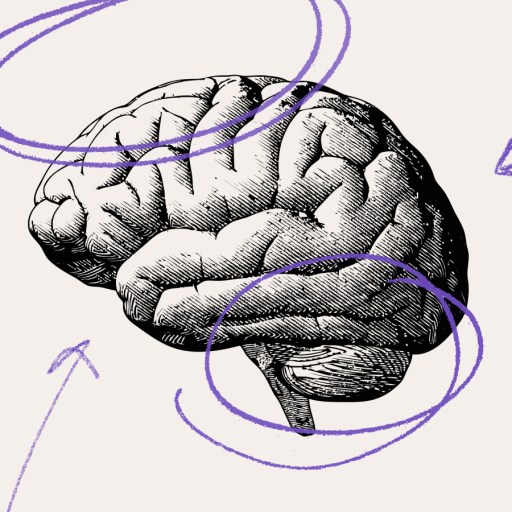
Black and white illustration of a human brain with purple scribble circles and arrows pointing toward it on a light background, perfect for those interested in books about the brain.
Neuroscientist Rachel Barr shares her favorite books on the brain and how they shaped her approach to the field.
A woman sits at a desk covered with tall stacks of papers, reviewing and pointing to documents as she conducts a purpose-driven peer review in a busy office setting.
Just because a paper passes peer review doesn't mean that what's written, or what the author asserts, is true. Here's why it still matters.
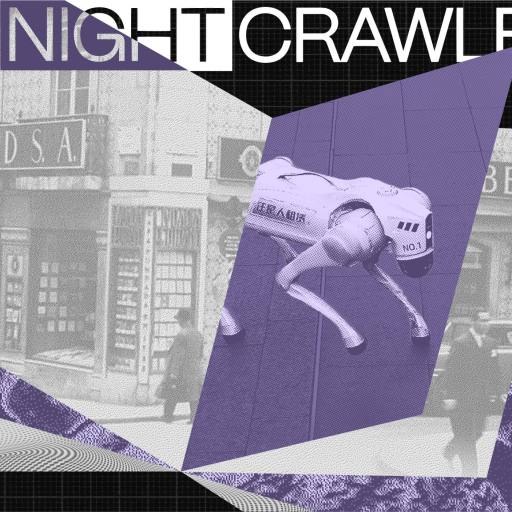
A digital collage features the title "THE NIGHTCRAWLER," a robotic dog inspired by China tech, vintage storefronts, and abstract purple geometric shapes.
Welcome to The Nightcrawler — a weekly newsletter from Eric Markowitz covering tech, innovation, and long-term thinking.
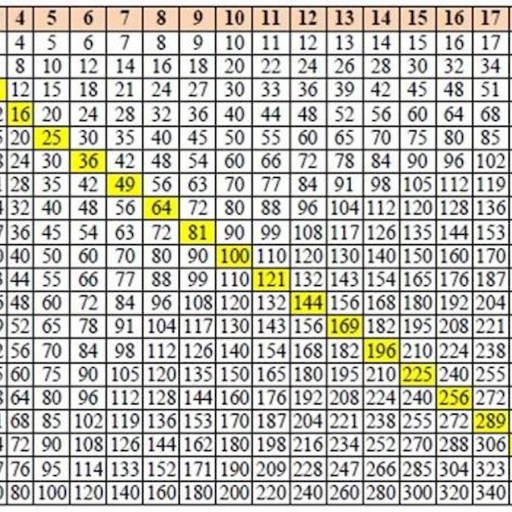
Multiplication table from 1 to 20, featuring pythagorean runs and perfect squares highlighted in yellow along the diagonal from top left (1) to bottom right (400).
It's not just an odd quirk of numbers that makes it true, but a deep mathematical insight that dates all the way back to Pythagoras.
Mars rover on rocky terrain, showing its camera mast, equipment, and six wheels against a dusty, reddish Martian landscape.
Organic compounds can form through simple chemistry alone — making the search for true biosignatures trickier than it seems.
LIGO Livingston
10 years ago, LIGO first began directly detecting gravitational waves. Now better than ever, it's revealing previously unreachable features.
ESO milky way
Questions about our origins, biologically, chemically, and cosmically, are the most profound ones we can ask. Here are today's best answers.
Book cover of "Epic Disruptions" by Scott D. Anthony, featuring bold, stacked text and an orange lightning bolt—evoking the spirit of innovators like Mark Zuckerberg; left side reads "an excerpt from" on an orange background.
Even when leaders know disruption is a smart ­long-term decision, the pain of transition can produce a titanic shambles. Just ask Kodak.
a painting of a woman avidly reading a book.
Despite the claims of speed reading apps and programs, you actually have to read the book if you want to learn.
Book cover of "Manage Yourself to Lead Others" by Margaret C. Andrews, with the phrase "an excerpt from" on a purple background—highlighting the importance of know thyself in effective leadership.
Aristotle taught that “knowing yourself is the beginning of all wisdom” — all leaders and teams should take note.
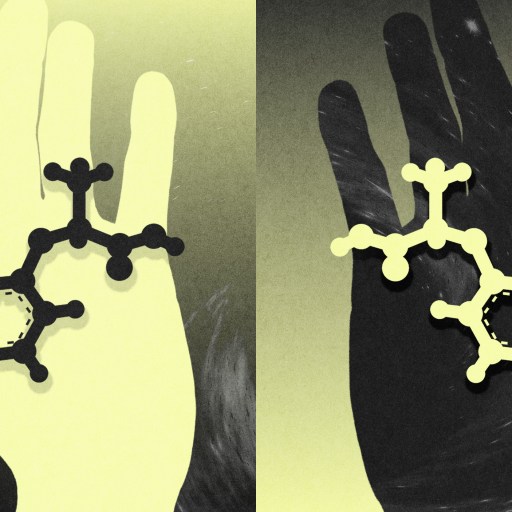
Two hands, one light and one dark, each holding a contrastingly colored molecular structure against a gradient background.
The fear of unleashing forces beyond control has haunted science for centuries.
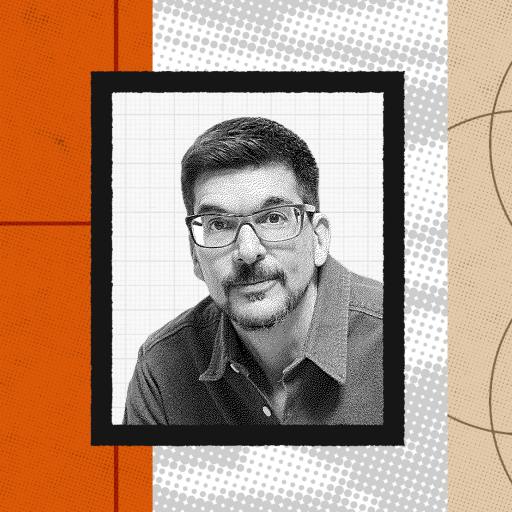
Black and white portrait of Alex Osterwalder with glasses and facial hair, framed against a graphic background featuring striking orange, white, and beige geometric patterns.
Strategyzer CEO Alex Osterwalder on why entrepreneurs should take a leaf from Amazon’s innovation playbook.