
Test Special Issue

Game Change

Do elite athletes really make elite employees?

Sports, we tend to assume, offer a sharp-edged reflection of business life in microcosm — leadership under pressure, the winning mentality, valuable lessons drawn from loss. It’s all there. Just kick back with a beer and a pizza and watch your pathway to workplace success unfold on game day. Well, it turns out that the connections are often far more nuanced than we might have presumed. Do elite athletes really make elite employees? What’s the connection between Swedish pragmatics in soccer and a thriving startup culture? Have you factored in the difference between “wicked” and “kind” environments (and what does that even mean)? We investigate all of these pivotal tangents, and much more, in this Big Think special collection of essays, interviews, and curated book excerpts. Forget everything you’ve been told about the synergies between sports and business. It’s time to rewrite the rules.

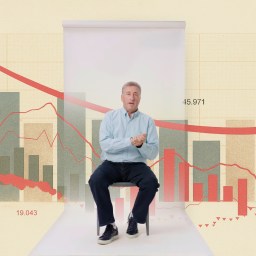
Blue background with the words "Game Change" in white, surrounded by strategic game symbols and graphs in the background.
Presented by
John Templeton Foundation
A grayscale portrait of Caterina Fake is centered between an FDNY ambulance on the left and patterned designs with circular symbols on the right.
Venture capitalist and Flickr co-founder Caterina Fake talks to Big Think about why AI won’t make the internet better, her influences beyond tech, and more.
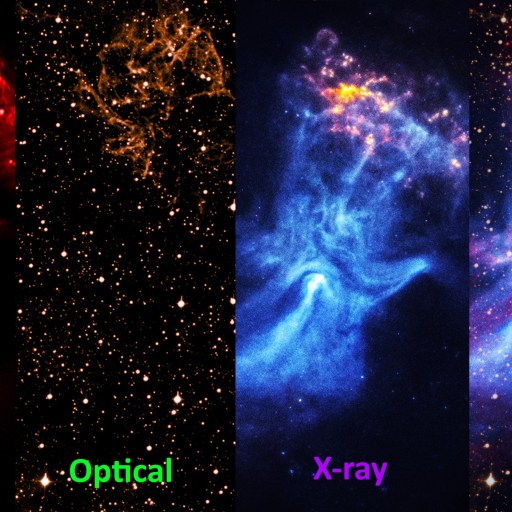
Four images of a nebula, sculpted by a dead star, are shown side by side in radio, optical, and X-ray wavelengths; the fourth composite image reveals the so-called "Hand of God." Each is labeled at the bottom.
In our own Milky Way, a recently deceased star creates a ghostly, hand-like shape in X-rays some 150 light-years wide. Here's how it's made.
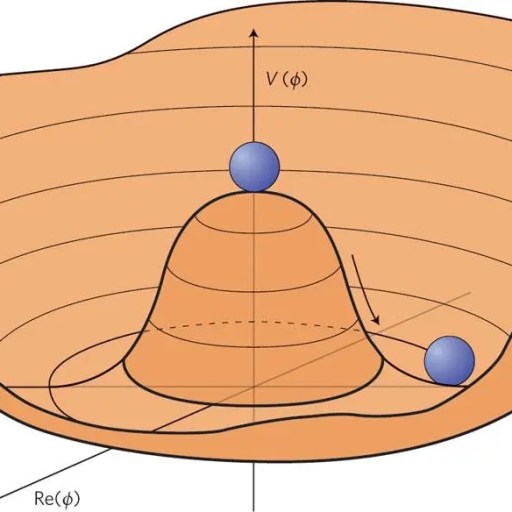
A 3D potential energy surface with a central peak and surrounding valley illustrates zero-point energy power; two blue spheres indicate positions atop the peak and within the valley. Axes labeled Re(φ), Im(φ), and V(φ).
Throughout history, "free energy" has been a scammer's game, such as perpetual motion. But with zero-point energy, is it actually possible?
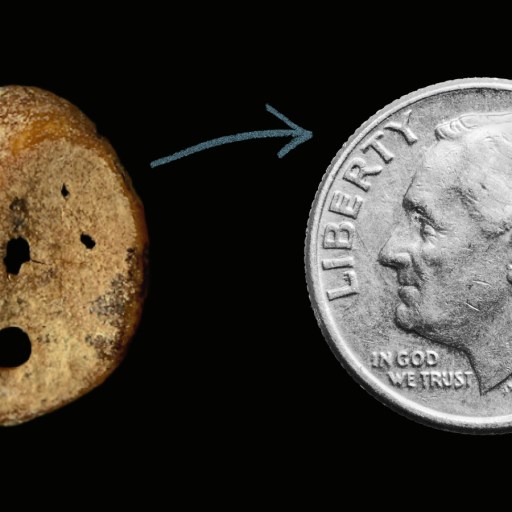
A small, irregular brown stone with holes—possibly linked to Denisovans—is shown next to a 1990 U.S. dime for size comparison.
In “The Secret History of Denisovans,” Silvana Condemi and François Savatier trace the story of our mysterious hominin ancestor.
A storytelling collage featuring a man inspecting barrels, a person holding a skull mask, another man observing the mask, and the text "THE NIGHTCRAWLER" in bold black and orange.
Welcome to The Nightcrawler — a weekly newsletter from Eric Markowitz covering tech, innovation, and long-term thinking.
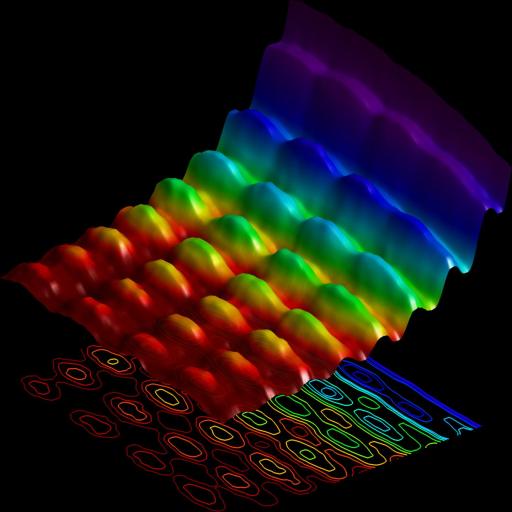
There could be variables beyond the ones we've identified and know how to measure. But they can't get rid of quantum weirdness.
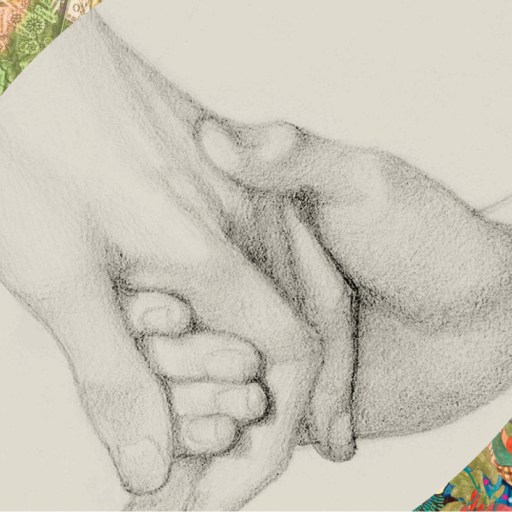
Pencil drawing of an adult hand holding a child's hand, surrounded by colorful, illustrated borders with various faces and map elements.
Sikh American scholar and historian Simran Jeet Singh on helping kids imagine — and create — a more empathetic world.
John Templeton Foundation
Abstract collage with a butterfly, brain sketches, graphs, and scientific diagrams overlaid with red, black, and beige shapes and textured patterns.
A conversation with neuroscientist Erik Hoel about the future of consciousness research.
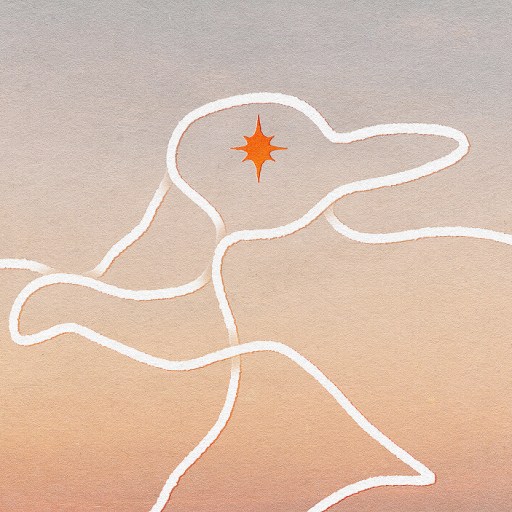
A minimalist drawing of a duck outlined in white against a gradient background, with an orange star shape marking the eye, invites you to question your perception.
“Who ya gonna believe: me or your own eyes?” Until you can assess your perception, the answer should be neither.
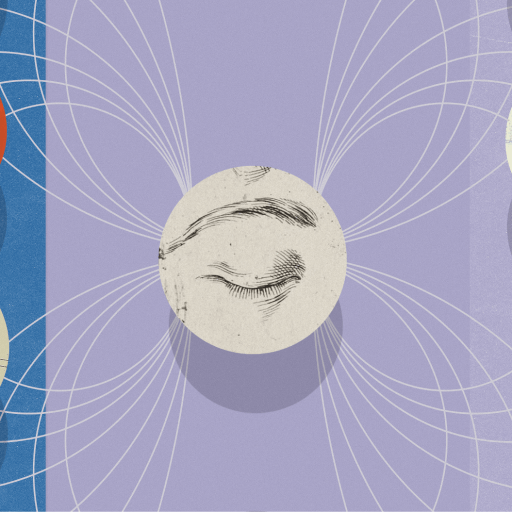
Abstract illustration featuring five circles with various designs connected by curved white lines on a purple and blue background, symbolizing science or interconnected concepts.
A conversation with Annaka Harris on shared perception, experimental science, and why our intuition about consciousness is wrong.
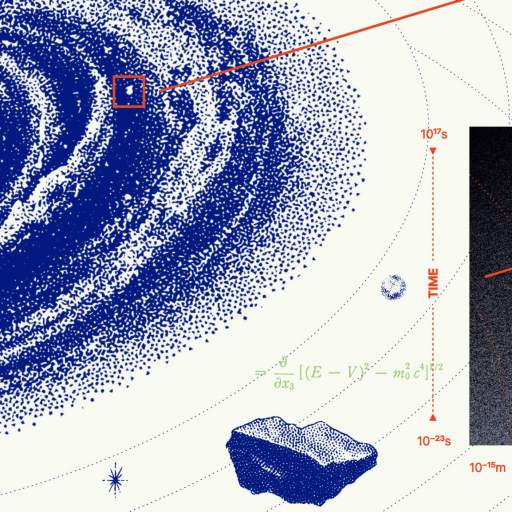
Diagram showing a galaxy, zooming in to highlight a small area labeled "Human Experience" within a grid mapping time and space on logarithmic scales.
Science helps us imagine the vastness of space and time — and our small but meaningful place within it.
A red door with a gold doorknob is floating in the middle of a blue sky surrounded by white clouds.
"Ordinary dreams are, perhaps, the clearest articulation of what it is like to be."
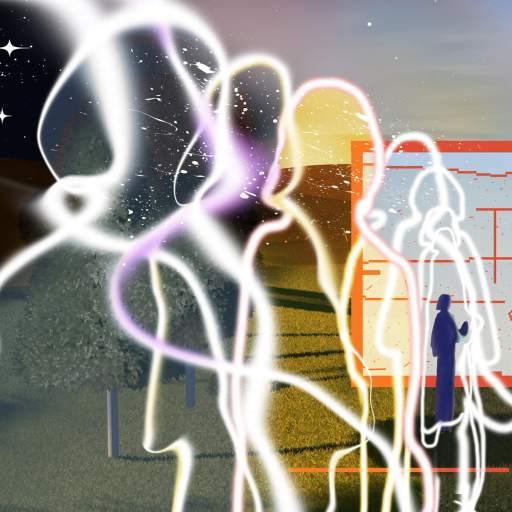
Abstract illustration of translucent human figures standing in line, with a mix of a natural outdoor scene and geometric digital elements in the background.
The overlooked reason why "AI consciousness" isn't coming anytime soon.
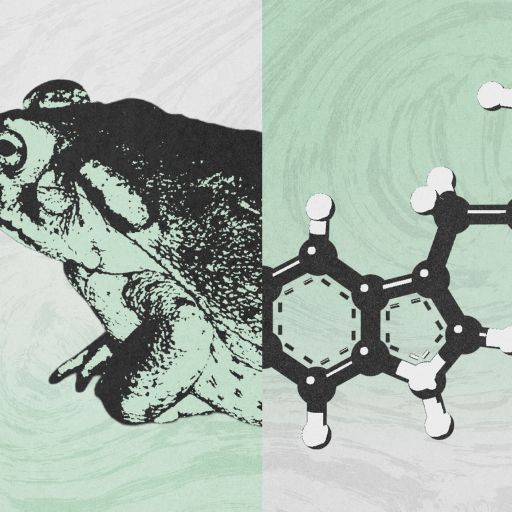
A split image showing the left half of a frog and the right half of a chemical structure on a green and white textured background.
5-MeO-DMT may offer a practical way to access and study consciousness in its most basic form.
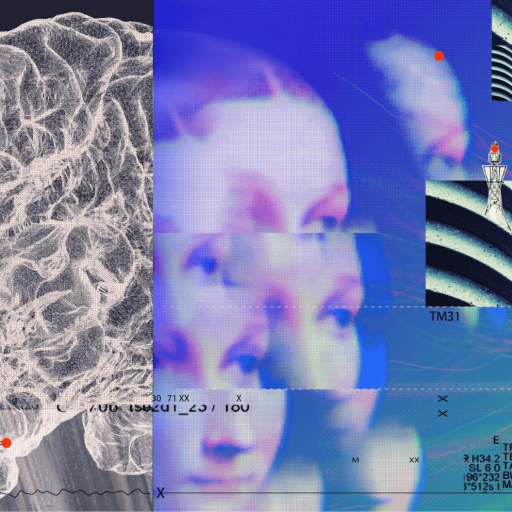
A digital collage featuring a brain illustration, distorted human faces, signal towers, abstract waves, and scattered data points and text on a blue and gray background.
A universal signature could make surgeries safer — and help reveal what holds consciousness together.
A man and woman sit on a bed with two young children, sharing a quiet moment; the older child stands while the younger, cradled by the woman, embodies the precious gift of consciousness within the family.
After the trauma of a high-risk medical procedure, Eric Markowitz discovered a kind of consciousness that lives not in thought — but in presence.
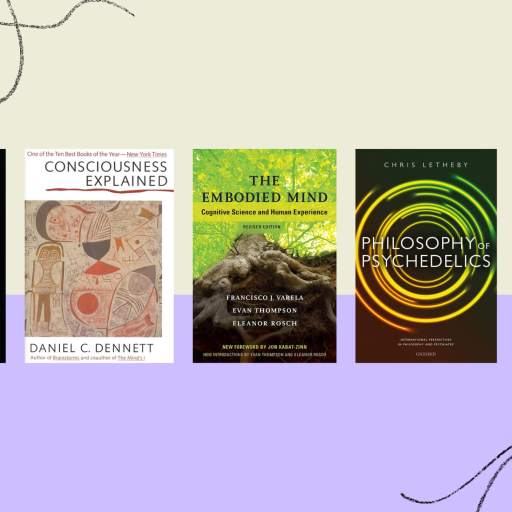
Five books on consciousness and philosophy are displayed upright in a row against a pale background with abstract black lines.
These expert-recommended books try to answer the questions of consciousness, from its fundamental nature to its role in human experience and the natural world.
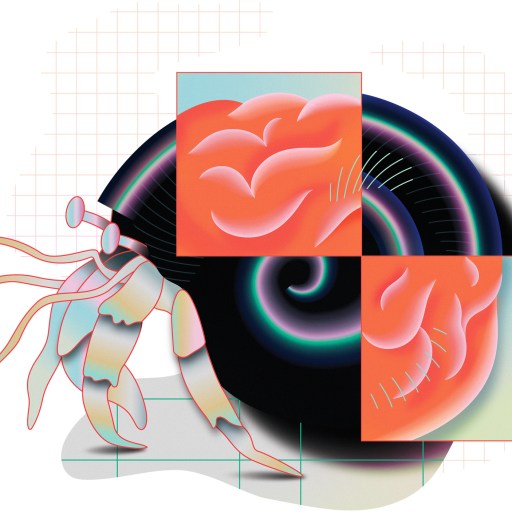
A digital illustration of a hermit crab with a shell resembling a human brain, shown in two square sections over the shell.
A conversation about intelligence and consciousness with philosopher Peter Godfrey-Smith.
Three circles show, from left to right, an oyster shell, a Vitruvian-style human figure, and a swirling spiral, linked together on a textured lavender background.
Philosophers once prophesied that evolution would lead to minds far greater — and stranger — than our own.
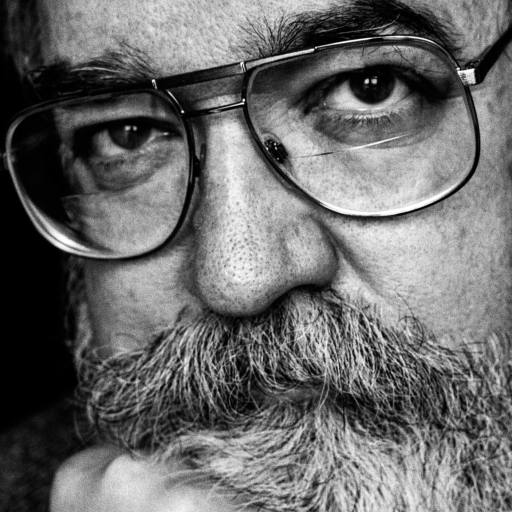
Black and white close-up of an older man with glasses, a bushy mustache, and beard, resting his chin on his hand and looking directly at the camera.
"For many people, the idea that consciousness is a set of tricks is offensive," the late philosopher told Big Think in 2012. "I think that's a prime mistake."