

Test Special Issue

Game Change

Do elite athletes really make elite employees?

Sports, we tend to assume, offer a sharp-edged reflection of business life in microcosm — leadership under pressure, the winning mentality, valuable lessons drawn from loss. It’s all there. Just kick back with a beer and a pizza and watch your pathway to workplace success unfold on game day. Well, it turns out that the connections are often far more nuanced than we might have presumed. Do elite athletes really make elite employees? What’s the connection between Swedish pragmatics in soccer and a thriving startup culture? Have you factored in the difference between “wicked” and “kind” environments (and what does that even mean)? We investigate all of these pivotal tangents, and much more, in this Big Think special collection of essays, interviews, and curated book excerpts. Forget everything you’ve been told about the synergies between sports and business. It’s time to rewrite the rules.
Blue background with the words "Game Change" in white, surrounded by strategic game symbols and graphs in the background.
Presented by
John Templeton Foundation
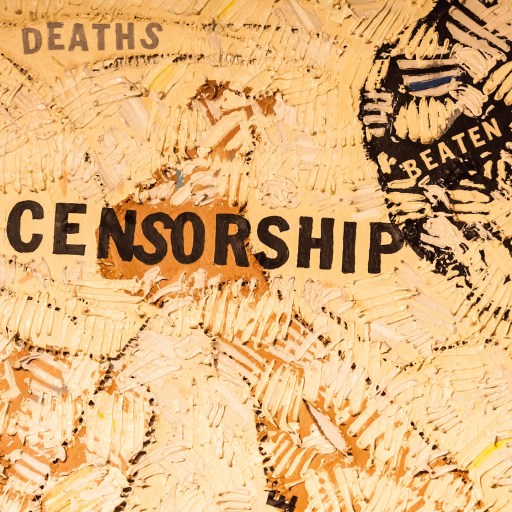
A textured, abstract artwork prominently features the word "CENSORSHIP" in bold black, flanked by stark words like "BEATEN," "DEATHS," and "IRON FIST." The beige backdrop subtly hints at government influence, blending shadows of science with restraint.
With a flurry of threats to scientists, science funding, and health policy, the USA now faces a crisis reminiscent of Soviet-era Lysenkoism.
A line of waiters in formal attire, embodying a sense of unreasonable hospitality, carry trays with teapots and cups as they gracefully walk in procession outside the building.
Restaurateur Will Guidara explains why it’s not just what you do, but how you make people feel that leads to successful ventures.
Mousetrap with assorted colorful pills on the trigger, set against a red, wavy striped background.
Today's pseudoscience-ridden wellness industry owes a great debt to its forefathers.
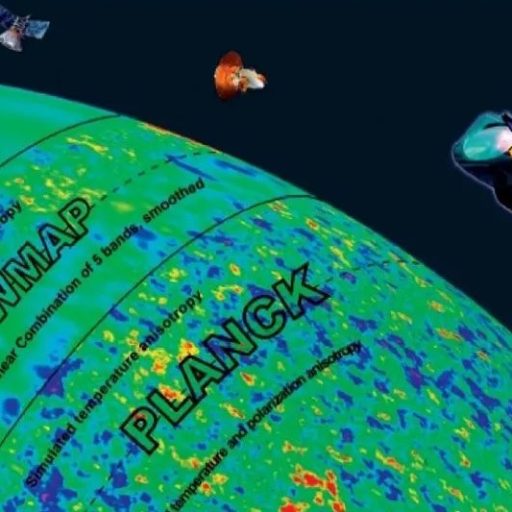
Diagram showing the cosmic microwave background radiation with satellites COBE, WMAP, and Planck, illustrating improvements in observational detail and resolution.
First discovered in the mid-1960s, no cosmic signal has taught us more about the Universe, or spurred more controversy, than the CMB.
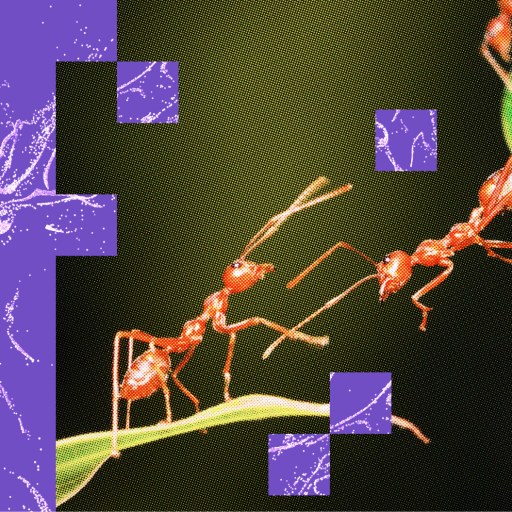
Red ants on green leaves with purple abstract shapes and squares in the background, symbolizing how AI for stronger teams can create a vibrant, interconnected ecosystem.
Jotform CEO Aytekin Tank highlights an AI-powered pathway towards more productive and more creative teams.
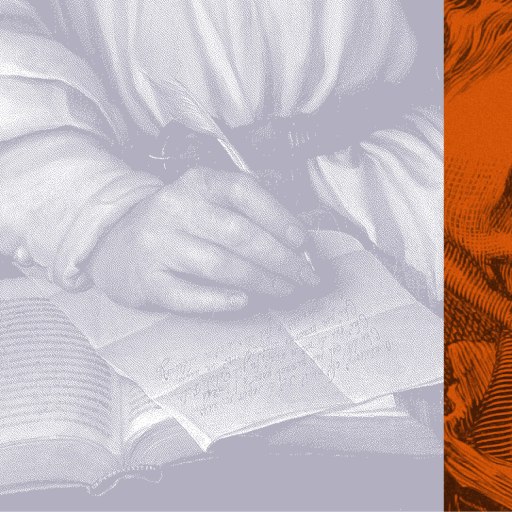
A hand writes on a piece of paper over an open book, next to Nathan Thrall's evocative orange-toned illustration of a face with a tear.
“The only requisite for nonfiction is that it’s true," says Nathan Thrall, author of the Pulitzer Prize-winning book "A Day in the Life of Abed Salama."
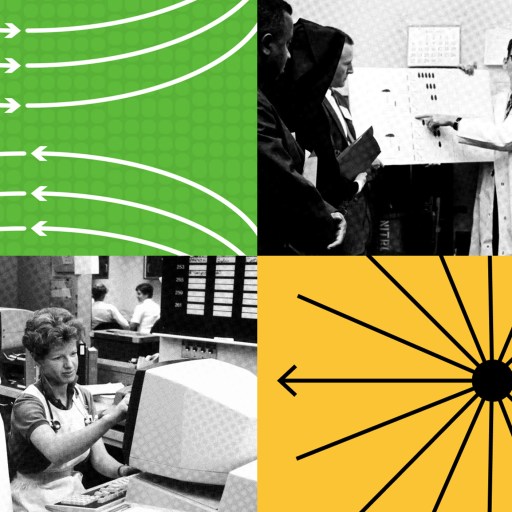
An open magazine reveals a woman wearing a hijab and headphones on one page, with de-bias technology illustrations mapping the faces of three individuals on the opposite page.
By designing smart systems, we can help ourselves live up to our best intentions — and perform even better in our workplaces.
elements
From LIGO, there weren't enough neutron star-neutron star mergers to account for our heavy elements. With a JWST surprise, maybe they can.
4 things you should consider before launching your next global learning program.
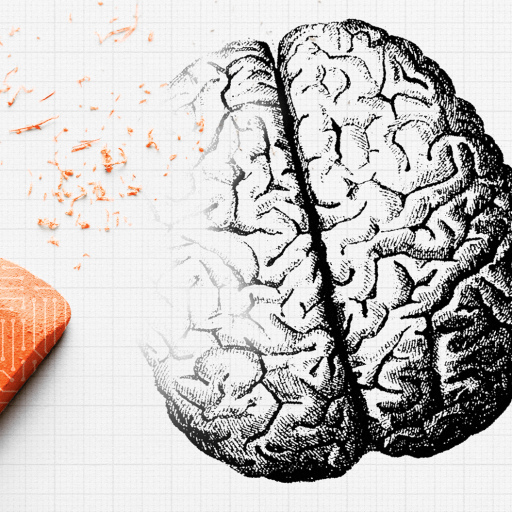
A pencil eraser gently rubs away a detailed sketch of a human brain on graph paper, subtly symbolizing the fine balance needed in critical thinking.
"Ultimately, the choice rests with each individual: whether to take the convenient route of allowing AI to handle our critical thinking, or to preserve this essential cognitive process for ourselves."
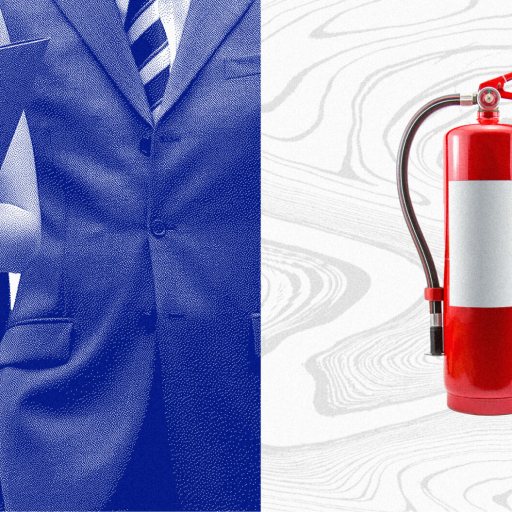
A business professional in a suit, embodying fractional leadership, holds a folder on the left; a fire extinguisher appears on the right.
An alternative vision of the future of work for senior executives might hold a solution to relentless workplace stress.
A dark nebula with dimming T Tauri stars nestled among dust and gas. The nebula casts a shadowy silhouette against a backdrop of numerous smaller stars in space.
It's the ultimate game of cosmic "cover up," as the dimming occurs when a circumbinary disk from a nearby star passes in front of T Tauri North.
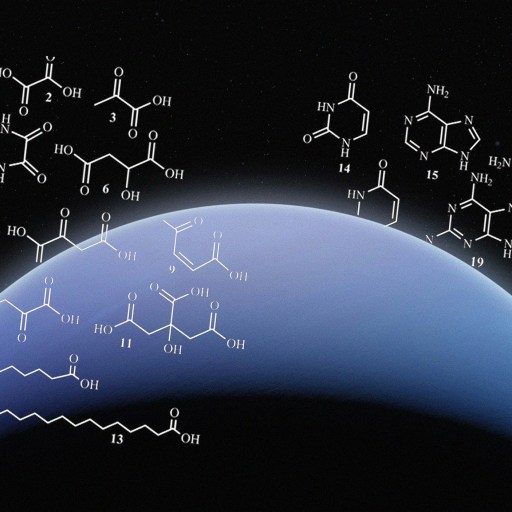
Chemical structures over an image of a planet with a dark background, resembling a scientific illustration of molecular compounds in space exploration.
Life might be more common across the Universe than the "Hard Steps Model" suggests.
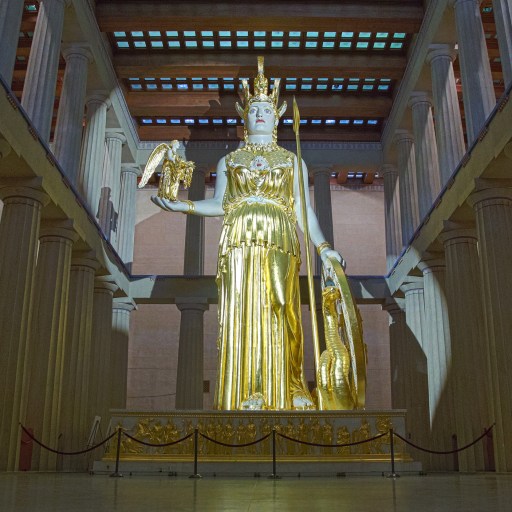
The golden statue of Athena stands prominently in a replica of the Parthenon interior, steeped in mythology. She holds a shield and a small figure, while the spacious setting boasts large columns and high ceilings.
An interview with renowned mythologist Martin Shaw about persona, presence, and how to spend life's finite time.
Various capsules arranged diagonally on a blue surface, alternating between light and dark colors.
4mins
“The truth is there are very few supplements that have good evidence-based medicine to support them.”
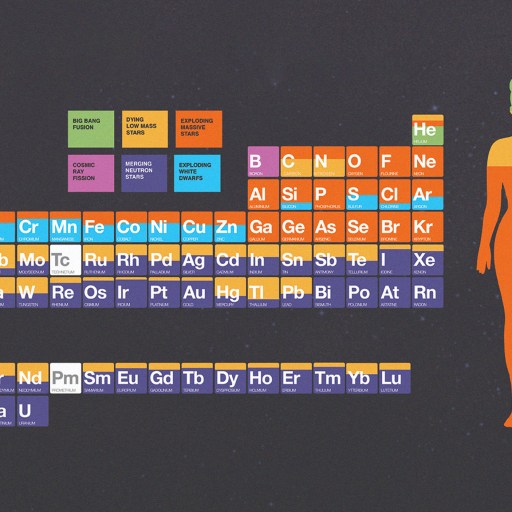
Illustration of the periodic table with a human silhouette reveals how heaviest elements shape us. Elements are color-coded, depicting the percentage composition of the body: 73% oxygen, 16.5% carbon, 9.5% hydrogen, and 1% others.
Matter is made up largely of atoms, where atomic nuclei can contain up to 100 protons or more. But how were the heaviest elements made?
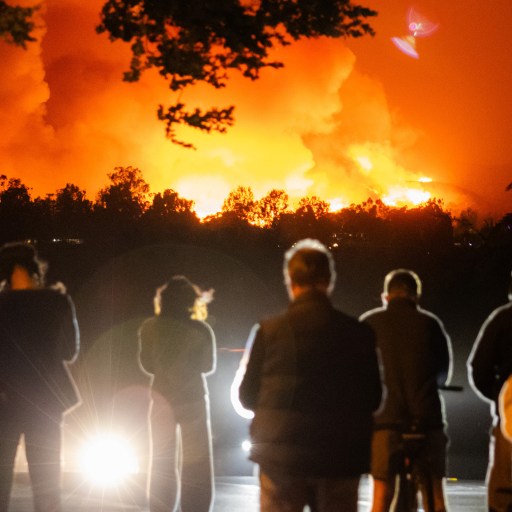
A group of people watches a large wildfire at night, with flames lighting up the sky in the background.
Effective leadership requires long-term strategy — not tactical reactions.
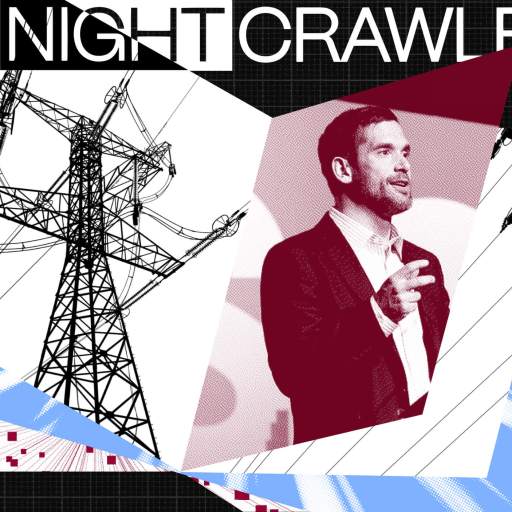
Collage of a man speaking, an electricity pylon, and the title "The Nightcrawler" on a graphic background, hinting at the integration of next-gen AI.
Welcome to The Nightcrawler — a weekly newsletter from Eric Markowitz covering tech, innovation, and long-term thinking.
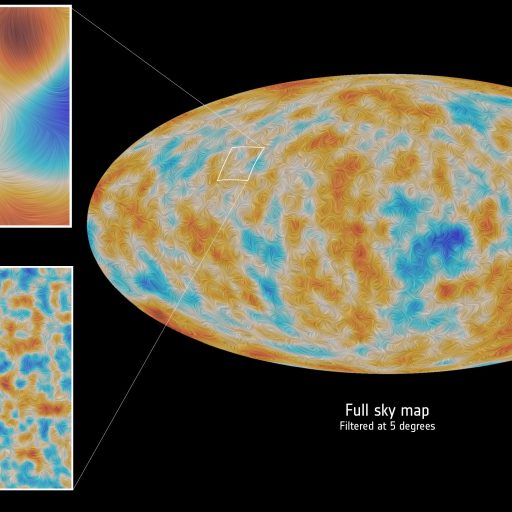
CMB polarization Planck
Cosmic inflation, proposed back in 1980, is a theory that precedes and sets up the hot Big Bang. After thorough testing, is it still valid?
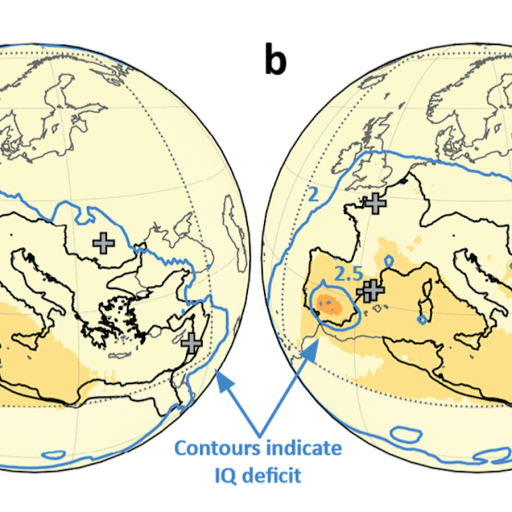
Map showing regions in Europe and North Africa. Two parts labeled 'a' and 'b' highlight areas with IQ deficit contours. Several crosses are marked on the map.
The Roman Empire at one point emitted roughly 3,600 tons of lead dust per year, causing “widespread cognitive decline.”