









Test Special Issue

Game Change

Do elite athletes really make elite employees?

Sports, we tend to assume, offer a sharp-edged reflection of business life in microcosm — leadership under pressure, the winning mentality, valuable lessons drawn from loss. It’s all there. Just kick back with a beer and a pizza and watch your pathway to workplace success unfold on game day. Well, it turns out that the connections are often far more nuanced than we might have presumed. Do elite athletes really make elite employees? What’s the connection between Swedish pragmatics in soccer and a thriving startup culture? Have you factored in the difference between “wicked” and “kind” environments (and what does that even mean)? We investigate all of these pivotal tangents, and much more, in this Big Think special collection of essays, interviews, and curated book excerpts. Forget everything you’ve been told about the synergies between sports and business. It’s time to rewrite the rules.

Blue background with the words "Game Change" in white, surrounded by strategic game symbols and graphs in the background.
Presented by
John Templeton Foundation
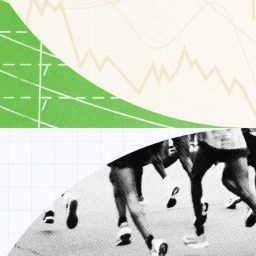
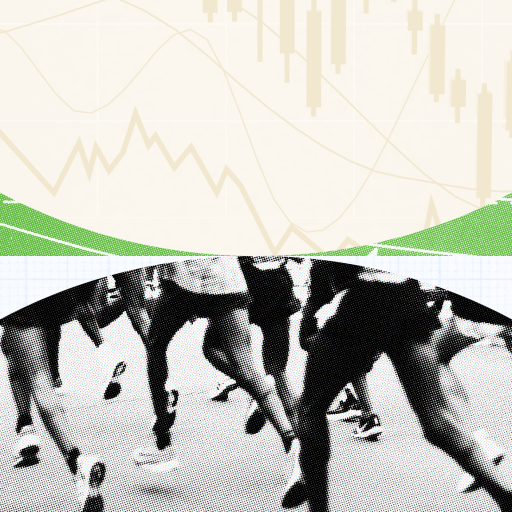
A composite image features a stock market graph in the upper half and a black-and-white photo of runners' legs pushing through the pain cave in the lower half.
Resilience isn’t just about pain and perseverance — it’s about embracing the journey.
A person with headphones is immersed in framed pictures, next to a book open to a page with abstract blue patterns, reminiscent of human-AI symbiosis in its design.
An approach based on collaboration and empathy can place “connection with people” at the heart of AI’s purpose.
A supermassive black hole caught turning on reveals a mesmerizing cosmic dance, with bright streams of light and colorful gases swirling around it against a starry backdrop.
Seven years ago, an outburst in a distant galaxy brightened and faded away. Afterward, a new supermassive black hole jet emerged, but how?
Black and white close-up of a woman savoring a burger wrapped in paper, her eyes reflecting her elevated taste expectations.
New research is uncovering why we eat first with our expectations.
A grayscale portrait of a man with short hair, wearing a collared shirt, is framed within a colorful, abstract background that symbolizes progress with less reliance on cellphones.
Yondr CEO Graham Dugoni unpacks the technological zeitgeist in this exclusive Big Think interview covering media ecology, leadership, AI, human connection, and much more.
A vibrant cosmic scene reveals a galaxy with bright jets of energy, hottest stars twinkling vividly amidst scattered stars against a dark backdrop.
Here in our Universe, stars shine brightly, providing light and heat to planets, moons, and more. But some objects get even hotter, by far.
A digitally altered image blending the flags of China and the United States with pixelated and abstract effects, symbolizing a modern digital cold war.
“Technology has always been co-opted for war, but truly intelligent AI, let alone a superintelligence, is a different beast entirely.”
A gloved hand holds a smoking test tube with tongs against a dark background.
Other plans for the tech: organ banking and deep space travel.
A bright star emits light in a field of smaller, scattered stars against a dark sky.
Most stars shine with properties, like brightness, that barely change at all with time. The ones that do vary help us unlock the Universe.
A person holds a sign reading "GLOBAL WARMING is a cruel hoax" with a dog standing nearby on a leafy ground.
Astronomer Adam Frank reflects on some responses to his recent appearance on the Lex Fridman Podcast.
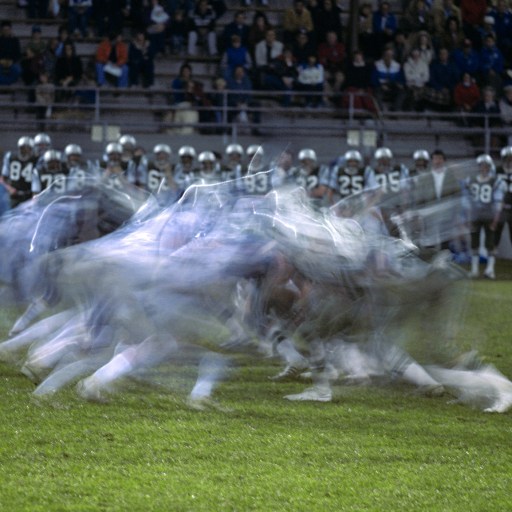
Blurred image of a thrilling football game in action under the night sky, with enthusiastic spectators on bleachers watching one of America's most exciting and sometimes dangerous sports.
"I think it's about time we stop allowing every male generation bang their frontal lobe through its most developmental stages."
An older man in a suit stands in front of a large bookcase filled with books, pondering life's limit situations.
When Star Trek's Captain Picard and The Office's Dwight Schrute channel philosopher Karl Jaspers, we can all benefit.
Silhouette of a person against a vibrant background with radiating light beams in blue, white, and orange hues.
10mins
“Many people get stuck in feeling responsible for their psychological state, and there's a way in which simply being with whatever uncomfortable emotions rather than believing that you are controlling them can be extremely beneficial for psychological wellbeing.”
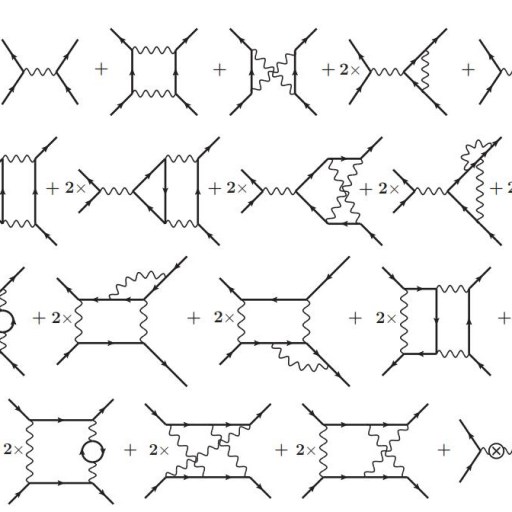
Diagram of particle interactions with wavy and straight lines, illustrating how photons mediate attraction and repulsion in various Feynman diagrams in particle physics.
The electromagnetic force can be attractive, repulsive, or "bendy," but is always mediated by the photon. How does one particle do it all?
Book cover of "Money on Your Mind" by Vicky Reynal appears next to text reading "an excerpt from," on a split pastel background—hinting at themes like greed and our complex relationship with wealth.
From King Midas to Gordon Gekko, humanity has struggled to grasp greed's true nature.
Black and white abstract design featuring swirling, concentric patterns resembling a ripple effect with a yin-yang-like motif at the center.
Despite no experimental evidence showing that gravitons exist, they remain a respectable concept in the world of professional physicists.
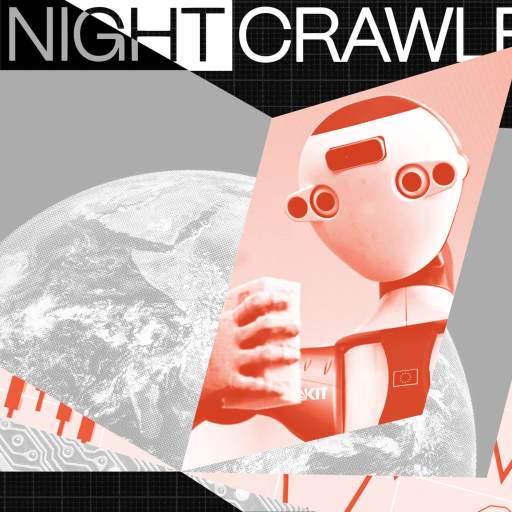
A superintelligent robot stands against a striking backdrop of red and gray financial graphs and a globe, with the text "The Nightcrawler" boldly emblazoned above.
Welcome to The Nightcrawler — a weekly newsletter from Eric Markowitz covering tech, innovation, and long-term thinking.
A swirling black hole, prepared to suck in surrounding matter, features a glowing, distorted ring of light against a starry backdrop.
Many of us look at black holes as cosmic vacuum cleaners: sucking in everything in their vicinity. But it turns out they don't suck at all.
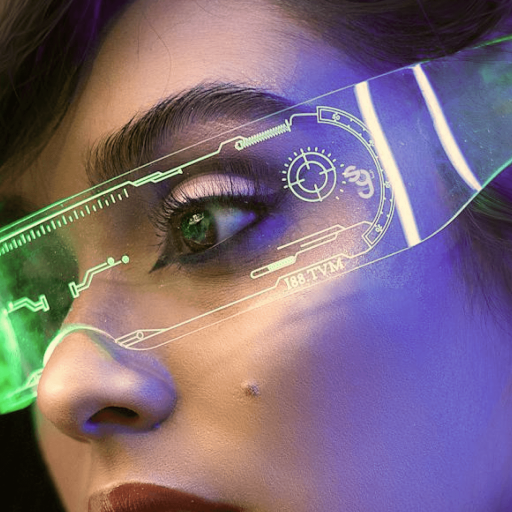
A person wearing futuristic, translucent smart glasses with green lights and a digital interface display.
"Mainstream computing will start to shift from a race to develop increasingly powerful tools to a race to develop increasingly powerful abilities."