



Test Special Issue

Game Change

Do elite athletes really make elite employees?

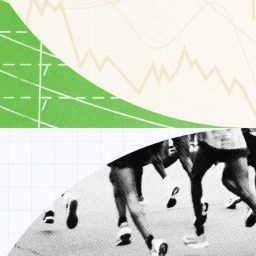
Sports, we tend to assume, offer a sharp-edged reflection of business life in microcosm — leadership under pressure, the winning mentality, valuable lessons drawn from loss. It’s all there. Just kick back with a beer and a pizza and watch your pathway to workplace success unfold on game day. Well, it turns out that the connections are often far more nuanced than we might have presumed. Do elite athletes really make elite employees? What’s the connection between Swedish pragmatics in soccer and a thriving startup culture? Have you factored in the difference between “wicked” and “kind” environments (and what does that even mean)? We investigate all of these pivotal tangents, and much more, in this Big Think special collection of essays, interviews, and curated book excerpts. Forget everything you’ve been told about the synergies between sports and business. It’s time to rewrite the rules.
Blue background with the words "Game Change" in white, surrounded by strategic game symbols and graphs in the background.
Presented by
John Templeton Foundation
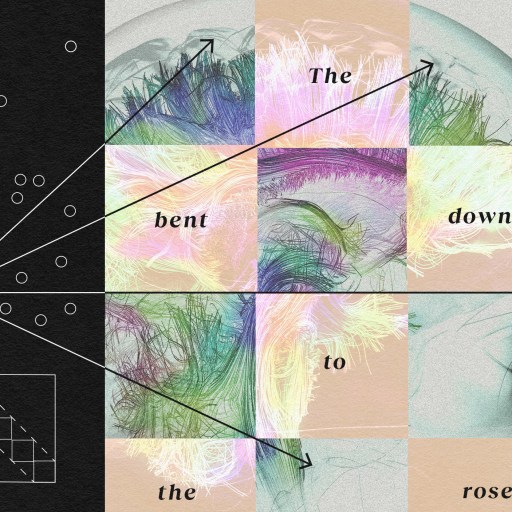
A diagram combines a 3D brain connectome with text and geometric shapes, with arrows pointing to areas labeled "The child bent down to smell the rose." A list and graph are shown on the left, illustrating how words in the brain are processed.
The findings show that even small areas in the brain may have the potential to represent complex meanings.
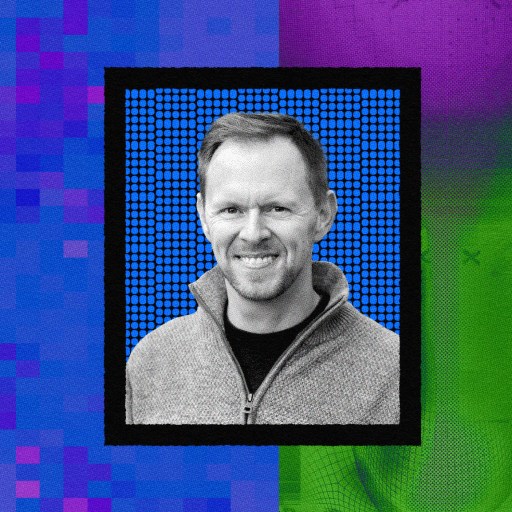
A black and white portrait of a smiling man in a gray sweater is centered against a vibrant, abstract digital background with blue, purple, and green sections, evoking the essence of humanity striking back.
Mike Bechtel, chief futurist with Deloitte Consulting LLP, joins Big Think for a wide-ranging look at what’s next — and why.
A person wearing safety goggles is using a tool to grind or cut metal, creating sparks in a dimly lit workshop.
6mins
Through woodworking, John Furniss, known as The Blind Woodsman, discovered a new purpose and a way to share his vision with the world.
Unlikely Collaborators
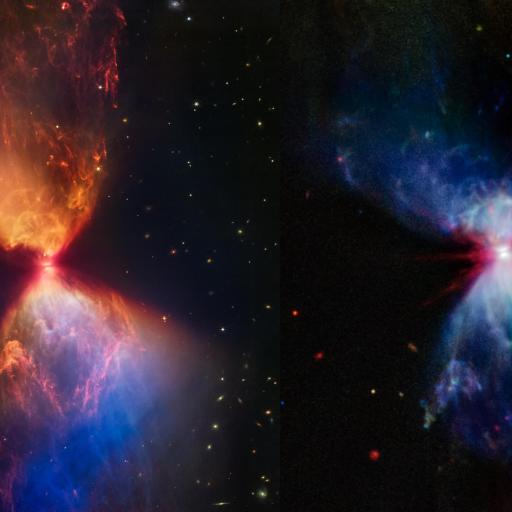
Two views of the same celestial object: the fiery orange-blue image on the left and a cooler blue-pink image on the right, showcasing an hourglass-shaped cloud of gas and dust in space.
Just 460 light-years away, the closest newborn protostars are forming in the Taurus molecular cloud. Here are JWST's astonishing insights.
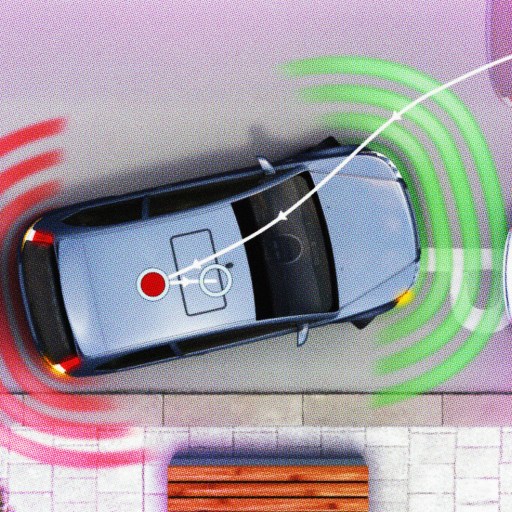
Aerial view of a car parking with proximity sensors activated, showing red and green signals indicating object detection around the vehicle.
Why the road to self-driving vehicles is paved with smarter “dumb” cars.
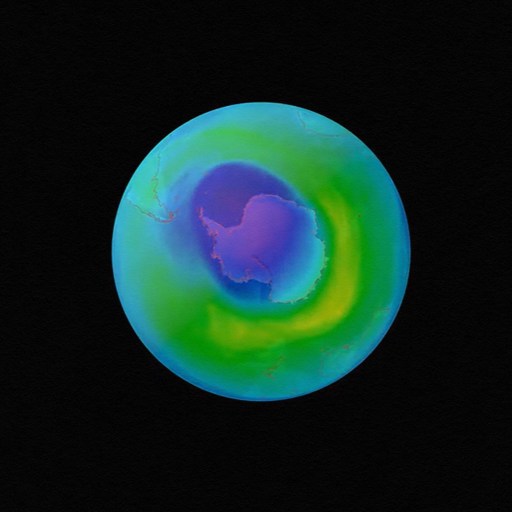
A visual representation of the hole in the ozone over Antarctica, depicted in varying colors to indicate different ozone concentration levels, against a black background.
A scientist’s first-hand account shows the world can tackle a global environmental crisis.
A close-up of gloved hands handling a cryogenic storage device with straw container tubes inside, emitting visible vapor.
How technology could change everything we thought we knew about reproduction.
Black and white photo of an American flag waving against a blurred background of buildings, framed by red and beige rectangular blocks.
In today’s political climate, how can we come together and seek some common ground or understanding? What are the mechanics of doing that? Is there some script or set of […]
Three wireframe human heads are depicted against a dark background, their complex overlapping patterns evocative of the Johari window model, revealing multifaceted layers within each head's structure.
It's hard to know what other people know. But it's not impossible.
entanglement across space
It's possible to remove all forms of matter, radiation, and curvature from space. When you do, dark energy still remains. Is this mandatory?
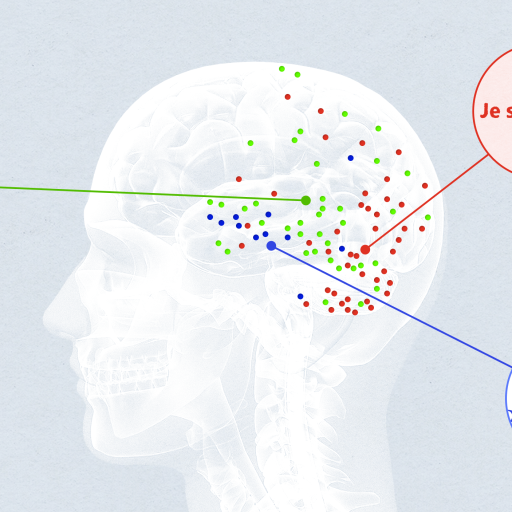
An illustration showing a side view of a human brain with colored dots representing neurons and text excerpts in three languages in circular insets.
In the brain's language-processing centers, some cells respond to one word, while others respond to strings of words together.
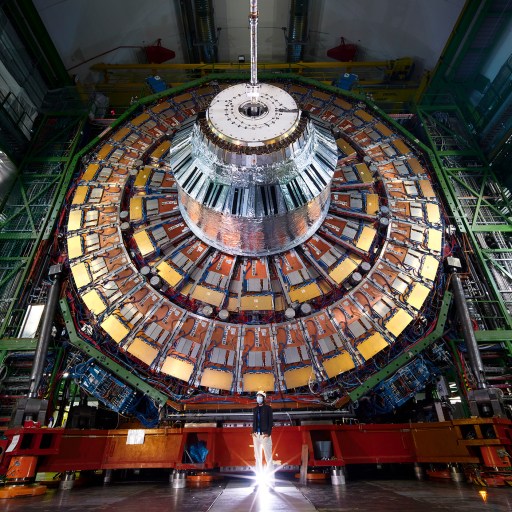
A person stands in front of a large, circular particle detector in a brightly lit, high-tech facility.
CERN scientists achieved record-breaking accuracy in mapping the mass of a key particle in the Standard Model.
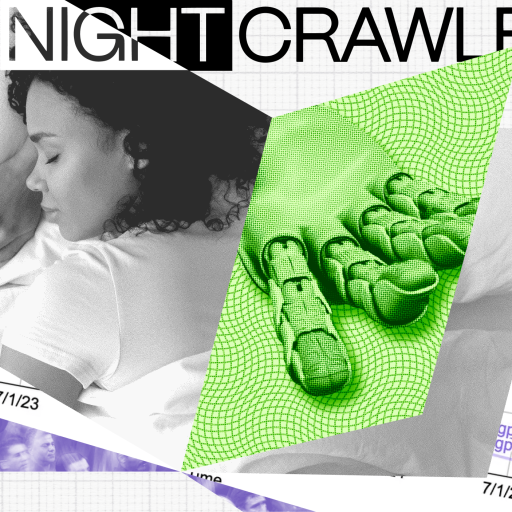
A collage featuring a sleeping person, a 3D-rendered hand, and various graphs with dates and "gpt-4" labels, overlaid by the text "The Nightcrawler," subtly highlights themes of the attention economy.
Welcome to The Nightcrawler — a weekly newsletter from Eric Markowitz covering tech, innovation, and long-term thinking.
spooky action quantum
Do we actually live in a deterministic Universe, despite quantum physics? An alternative, non-spooky interpretation has now been ruled out.
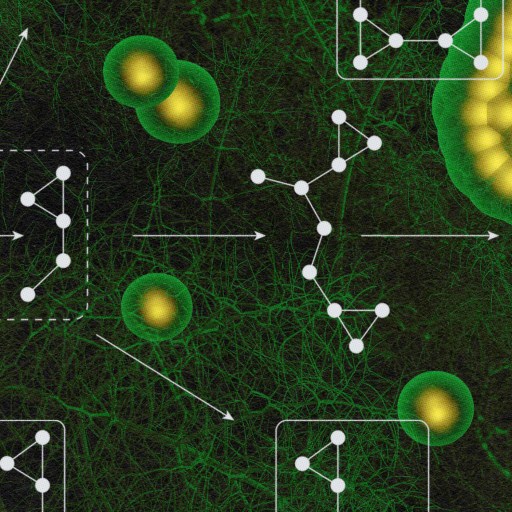
Green and yellow abstract scientific illustration depicting molecular structures interconnected with arrows, set against a dark background.
It's deceptively tricky to distinguish living systems from non-living systems. Physics may be key to solving the problem.
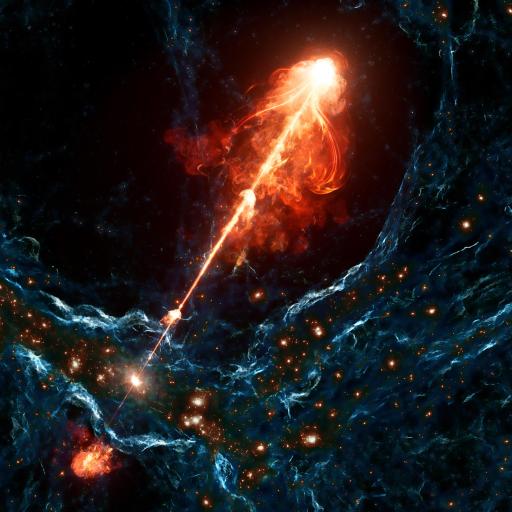
A vivid depiction of a cosmic event showing a jet of orange and red energy extending from a bright source in the vastness of space, surrounded by stars and interstellar matter.
With the discovery of Porphyrion, we've now seen black hole jets spanning 24 million light-years: the scale of the cosmic web.
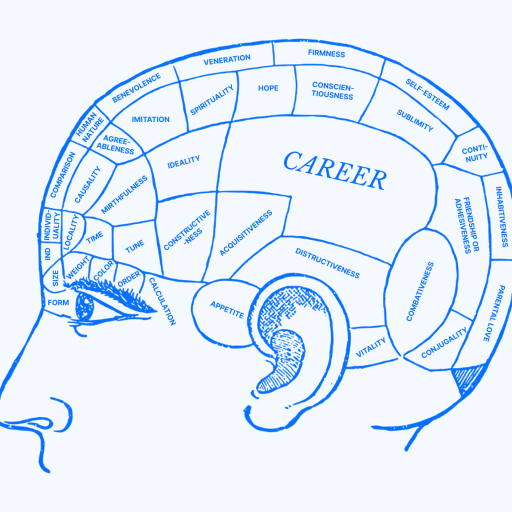
A labeled diagram of a human head's profile showcases areas of the brain related to career, self-esteem, conscientiousness, integrity, ambition, and more personality traits that help individuals work happy.
We spend over a third of our lives at work, yet the global workplace is often not a happy place. The solution may lie with our feelings of attachment.
A close-up image showing a crack in the ground, revealing a narrow, dark crevice between layers of brown, sandy soil with hints of biocrusts forming along the edges.
Think twice before stepping on that crunchy top layer of soil.
A praying mantis, a marvel of evolution, is gracefully perched on a white orchid flower against a black background.
Some biologists believe natural selection produces animals that are just good enough. Dawkins disagrees.