





Test Special Issue

Game Change

Do elite athletes really make elite employees?

Sports, we tend to assume, offer a sharp-edged reflection of business life in microcosm — leadership under pressure, the winning mentality, valuable lessons drawn from loss. It’s all there. Just kick back with a beer and a pizza and watch your pathway to workplace success unfold on game day. Well, it turns out that the connections are often far more nuanced than we might have presumed. Do elite athletes really make elite employees? What’s the connection between Swedish pragmatics in soccer and a thriving startup culture? Have you factored in the difference between “wicked” and “kind” environments (and what does that even mean)? We investigate all of these pivotal tangents, and much more, in this Big Think special collection of essays, interviews, and curated book excerpts. Forget everything you’ve been told about the synergies between sports and business. It’s time to rewrite the rules.
Blue background with the words "Game Change" in white, surrounded by strategic game symbols and graphs in the background.
Presented by
John Templeton Foundation
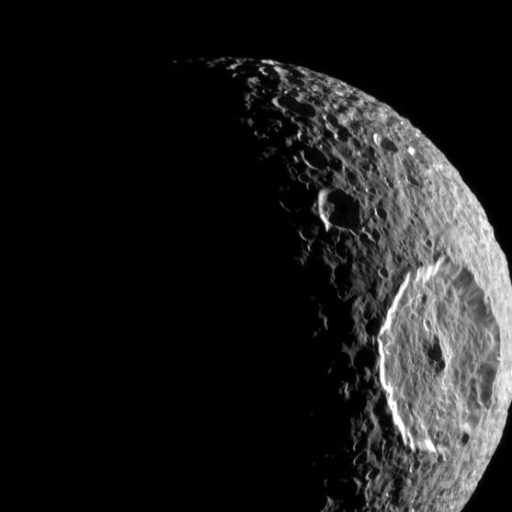
Image of Mimas, one of Saturn's moons, partially illuminated. The large Herschel crater is prominently visible on the right side of the moon's surface.
The existence of another watery world in the outer solar system may offer clues to how such seas form — and hope for another spot to search for life.
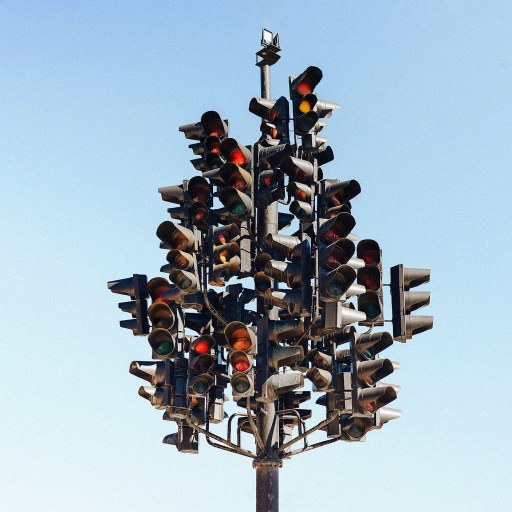
A pole with numerous traffic lights mounted in different directions creates an illusion of control against a clear sky background.
How to find the right balance between controlling teams and allowing them the agency to make mistakes — and learn from them.
A collage featuring close-up images of hands, faces, eyes, and text excerpts. The central focus is on various hand gestures performing actions with small objects and cards, evoking the mysterious art of mentalism.
Meet the scientist mixing mentalism with principles from positive psychology and the science of human potential.
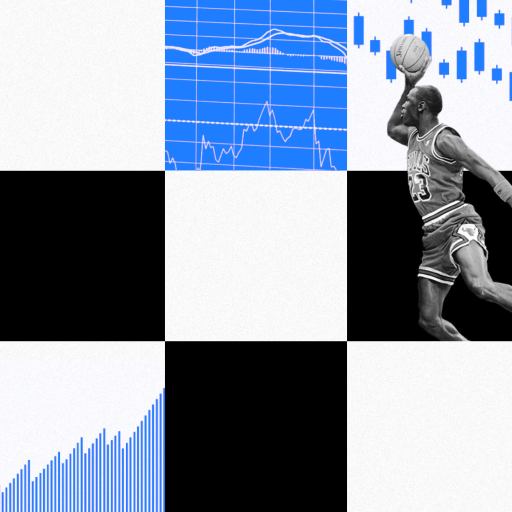
A collage features a tennis player and a basketball player against a backdrop of financial charts, graphs, and mathematical equations on a checkered pattern.
How Daniel Kahneman and Amos Tversky cracked open behavioral economics and enlightened all our choices.
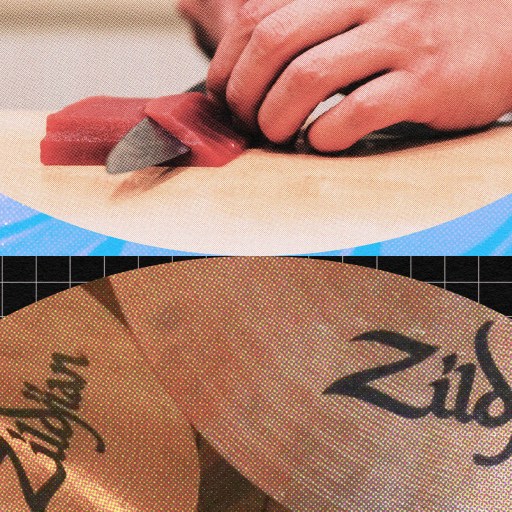
Top image: Close-up of hands slicing a piece of raw meat with a knife, emphasizing precision akin to the longevity sought in business immortality. Bottom image: Close-up of two Zildjian cymbals of different sizes on a grid pattern background.
In a world of distractions, several remarkable companies show why focus is the ultimate strategy for endurance.
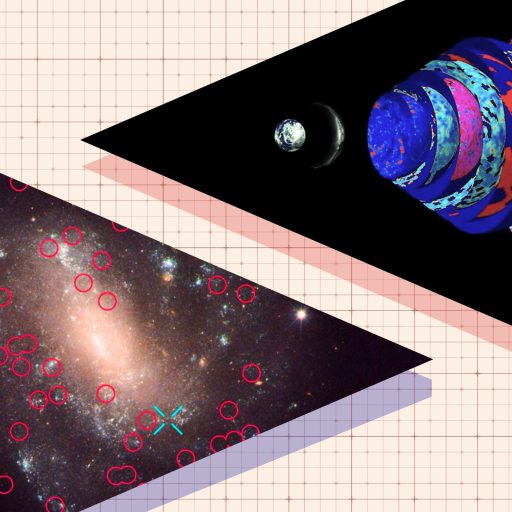
Two breathtaking pictures of a galaxy and a star taken by the Hubble telescope, highlighting the beauty and cosmic magnitude that fuels the Hubble tension.
In the expanding Universe, different ways of measuring its rate give incompatible answers. Nobel Laureate Adam Riess explains what it means.
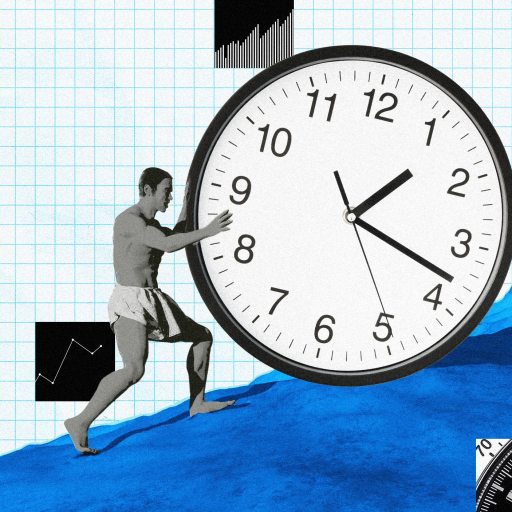
A person in minimal clothing pushes a large clock up a blue hill against a grid background with various numbers and graphs, embodying the diligence reminiscent of the Rule of Saint Benedict.
Oliver Burkeman — author of "Four Thousand Weeks: Time Management for Mortals" — tells Big Think about modern life lessons from a 6th-century monk.
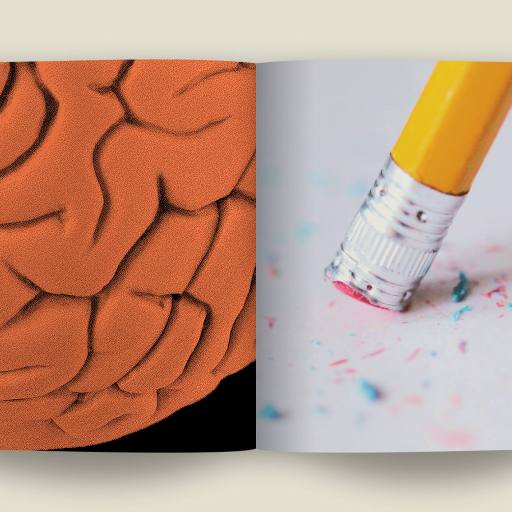
Open book with an image of a brain on the left page and a pencil eraser unlearning old marks on the right page.
By unlearning old leadership mindsets, cultures, and assumptions we can move from Industrial Age thinking to Intelligence Age thinking.
Illustration featuring an eye, an ear, and a hand, each encircled by overlapping multicolored circles.
7mins
Expanding your worldview starts with understanding your brain. Stanford neuroscientist David Eagleman explains.
Unlikely Collaborators
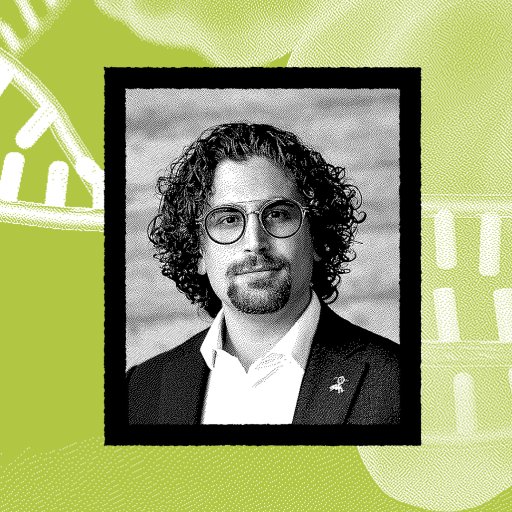
A black-and-white portrait of a man with curly hair, glasses, and a beard is centered against a green and blue background with abstract DNA helix patterns, representing leadership essentials.
Benjamin Oakes — CEO of buzz-worthy biotech company Scribe Therapeutics — joins Big Think for a chat about innovation, human endeavor, and more.
White text on a black background reads "The Impact of Nothing.
3mins
From nothing to everything: How zero changed our understanding of the universe, forever.
The image shows a bright spot labeled "JADES-GS-z13-1-LA," seemingly an impossible light captured by the JWST, surrounded by measurement markers, including a scale bar for 1 kpc and 0.28 arcsec. Filters and colors are listed at the bottom.
The Lyman-α emission line has never been seen earlier than 550 million years after the Big Bang. So why does JADES-GS-z13-1-LA have one?
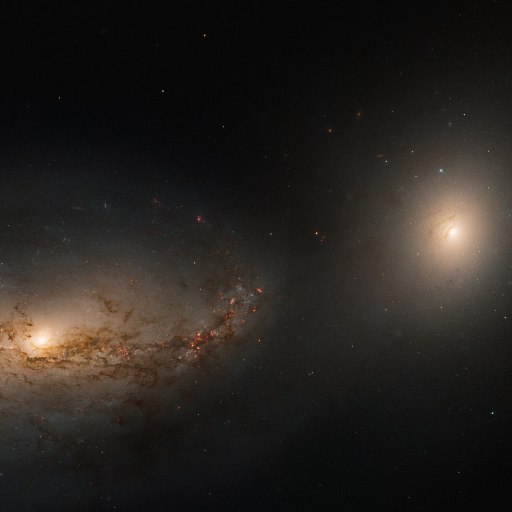
A detailed image of two galaxies in space, one with spiral arms on the left and the other, more elliptical, on the right, surrounded by distant stars.
Galactic activity doesn't just arrive when supermassive black holes feast on matter. Before, during, and after all create fascinating signs.
Film strip collage of abstract images—including faces with X marks, colorful patterns, and nature elements—evokes the vibrant allure of "Crazy Rich Asians.
"No matter how long you’ve been doing a job or how good people say you are, you need to care as if you’ve never done it before."
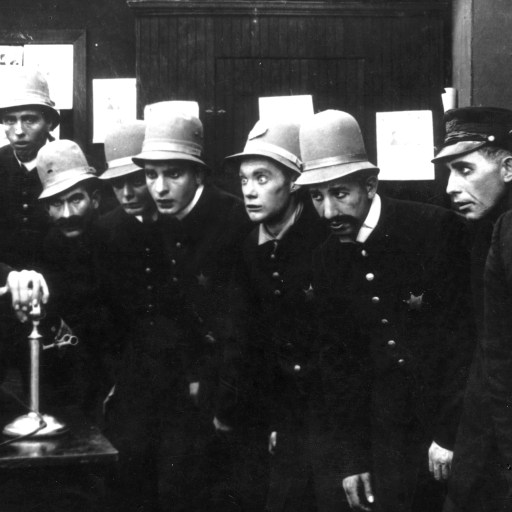
A group of vintage uniformed men, some wearing helmets, appear startled or curious while standing in what seems to be an office setting. The man on the left is speaking into a telephone, possibly exemplifying the Peter Principle as he manages the unexpected situation.
Why would someone who has spent their entire career following orders become a great leader overnight?
5mins
Who decides what’s “normal” and why? As social norms increasingly dissolve, here’s how to find true guidance.
A fern frond unfurling in a spiral shape against a plain green background.
1mins
What would the world be like if we focused on “the inherent beauty of math,” rather than its technical aspects? A statistician reflects:
uap ufo UAPs UFOs
Although a great many unidentified sights have been seen in the skies, none have conclusively demonstrated the presence of aliens. So far.