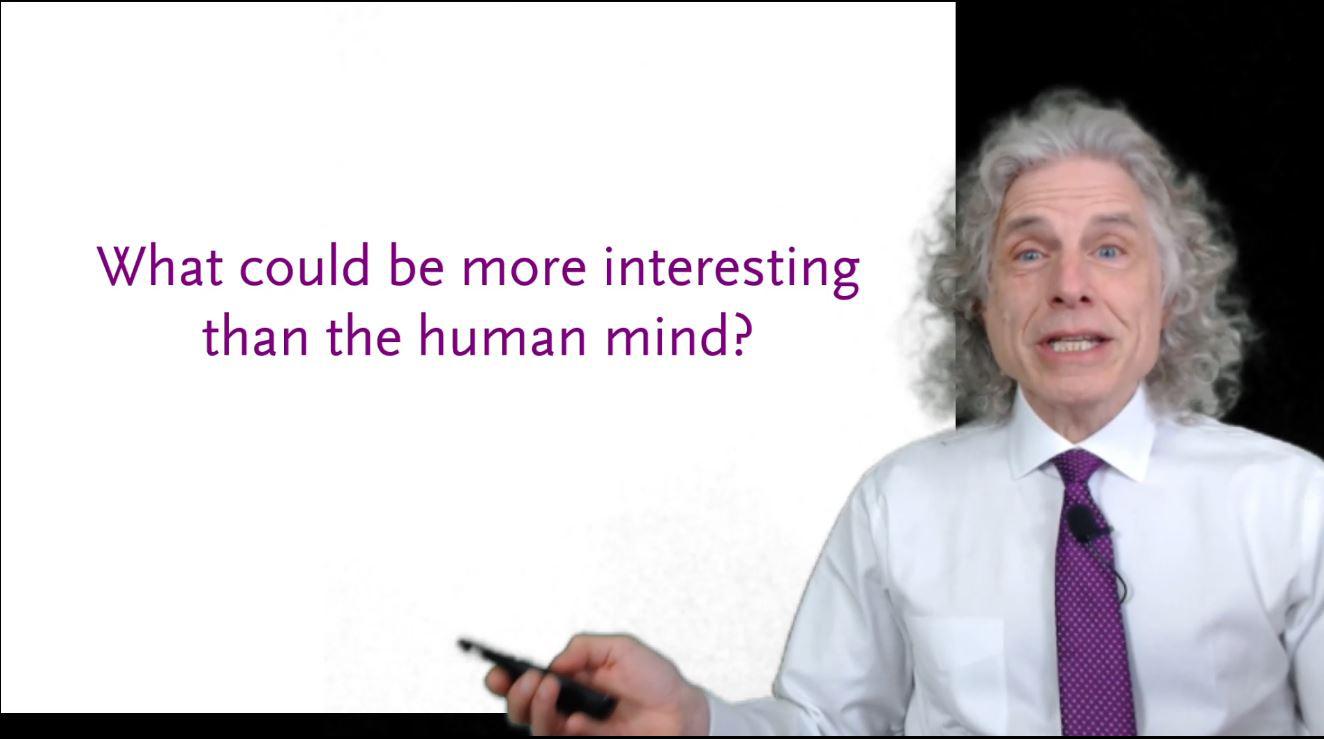











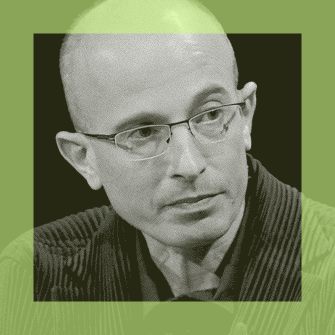


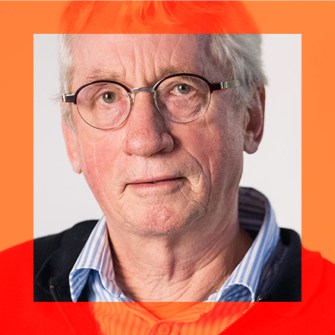

In this excerpt from his linguistics lecture for the Floating University, Steven Pinker illuminates some of the mysteries surrounding children’s hardwired ability to learn language.
What’s the Big Idea?
Language is so central to everything we are and do from toddlerhood on that unless you are a) a linguist or b) right now raising a toddler it’s easy to forget just how amazing our capacity to produce and decode speech actually is. For the most part, language just works – by some mysterious process, people all over the world absorb the complex, underlying rules of their native grammars and store a vast lexicon of words and idioms in long-term memory. Effortlessly, we share stories, make demands, manipulate and delight one another with language. Almost never does the conversation come to a screeching halt as someone reels from vertigo over this linguistic highwire act we’re constantly engaged in.
Language is so central to everything we are and do from toddlerhood on that unless you are a) a linguist or b) right now raising a toddler it’s easy to forget just how amazing our capacity to produce and decode speech actually is. For the most part, language just works – by some mysterious process, people all over the world absorb the complex, underlying rules of their native grammars and store a vast lexicon of words and idioms in long-term memory. Effortlessly, we share stories, make demands, manipulate and delight one another with language. Almost never does the conversation come to a screeching halt as someone reels from vertigo over this linguistic highwire act we’re constantly engaged in.
But the process of language acquisition is mysterious indeed, and the subject of intense, internecine quarrels among linguists. Noam Chomsky, a titan in the field, famously argued that humans are born with an “L.A.D.” (language acquisition device) – a structure in the brain that is hardwired with “universal grammar” so that a baby airlifted and deposited in any country on earth is primed to acquire the local language fluidly and rapidly. Earlier hypotheses viewed children’s minds as a “tabula rasa” – a blank slate of memory that records, verbatim, all language spoken around it. This, Chomsky and others have argued, is simply insufficient to explain children’s early understanding and creative use of the underlying structures of language.
What’s the Significance?
Babies have thoughts before they have the ability to express them, but it is language that enables us to work together. In his new book, The Better Angels of Our Nature: Why Violence Has Declined, Steven Pinker marshals an impressive body of evidence that violence has steadily declined throughout human history, and that ours is therefore the most peaceable chapter in our several million years of existence.
How is this possible? The book presents convincing statistics about the likelihood of dying by violence in different eras, and even takes into account the cataclysmic death tolls of modern wars, but the deeper questions here are how and why a significant portion of humanity has managed to “tame” itself.
If we are, on balance, a less violent, more cooperative species than when we began, language has played an enormous role in this evolution. From the “humanitarian revolution” of the Enlightenment to today’s internet-driven global integration, it is the language that enables us to share and spread transformative ideas. Our meta-examination of language has resulted in the simplified (yet powerful) languages of computers and will one day be instrumental in producing true artificial intelligence – an event that will render our world unrecognizable from the vantage point of today.
Although language is literally “second nature,” understanding how it works is the key to mastering our most valuable tool, the one that is capable of maximizing our species’ capacity for good, or for evil.
How is this possible? The book presents convincing statistics about the likelihood of dying by violence in different eras, and even takes into account the cataclysmic death tolls of modern wars, but the deeper questions here are how and why a significant portion of humanity has managed to “tame” itself.
If we are, on balance, a less violent, more cooperative species than when we began, language has played an enormous role in this evolution. From the “humanitarian revolution” of the Enlightenment to today’s internet-driven global integration, it is the language that enables us to share and spread transformative ideas. Our meta-examination of language has resulted in the simplified (yet powerful) languages of computers and will one day be instrumental in producing true artificial intelligence – an event that will render our world unrecognizable from the vantage point of today.
Although language is literally “second nature,” understanding how it works is the key to mastering our most valuable tool, the one that is capable of maximizing our species’ capacity for good, or for evil.
To subscribe to The Floating University’s Great Big Ideas, click here.