













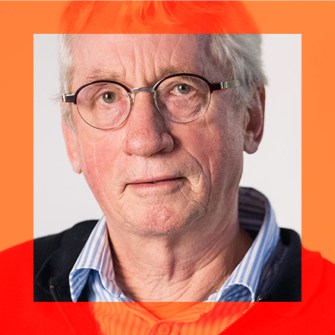

1. Reverse-engineer what you read. If it feels like good writing, what makes it good? If it’s awful, why?
1. Reverse-engineer what you read.
2. Prose is a window onto the world. Let your readers see what you are seeing by using visual, concrete language.
2. Prose is a window onto the world.
3. Don’t go meta. Minimize concepts about concepts, like “approach, assumption, concept, condition, context, framework, issue, level, model, perspective, process, range, role, strategy, tendency,” and “variable.”
3. Don’t go meta.
4. Let verbs be verbs.
5. Beware of the Curse of Knowledge: when you know something, it’s hard to imagine what it’s like not to know it. Minimize acronyms & technical terms. Use “for example” liberally. Show a draft around, & prepare to learn that what’s obvious to you may not be obvious to anyone else
5. Beware of the Curse of Knowledge.
Interlude: Steven Pinker’s take on human nature. Is it evil?
Against chaos: The world is a hard place, but maybe humans aren’t …
6. Omit needless words.
7. Avoid clichés like the plague.
8. Old information at the beginning, new information at the end.
9. Save the heaviest for last.
Interlude: Steven Pinker’s take on libertarianism (at any age, it’s marginal).
10. Prose must cohere: readers must know how each sentence is related to the preceding one. If it’s not obvious, use “that is, for example, in general, on the other hand, nevertheless, as a result, because, nonetheless,” or “despite.”
10. Prose must cohere.
11. Revise several times.
12. Read it aloud.
13. Find the best word, which is not always the fanciest word. Consult a dictionary with usage notes, and a thesaurus.
13. Find the best word.
Want to dig further into Pinker’s writing style? Here’s the book he wrote on the subject. Enjoy!
Special Issue
Leadership masterclass: Nike, Jordan, and James Baldwin
George Raveling — the iconic leader who brought Michael Jordan to Nike — shares with Big Think a lifetime of priceless wisdom learned at the crossroads of sports and business.
14 articles