




















Search


In this excerpt from "The Story of CO2," Peter Brennan explains how changes in the Earth's ecosystem led to fire, which in turn led our ancestors to become the "fire apes."


Welcome to The Nightcrawler — a weekly newsletter from Eric Markowitz covering tech, innovation, and long-term thinking.

When you don't have enough clues to bring your detective story to a close, you should expect that your educated guesses will all be wrong.
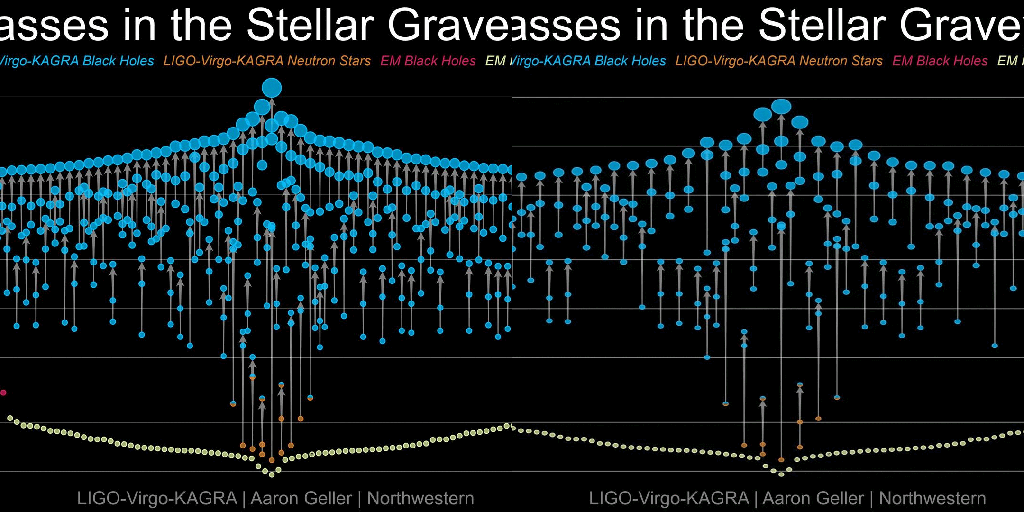
10 years ago, LIGO saw its first gravitational wave. After 218 detections, our view of black holes has changed forever. Can this era endure?

In this excerpt from "Tales of Militant Chemistry," Alice Lovejoy exposes how the need for uranium during WWII led the Allied governments to turn a blind eye to colonial exploitation.

The latest "Superman" film sets Metropolis in the First State.

MIT Sloan’s Nelson P. Repenning and Donald C. Kieffer outline their tried-and-tested solution for stubborn workflow blockages.
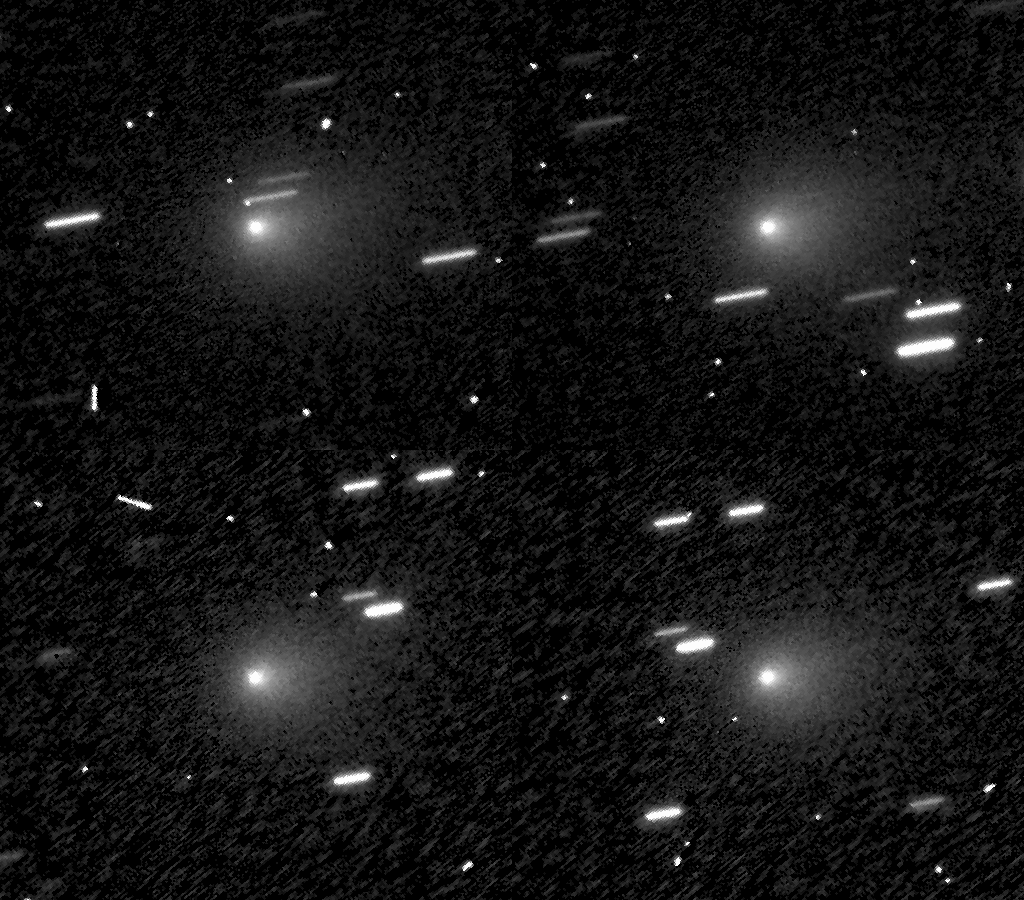
Designed to map galaxies, the SPHEREx mission's first science result is instead about interstellar interloper 3I/ATLAS. No, it's not aliens.

You are held, shaped, and sustained by a thousand invisible hands.

Venture capitalist and Flickr co-founder Caterina Fake talks to Big Think about why AI won’t make the internet better, her influences beyond tech, and more.

In our own Milky Way, a recently deceased star creates a ghostly, hand-like shape in X-rays some 150 light-years wide. Here's how it's made.

Throughout history, "free energy" has been a scammer's game, such as perpetual motion. But with zero-point energy, is it actually possible?

In “The Secret History of Denisovans,” Silvana Condemi and François Savatier trace the story of our mysterious hominin ancestor.

Welcome to The Nightcrawler — a weekly newsletter from Eric Markowitz covering tech, innovation, and long-term thinking.

There could be variables beyond the ones we've identified and know how to measure. But they can't get rid of quantum weirdness.

Sikh American scholar and historian Simran Jeet Singh on helping kids imagine — and create — a more empathetic world.
John Templeton Foundation

A conversation with neuroscientist Erik Hoel about the future of consciousness research.

“Who ya gonna believe: me or your own eyes?” Until you can assess your perception, the answer should be neither.

A conversation with Annaka Harris on shared perception, experimental science, and why our intuition about consciousness is wrong.