




















Search


We must get happiness right — even when the world around us gets it wrong.

A perfect map is as useless as it is impossible to create.

A longstanding mismatch between theory and experiment motivated an exquisite muon measurement. At last, a theoretical solution has arrived.

Propofol, a drug commonly used for general anesthesia, derails the brain’s normal balance between stability and excitability.

An analysis of Indonesian cave paintings is reframing the history of human art, though whether the paintings really were created by human hands remains an open question.

How to make sure our formative tendencies don't derail us from being the great leaders we are trying to become.

3mins
“Not only does Mother Nature not care about your happiness, she knows that we need lots of negative emotions to keep us alive.” Harvard happiness professor on why suffering IS necessary:

The all-time record is Usain Bolt's 9.58 seconds, set in 2009. What is the fastest time, ultimately, for an ideal human body?

Cats twist and snakes slide, exploiting and negotiating physical laws. Scientists are figuring out how.
Can AI-powered “answer engines” replace the 10 blue links model?

Alan Turing and Christopher Strachey created a ground-breaking computer program that allowed them to express affection vicariously when so doing publicly, as gay men, was criminal.

In "Not Born Yesterday," author and cognitive scientist Hugo Mercier makes the case that misinformation is overrated — and other human foibles are underrated.

"If you’re training an AI to optimize for a task, and deception is a good way for it to complete the task, then there’s a good chance that it will use deception."

When stuffed and staring down the last bite, you might hear your mother's voice in your mind.

9mins
Humans are among the most altruistic species that we’ve studied, due to our alloparental instincts – a trait we evolved into that allows us to care for offspring who are […]

2mins
“We wouldn’t be able to talk about minerals if it weren’t for the minerals themselves.” Mineralogist Bob Hazen explains how Earth’s rocks can teach us about our planet’s technicolor history.

The passage of time is something we all experience, as it takes us from one moment to the next. But could it all just be an illusion?

19 rooms. 1,636 square feet. 1,800 years of history.

"The movement is much bigger than Sam Bankman-Fried, or any one person, no matter how wealthy," philosopher Peter Singer told Big Think.
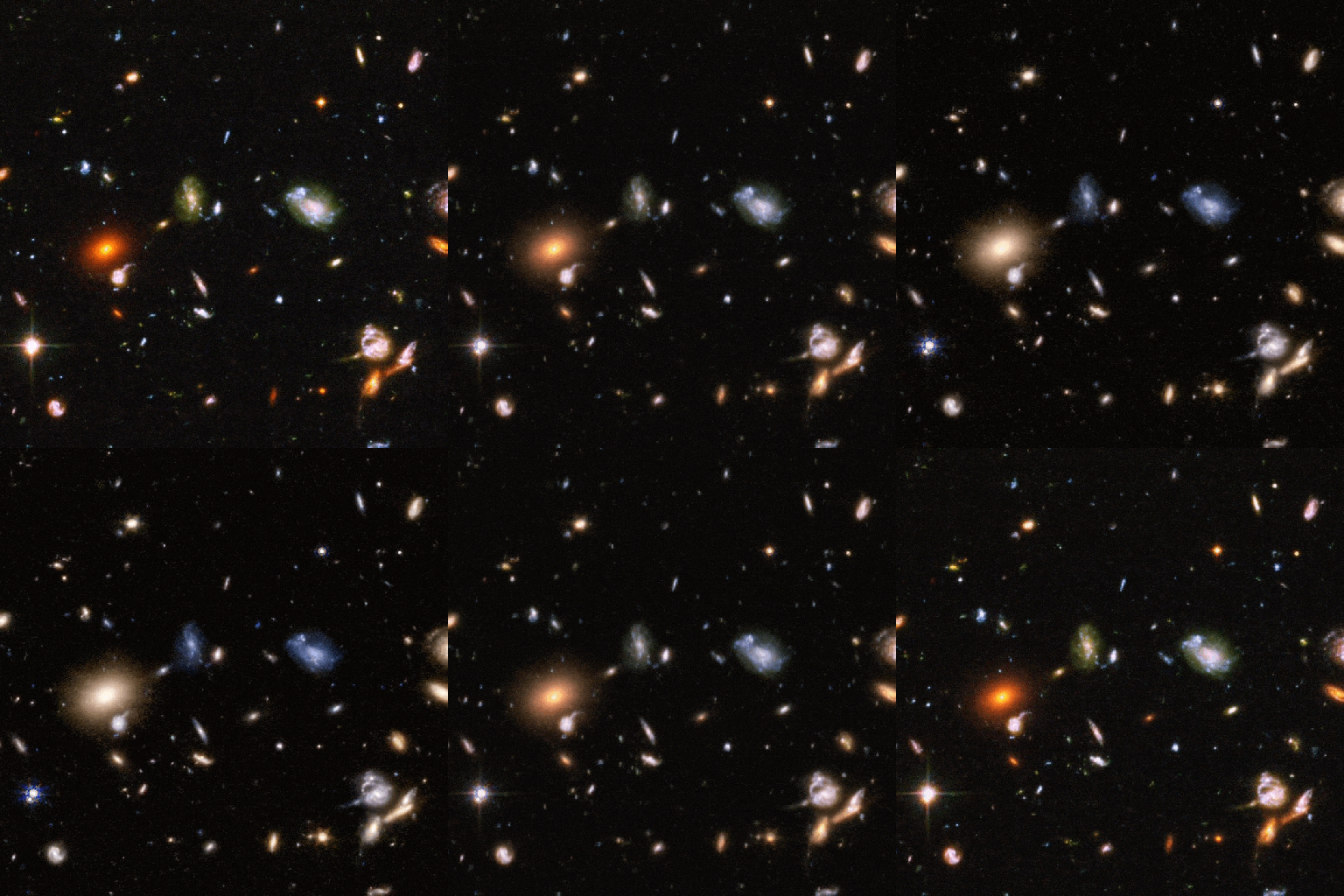
From inside our Solar System, zodiacal light prevents us from seeing true darkness. From billions of miles away, New Horizons finally can.