






Kevin Dickinson

Kevin Dickinson

A man with short gray hair and wearing a plaid shirt is seated at a wooden table in a dimly lit restaurant, smiling at the camera.

Kevin Dickinson is a staff writer and columnist at Big Think. His writing focuses on the intersection between education, psychology, business, and science. He holds a master’s in English and writing, and his articles have appeared in Agenda, RealClearScience, and the Washington Post. Follow him on LinkedIn and Twitter @KevinRDickinson.

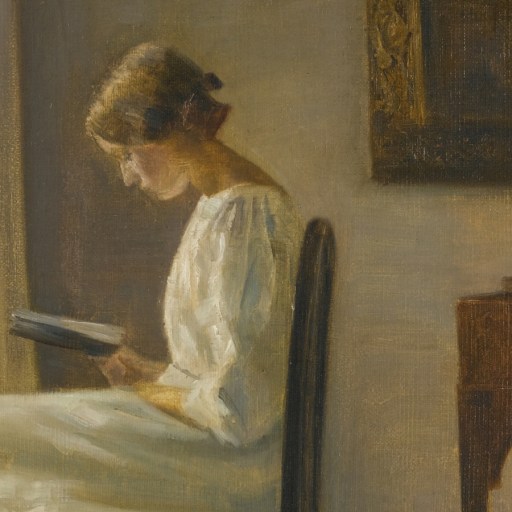
A woman in a white dress sits on a chair by a window, reading a book in a softly lit room with a piano nearby, embodying the quiet charm of why read old books.
Reading classic books can teach you as much about the present as the past.

Out-of-focus trees in the foreground with a clear full moon visible in the dusk sky, evoking a scene worthy of tristan gooley’s natural navigation.
Natural navigator Tristan Gooley joins us to discuss the philosophy of reading nature’s hidden clues — and how relearning this ancient skill can help us see the world, and ourselves, with greater awareness.
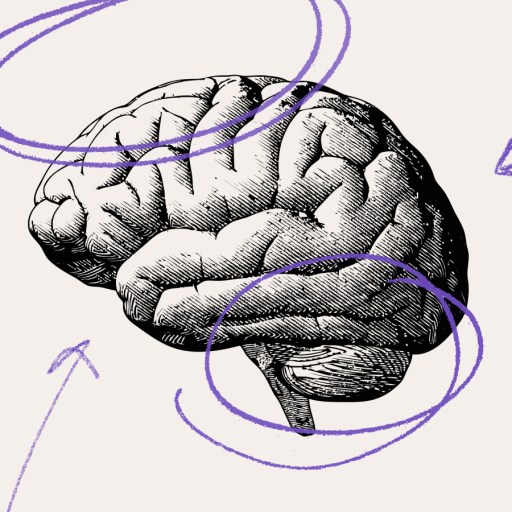
Black and white illustration of a human brain with purple scribble circles and arrows pointing toward it on a light background, perfect for those interested in books about the brain.
Neuroscientist Rachel Barr shares her favorite books on the brain and how they shaped her approach to the field.
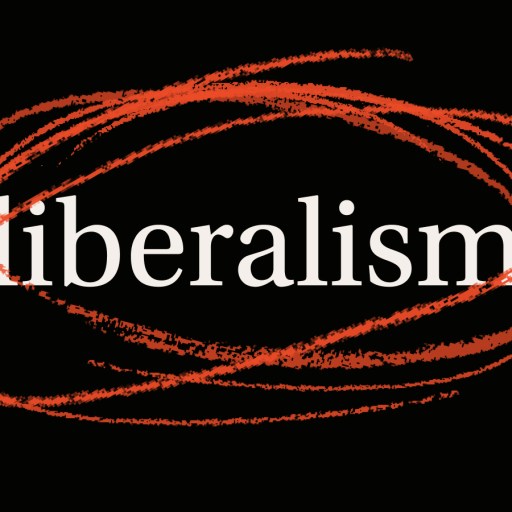
The word "liberalism" in white lowercase text is centered on a black background, surrounded by rough red circles drawn with a crayon effect, visually emphasizing the ongoing discourse on liberalism.
In “On Liberalism," Cass Sunstein argues that liberalism can only endure if we reclaim its core commitments and revive its spirit of freedom and hope for the future.
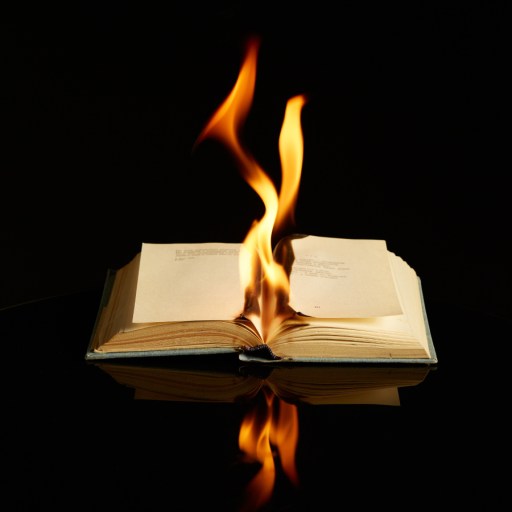
An open book, symbolizing dangerous books, burns with flames rising from its pages against a black background, its fiery reflection shimmering on a glossy surface.
In "That Book Is Dangerous," author Adam Szetela examines the rise of the “Sensitivity Era” in publishing and how outrage campaigns try to control what books authors can write and readers can read.
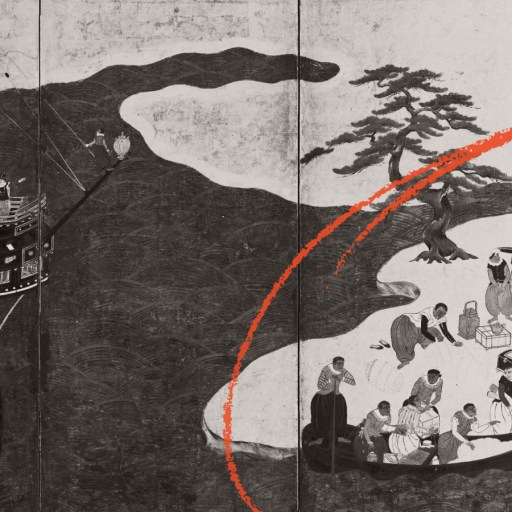
Black and white illustration of a ship at shore, with people unloading goods and interacting on land; orange arc marks part of the scene.
In the Embers series, historian M.G. Sheftall shares the stories of Hiroshima and Nagasaki’s last survivors and reveals why their testimony must endure.
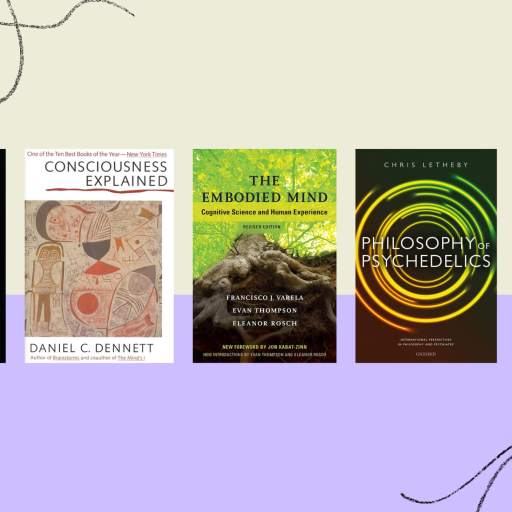
Five books on consciousness and philosophy are displayed upright in a row against a pale background with abstract black lines.
These expert-recommended books try to answer the questions of consciousness, from its fundamental nature to its role in human experience and the natural world.

A minimalist drawing of a duck outlined in white against a gradient background, with an orange star shape marking the eye, invites you to question your perception.
“Who ya gonna believe: me or your own eyes?” Until you can assess your perception, the answer should be neither.
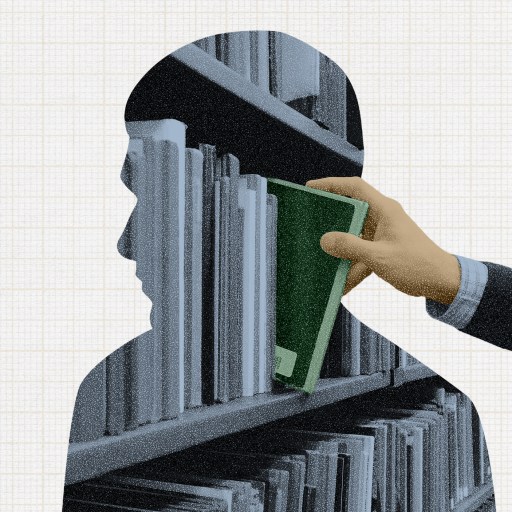
A hand pulls a green book from a library shelf, surrounded by tsundoku—the gentle art of collecting more books than you can read—with the silhouette of a person formed from the bookshelf and books.
The Japanese practice of "tsundoku" bestows joy and lasting benefits to those who make books an important part of their lives.
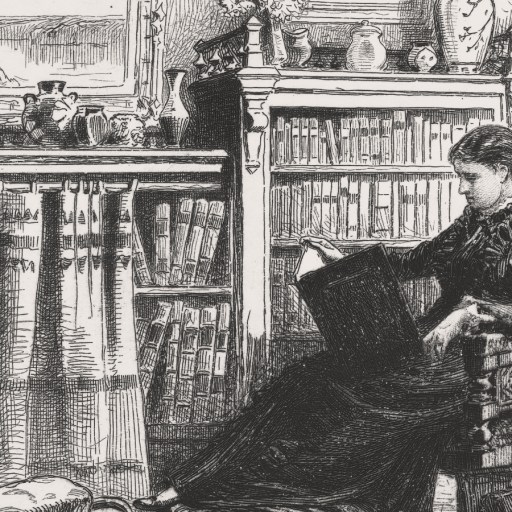
A woman sits in a Victorian-style room, reading a large book of classic books. She is surrounded by bookshelves, decorative objects, and a curtained window letting in natural light.
These short books offer insights and meditations on timeless themes, without the time commitment.
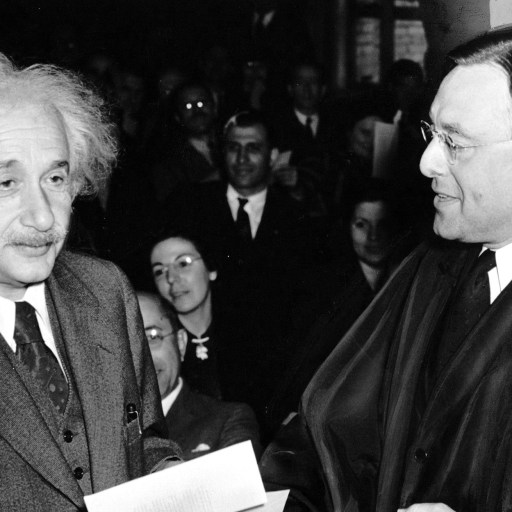
An older man with white hair and a suit receives a document from another man in a robe during an event, as several people look on in the background. In the age of viral misquotes, capturing such moments accurately becomes ever more crucial.
From Einstein to Twain, Garson O’Toole investigates the truth behind your favorite — and often misattributed — quotes.
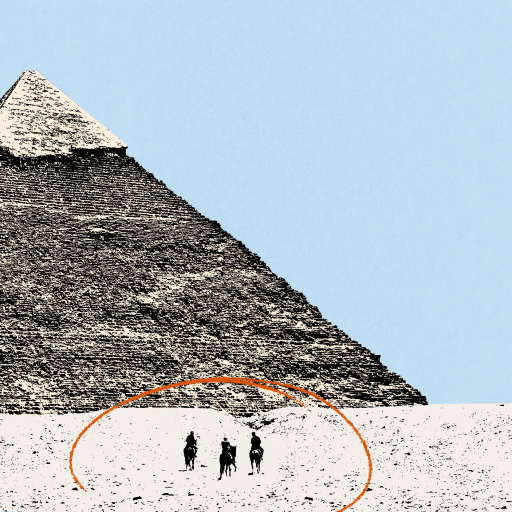
A pyramid stands in a desert with three people in front, evoking experimental archeology; a modern McDonald's restaurant is visible in the background on the right.
In "Dinner with King Tut," Sam Kean examines how a burgeoning field is recreating ancient tasks to uncover historical truths.
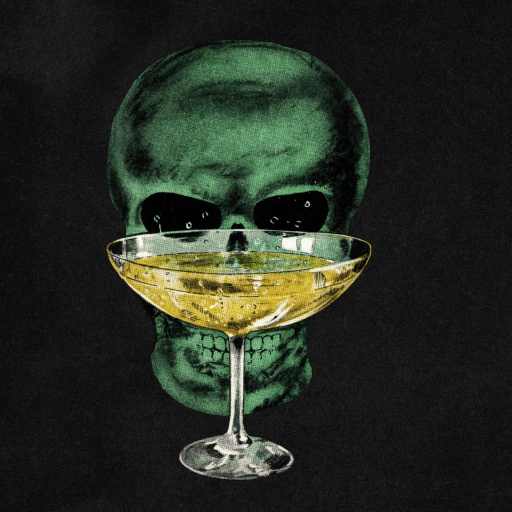
A green skull in the background appears to stare through a glass of champagne centered in the foreground, evoking Agatha Christie poisons, all set against a black backdrop.
Kathryn Harkup, chemist and author of V Is for Venom, joins Big Think to discuss why Christie isn’t just a brilliant writer but a unique science communicator.
A man in a suit looks at the camera with a neutral expression, set against a light green background with abstract black scribble accents.
With "Karla's Choice," Nick Harkaway had an impossible mission: maintain his father’s legacy while staying true to his voice.
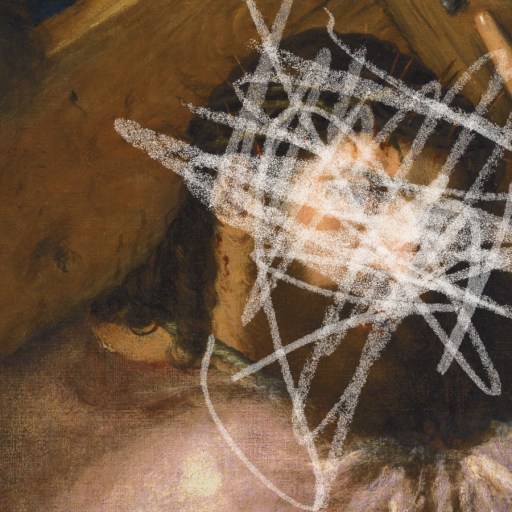
A classical painting of the historical Jesus carrying a cross, with his face obscured by white scribble marks.
The Gospels aren’t historical biographies but genre-defining works that blend myth, theology, and a promise of hope.
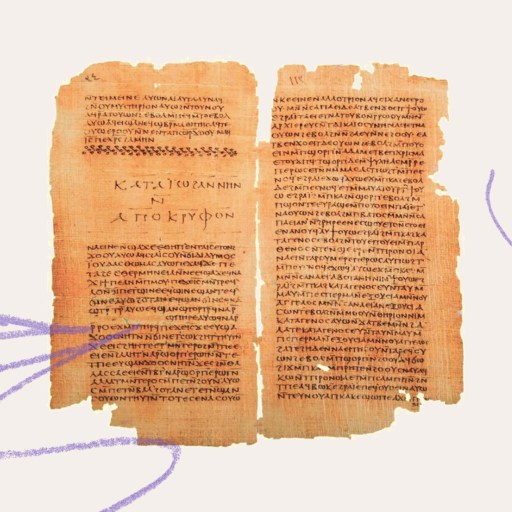
A photograph of an ancient manuscript with Greek text, displayed on a plain background with abstract purple lines drawn around the edges.
Experts and Big Think writers recommend their favorite reads for diving deeper into the history and perspectives found in the Book of Books.
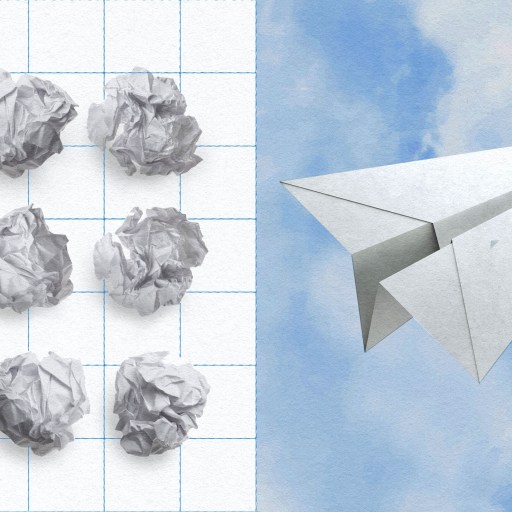
A failure of a paper airplane constructed from crumpled paper.
“It is natural to want to avoid failure. But when we avoid failure, we also avoid discovery and accomplishment."
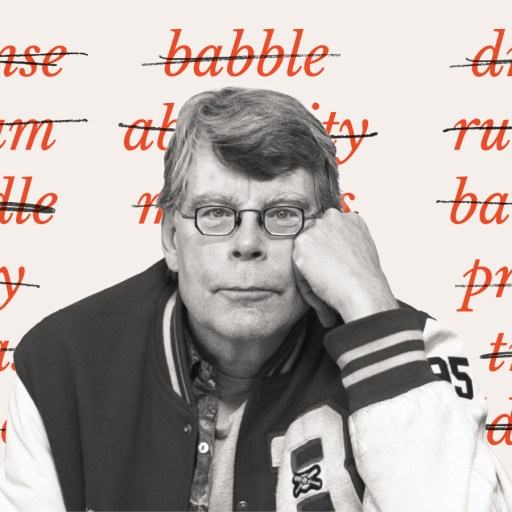
A man sits with his head resting on his hand, surrounded by crossed-out words like "nonsense," "babble," and "rubbish" in red text.
A thesaurus isn’t for finding fancy words; it’s a resource to help you keep your rhythm.
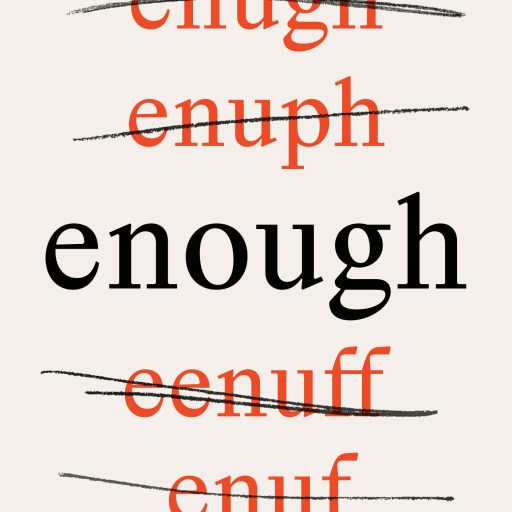
The word "enough" stands boldly in black at the center, with incorrect spellings like "enugh," "enuph," "enuff," and "enuf" crossed out in red above and below, subtly highlighting the quirks of English spelling.
In "Enough Is Enuf," Gabe Henry traces the history of simplified spelling movements and the lessons they teach us about language.
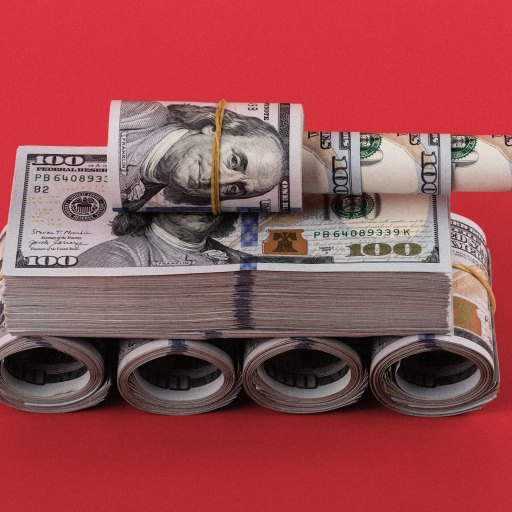
A miniature tank made from rolled and stacked U.S. hundred-dollar bills is displayed on a red background.
By weaponizing the global economy, the U.S. initiated a new era of economic warfare and transformed how major powers compete.