














Search
Megan Erickson
Associate Editor, Big Think
Megan Erickson is an Associate Editor at Big Think. Prior to Big Think, she taught reading and writing to ninth and tenth graders in NYC public schools and tutored students of all ages at the Stuyvesant Writing Center, which she helped launch. In her spare time, she worked in the communications department at the Center for Constitutional Rights and served as a mentor at the Urban Assembly, where she designed and led an extracurricular civics course on grassroots community action. She’s written on education, small business, and the arts for CNNMoney, Fortune Small Business, and The Huffington Post. Megan received her master’s degree in Education from Teachers College. You can reach her at megan@bigthink.com.
Read Less

What’s the Big Idea? As the K-12 school year starts up again in full force, it’s worth asking: are American public schools really failing? According to the measure set by […]

What’s the Big Idea? Hey, did you know that sex improves your self-esteem? It’s also linked to increased bladder control, reduced depression, fewer colds, pain-relief from the rush of oxytocin […]
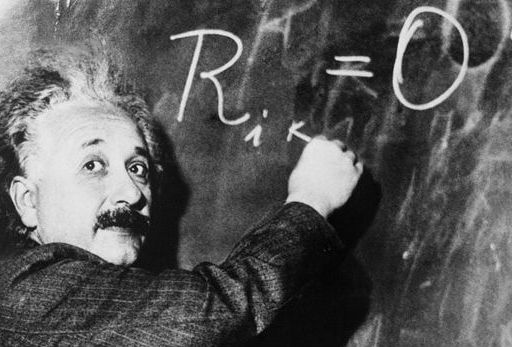
What’s the Big Idea? The Internet has a terrible habit of misquoting Einstein on energy and creativity until he sounds like he’s the author of The Secret, not the theory […]

What’s the Big Idea? Love your best friend? Good. Chances are you’re unconsciously emulating her. As humans, we all engage in mimicry, says Harvard physician and sociologist Nicholas Christakis, and […]

What’s the Big Idea? A few milestones in the short but storied history of machine translation: in 1939, Bell Labs presented the first speech synethesizing device, the Voder, at the World’s Fair in New York. […]
What’s the Big Idea? It started with furniture, Kip Tindell remembers. When the Dallas-based entrepreneur set out with his partners to launch a venture in 1978, the idea was to sell […]
What’s the Big Idea? Isaac Newton defined the optical spectrum, but it was Goethe who first understood that color is more than just a physical problem. In Theory of Colours (1840), the German […]

Through luck or sheer force of will, these seven former interns all managed to make it from paper-pushing, truck-loading, and (literally) shit-shovelling to the very top of their fields. Many went […]
In 1990, Kate O'Connor was the aide for the lieutenant governor of a small, largely inconsequential New England state. Fourteen years later, when Howard Dean became a front runner for the 2004 Democratic presidential nomination, that job -- her first -- suddenly changed.

A dramatic worldwide shift from defined benefit to defined contribution plans has also given employees the ability to take planning into their own hands. But with this freedom comes a confusion: What's the role of the employer versus the role of the employee in all this?

On a late winter day in 1922, the sound of a gun shot resounded with a loud boom in the hills surrounding the house of three-year-old Edgar Curtis. The sound itself wasn't out of the ordinary, since the Curtises lived near a firing range. What was extraordinary was the question the boy turned to ask his mother: "What is that big, black noise?"
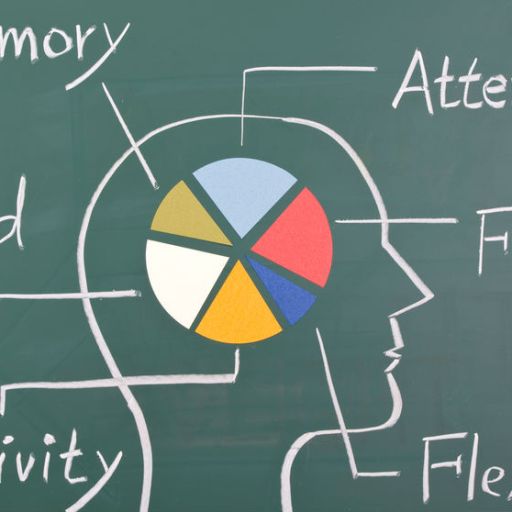
What’s the Big Idea? Forget coffee and crosswords. If you want to supercharge your brain, you have to change your lifestyle. But only a few things about it. Here, we lay […]

Even the smartest people make irrational choices, says Daniel Kahneman, a Nobel prize-winning psychologist. Here's why -- and what you can do about it.
The future is a difficult thing to grasp, and not just because we can't see it. Bringing innovation to life requires imagination, resourcefulness, the sort of limitless creative ambition we today associate mainly with science fiction writers.
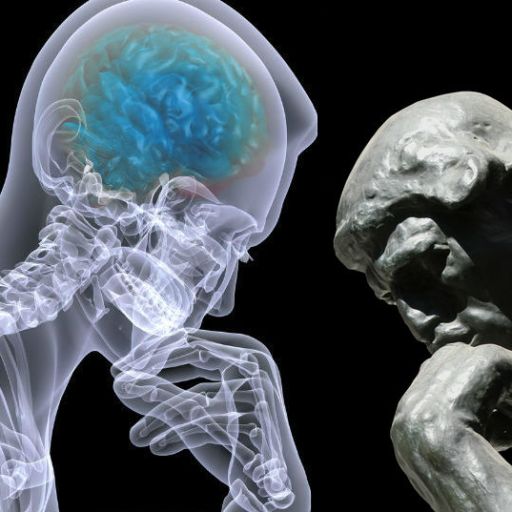
Reductionists believe that memories, emotions, and feelings can be broken down to nothing more than interactions between brain cells and their associated molecules. In other words, "you" are your brain.

What’s the Big Idea? The 17th-most cited economist in the world, a Nobel laureate for his work examining global wealth concentration and international trade, and the inspiration behind a viral Youtube […]
What’s the Big Idea? Philosopher Slavoj Žižek is fundamentally anti-capitalist, and yet, the man who describes himself as a “complicated Marxist” also expresses palpable irritation at the idea that capitalists are […]

What’s the Big Idea? In the U.S., the weekends sandwiching the 4th of July are the most popular travel time of the year. The cherries are ripe, the pool water is swimmable, and […]

What’s the Big Idea? Perhaps the better question is, do humans speak dog? Either way, the debate over whether language is unique to humans, or a faculty also possessed by […]

What happens when you do make it to the top of your field, only to find that it’s not exactly what you’d expected or been told to expect?