













Search
Simon Oxenham
The best and the worst of psychology and neuroscience
Simon Oxenham covers the best and the worst from the world of psychology and neuroscience. Formerly writing with the pseudonym "Neurobonkers", Simon has a history of debunking dodgy scientific research and tearing apart questionable science journalism in an irreverent style. Simon has written and blogged for publishers including: The Psychologist, Nature, Scientific American and The Guardian. His work has been praised in the New York Times and The Guardian and described in Pearson's Textbook of Psychology as "excoriating reviews of bad science/studies”.
Follow Simon on Twitter
Like Simon on Facebook
Follow Simon on Google+
Subscribe via Email
Subscribe via RSS
Contact Simon directly by Email
Read Less
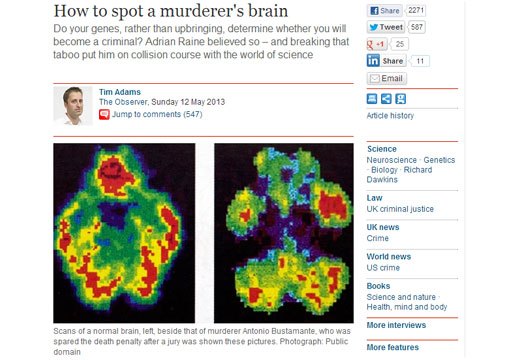
Update 13/05/13 12PM: The Guardian have now corrected the article to place David Eagleman’s quote in appropriate context. 1.55PM: The paragraph has now been cut completely with the following note “A paragraph that […]
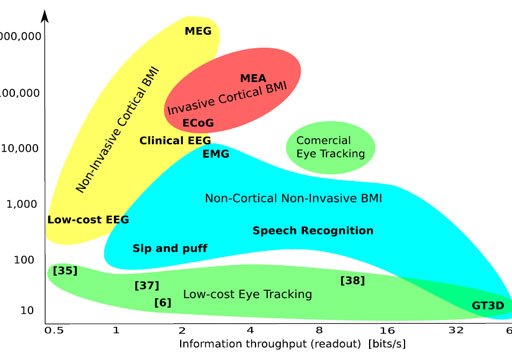
There has been much focus over recent years, on brain machine interfaces (BMI) allowing for the direct control of a computer by electrodes placed on or near the brain. Unfortunately […]
Last week a paper ($) was published in Nature Reviews Neuroscience that is rocking the world of neuroscience. The crack team of researchers including neuroscientists, psychologists, geneticists and statisticians analysed […]

Last night Ben Goldacre appeared on BBC Newsnight (viewable from UK ip addesses or portals only, for the next 7 days) discussing the ongoing havoc caused by the MMR scare in […]
The latest edition of the manual psychiatrists use to assess patients has gone through a major and controversial set of changes.

With terrorism at the forefront of public consciousness, it is easy to let civil liberties slip off the radar. This is unfortunate, if we learned anything from the classic psychology […]

The Center for Perceptual Systems at The University of Texas at Austin has just released a free web-app that will denoise and enlarge photos in a heartbeat to an extent […]