




















Search
Neuroscience
6mins
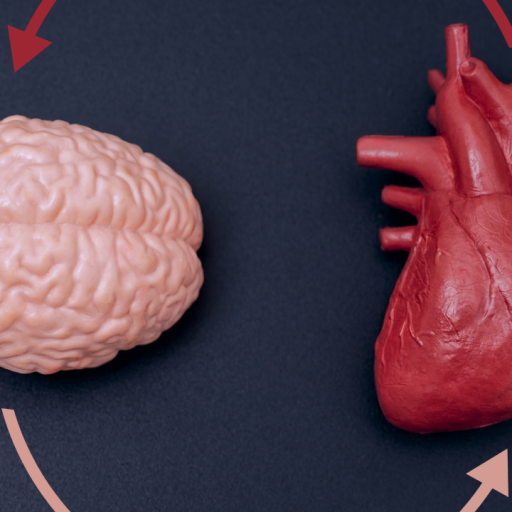
You've heard of the mind-body connection. But have you ever actually tried to understand your own? Three scientists break down the feedback loop running your brain and body — and what becomes possible when you learn to use it.
Unlikely Collaborators

Your energy doesn’t work like a battery — and treating it that way may be why you still feel tired even after a break.
6mins
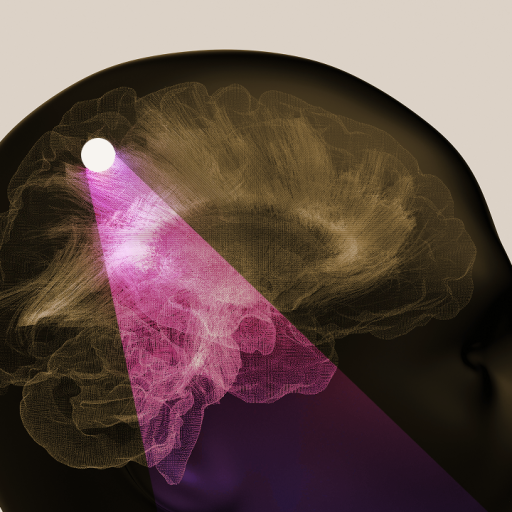
The voice in your head feels like your own, but it’s actually constructed by neurological processes. Three experts explain how this system shapes both perception and identity.
Unlikely Collaborators

Your sense of self isn’t located in a single part of the brain — it emerges from a complex interplay of cognitive processes that change over time.

4mins
Have you ever woken up after a dream and thought to yourself, “That made absolutely no sense”? According to modern neuroscience, there’s a reason why dreams feel so abstract and bizarre. Two sleep experts discuss.
Unlikely Collaborators

Howard Gardner joins us to reflect on the theory of multiple intelligences and why the question of who owns intelligence is more important than ever.

1hr 7mins
Members
Neuroscientist David Linden sheds light on the biology behind phenomena that medicine has long struggled to explain, from voodoo death and broken heart syndrome to the placebo effect, and why grief shows up in autopsy results

Neuroscientist Christof Koch on why reflective self-consciousness separates us from intelligent machines.

By better understanding how the brain constructs pain, we may transform how we treat chronic suffering.

Members
To foster inclusive and compassionate spaces for trauma survivors, we should understand the neurology of trauma and its profound effects, as emphasized by psychiatrist Bessel van der Kolk.

In this preview, the Stanford professor muses on how emergence, arriving at complex patterns from simple parts, explains AI, brains, and life itself.

A new framework suggests that bursts of neural chaos could be the fingerprints of a conscious mind at work.

13mins
Jim Al-Khalili introduces the technologies emerging from the second quantum revolution.

18mins
Abigail Marsh unpacks what defines psychopathy, how it differs from antisocial behavior, and why terms like “sociopath” only add confusion.

When people born blind gain sight, the hardest part isn’t opening their eyes — it’s teaching the brain how to see.

19mins
"I call it a tyranny of attention because there's so many demands on our attention coming from so many different directions that we are simply overwhelmed and we don't have the mental bandwidth to cope with it."

The “dystopian” biotech imagined in these novels is now changing real lives for the better.

Technology, shifting rules, and human ambition push athletes beyond biology’s perceived limits.

Books don’t just stimulate the mind — they trigger physiological changes throughout the body.

Sixty years ago, a little-known philosopher challenged how science understands life. His perspective is finding new relevance in the age of artificial intelligence.

By treating the human body as an information system, scientists are using AI to simulate cells, visualize hidden biology, and detect disease at its earliest — and most preventable — stages.
Biohub

Moltbook is a social media site built for conversation — but not for humans.

53mins
Members
“Our conscious awareness is everything. And the fact that it's still so mysterious to scientists and to all of humanity, the fact that it's still one of the great unsolved mysteries makes it something that everyone can be excited about and that inspires awe in everyone.”

1hr 23mins
Why social media is the perfect recipe for kids to become addicted to their smartphones.

Many top performers start behind — and overtake the early leaders later.

Elite athletes train their “quiet eye.” What happens if the rest of us do the same?

The Stoic philosopher argued that most of life is outside our control — but the little we do control defines who we are.

Researchers built a model that behaves like a brain. Without being trained on neural data, the model produced a peculiar signal — one that was later discovered in actual brain activity.

These cultural lies make normal struggle feel like failure. A habit of experimentation makes it feel like progress.

7mins
Members
We tend to trust our intuitions about consciousness because they feel immediate and personal, but feeling convinced is not the same as being right. Annaka Harris explores what happens when […]