




















Search
David Ropeik
Retired Harvard Instructor, Author

David Ropeik is an award-winning broadcast journalist, a Harvard instructor, and an international consultant in risk communication and risk perception. He’s also the author of How Risky Is It, Really? Why Our Fears Don’t Always Match the Facts.
Read Less

The evidence that pollution causes cancer is weak. Lifestyle factors, like smoking, obesity, and alcohol, matter far more.

Radiophobia had the Fukushima region by the throat, so it was decided that all 360,000 or so children and teens would be offered screening for thyroid irregularities.

We over-worry about terrorism when the latest attack makes news, and grow complacent when the headlines fade, and both our excessive and insufficient fears create risks all by themselves.

We are far more worried about the problem of parents not vaccinating their kids than low general vaccination rates for flu, which will sicken and kill way more of us, including WAY more kids.
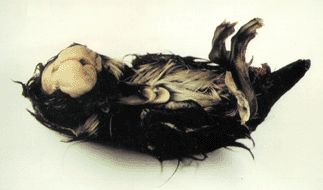
Yet another analysis of the dangers of mercury feeds fears that aren't supported by solid evidence. Fanning false fears hurts people.

Advocates masquerading as scientists to try and establish credibility for biased claims do the public, and science, serious harm. And journalists who fail to call them out and report biased studies as fact compound the damage.

2mins
Which team you support tells others about your background and where your history lies. And the superstitions we obey in support of our team are a classic example of tribal loyalty.

An unfamiliar new threat that harms babies, that we can't protect ourselves from, that experts don't fully understand, and about which the media is blaring loud alarms; Zika virus has several powerful emotional characteristics that make any potential danger feel much more dangerous than it might actually be.

Super Bowl season illustrates a deep part of who we are, not just as sports fans.

The Campbell Soup Company says it will go ahead and label foods that contain GMO ingredients, breaking industry ranks on the issue holding up wider adoption of agricultural biotechnology.

The battle over gun control is really about fear.

Living longer, but worrying more. Why?

There is a lot of hypocrisy in the way Naomi Oreskes attacks four renowned climate scientists.

Insufficient commitments to carbon cuts, and a process to encourage deeper cuts that is only voluntary, are bad news for our future.

When we're worried, identifying with our in-groups feels safe. Demonizing others feels reassuring.

The Second Amendment is “... not a right to keep and carry any weapon whatsoever in any manner whatsoever and for whatever purpose.”

Lack of deep personal public concern about climate change limits the politically difficult actions governments are willing to take.

When we fear, we band together, and more readily treat people in other tribes as the enemy.

Coming together after a tragedy is equally tribal as causing the tragedy in the first place.

Why are we ready to hold big corporations legally liable for lying, but not all the other advocates whose manipulation of the truth does society real harm!?