This content is locked. Please login or become a member.







Over the last 15 years, data on ancient DNA has upended the old story of human history. In this full-length interview, geneticist David Reich explains how new findings have challenged the family tree model of ancestry and revealed a past shaped by migration, interbreeding, disappearance, and constant change.
From Neanderthals and Denisovans to the myths of purity that still shape modern identity, Reich shows how the last decade of research has rewritten what we thought we knew about human origins. The result is a much stranger, more dynamic picture of the human story, one that forces us to rethink ancestry, evolution, and the deep history of who we are.
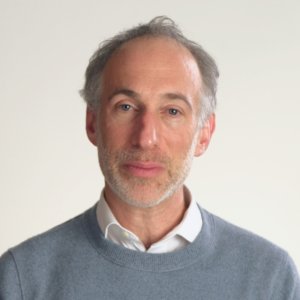
DAVID REICH: When you send your DNA to a direct to consumer ancestry testing company, you might get back an answer like you're 15% Irish and your 30% Nigerian and you're 20% South Asian or something like this. And what you're being told is an answer that's related to a very specific moment in time. But if you ask a question about another time, 80,000 years ago, you can ask another question. What are your ancestral components? And the thing that just comes clear from ancient DNA is that the people who lived in any one place a thousand years ago and 5000 years ago are almost never directly ancestral to the people who live in that place today. My name is David Reich. I'm a geneticist at Harvard University, and I work on learning about the past and the future, using DNA extracted from ancient human remains.
Ancient DNA is really a remarkable technology. There was no data of any real meaning before 2010. And at that time, we simply could not look at DNA from the bones of people who lived in the past and compare them to each other and people who live today. So really, all we could do was to speculate about how people who lived at any one place in the past related to other people and to people today. And there was a reasonable set of hypotheses that people had about about the history of our species and how it spread around the world. And that hypothesis was, to a large extent based on the idea that people spread in a simple way, moving from one place to the other out of an origin in Africa, maybe 50 or 60 or 70,000 years ago, spread to different parts of Eurasia and eventually to Australia and to the Americas. And once people got to a place, people pretty much stayed there without much change afterward. So then after 2010, it became possible to lift the veil on the data and see whether that was true. And what was really amazing was every time we got data from a place that we haven't seen, the results were surprising and new and made and different from what we expected, different from what I expected. The biases I had coming into this work in 2007 had just become cheap enough to generate genome scale data from lots of people living today. Today, this is routine, but at the time it was at just the price threshold had just been crossed and it made it possible to do this. So we were very excited to be also just studying how people today related to each other. I was working mostly on medical genetics and trying to learn about risk factors for disease, and especially in African-Americans and Latino populations who are populations of recently mixed ancestry from Native Americans and Europeans and West Africans in the last handful of generations. Then I got invited to participate in the analysis of the DNA that was being produced from ancient Neanderthals, ancient, archaic humans. So we got brought onto that consortium, which was this sort of amazing group of people working together to analyze this very, very special data. I thought, this is the best data in the world, and I want to spend my own time analyzing it. So I changed everything I did, and it was completely clear that this data was revolutionary. We would be able to see how people who lived, 70,000 years ago, 50,000 years ago related to people living today. And these were very special people. These were, people whose skeletons were very different from many people living today. And we could ask all sorts of questions about when they separated from each other and maybe, maybe did they even mix with people as modern humans spread into the territory these people were living in? So it was an incredibly exciting thing to do. And the results were even more exciting than we could have anticipated, because when we came into this work, we had this bias. I've had so many biases entering the different projects I've worked on. We had this bias that modern humans, as they spread out of Africa, had not mixed with the archaic humans they encountered, like the Neanderthals that had been the approximate finding from analysis of modern DNA. There wasn't really very strong evidence that there was an archaic component in Non-africans little hints here or there, but mostly it looked like a simple out of Africa spread. And so nobody really thought that there was good evidence for, archaic humans having mixed with non-africans during the spread. But then when we looked at the data, there was very, very clear evidence that Neanderthals that we were sequencing from Europe were more closely related to people outside of Africa today than people inside Africa today. And then we kept trying to make this result, try to go away, and it just wouldn't go away. And we looked at it in several different new ways, with completely different types of ways of analysis. And it just got stronger and stronger. And it became absolutely clear that as modern humans moved out of Africa, they mixed with the local archaic population, and about 2% of the DNA from Non-africans today comes from these archaic humans. And that was just the first of many, many surprises that comes out of this ancient DNA revolution. Really. In 2010, the same year that, we published this paper on the Neanderthals, we got DNA from another archaic human in Siberia that we completely had not expected at all. It was a pinky bone from a little girl, and it had no other skull or big morphologically informative parts to it. And we got a high quality genome sequence from it, and we could see how it was related to Neanderthals and to modern humans. And it was not either. It was something else. So we didn't even know there was another group of people living there. But this was another group, and these people, amazingly, had also mixed with modern humans, but different modern humans. So people living in New Guinea, for example, derive maybe 4% of their DNA from these, what we call Denisovans. After the cave, they were discovered. So again and again, when we get DNA from a place we haven't haven't gotten DNA before, we see these surprises because the world is so full of of of history that we didn't know about before, and it just shows us how little we knew before and how little we still know. The truth is that the world's a mystery, and that we've carved out areas of clarity.
Sometimes the measure of when you have a new seam of important information is when when you apply this new technology to topics that it's not been applied to before, things are just consistently new and surprising. We had the skeletons of the Neanderthals. We had a lot of knowledge about the tools they made and where they were, just where they lived. And there were lots of theories about how they might relate to modern humans, when we might share a common ancestor. And you can test those. Some of those theories are right. Many, many of them are wrong. And you can actually look at it once you have data like this. Ancient DNA is not more important than these other ways of learning about the past, like based on the tools people make or in later times, the languages people speak. But it's a quite different type of information. What's really happened is the introduction of a new scientific instrument that is able to measure things that has not been, that have not been measured before. So there have been other scientific instruments that have been revolutionary in their area, arguably more important ones, like the telescope or the microscope. So when the telescope was first invented and people peered through it, they could see planets around Jupiter, right? Or they could with the microscope, you can see whole worlds of microorganisms you didn't even know about before that were not even envisioned before. All these tiny creatures of, like, protests and fungi and all of these things with amazing structures that were not even envisioned in people's philosophies and imagination. And in the same way, when you can take DNA from people who lived in the past and compare it to each other and to people living today, you see things that you just didn't even imagine before the step migrations, the expansion of Lapita pottery culture, people of East Asian ancestry to the Southwest Pacific. Every time we get DNA from Africa from more than 3000 years ago, it's a huge surprise. You look at Malawi and south central Africa, the people there 3000 years ago, nothing like the people there today. They're a population that simply doesn't exist anymore. You look at Cameroon, which is supposed to be the homeland of the people who speak Bantu languages, which are spoken in the Congo area or in much of East Africa, or related to the languages that live in much of the West Africa. You would think, oh, this is just going to look like Nigerians or something, because that's what it should look like. Given that Nigerians look like most Kenyans and look like most people from Zimbabwe. But no, it's like a completely different population that we didn't know about before. This amazing study just came out from Libya of people who lived about 7000 years ago in the Sahara, a completely different population that we didn't know about before. So every time we get data, it's just surprising. So we developed a whole set of statistical techniques to try to interpret this data. We applied these tests to look at the Neanderthals and the modern humans and the Denisovans, and to try to understand how they might have mixed to form people living today. So it was a combination of the statistical techniques to get clear interpretation from these patterns of genetic data and this amazing new data, both from modern people and even more from ancient people. So it became clear that it would be possible to obtain super high resolution information for how people relate to each other and to people in the past, and that it was only now becoming possible to do that. And the results were not what was expected before. What happened at the end was, I think I, became very, very interested in trying to read these two areas, studies of people living today and studying of ancient DNA, and the people who were leading this work in the world were not really applying these methodologies, at all to people living in the last 20,000 or 15,000 years. But the last ten or 15 or 5000 years is when the world got to be the way it is today, when all the languages diversified, when the cultural variation that you see appears and so you can look at diverse people around the world today and try to understand how that all comes together. And so I completely retooled my laboratory. We started with a mammoth that had been dredged up, in hurricane Sandy on the ocean floor off Cape Cod so that we didn't contaminate it with human DNA and see if we could extract DNA from a mammoth tooth that had been dredged up. And then we started looking at our first human DNA, and we started working with a colleague, David Anthony, who is an archeologist and an amateur linguist who had become interested in asking how it is that the languages that are spoken across a wide swath of Eurasia come to be so related to each other languages like Sanskrit, Indic, Iranian languages, English, which is a Germanic language. Italic like Latin. Languages like Celtic, like Gaelic in Ireland, in Armenian in the Caucasus, languages that are now no longer spoken like toe Korean. That's was in eastern China, since young or Hittite and the and what's now Turkey and the Anatolian how it is that these languages came to be so closely related. So he had a theory which was that this might be related to people who lived in the steppes north of the Caspian Sea, a step culture called the Yamnaya. Who are the first people to take wheeled vehicles which, using wheels that had just been invented out onto the open steppe lands, he had an idea that they might be important in the spread of Indo-European languages, so we sequenced some bones from the Yamnaya and from their successor cultures, and also some bones from, Germany, from, a series of samples that we had covering the same time period to see whether the Yamnaya might have had an impact on the history of these people. And we got this incredible result from this data. So the incredible result was that the Yamnaya had this very distinctive ancestry that is a cocktail of, very distinctive, genetically recognizable components that are similar to what you see in Europeans today, but somehow more extreme and when you look at the farmers who lived in Europe before or 5000 years ago, for example, in Germany or Hungary. They don't have this type of ancestry you see in the Yamnaya. And then after 5000 years, it's everywhere. So it's very clear that the Yamnaya spread, powered by whatever technological innovations they have, they spread and we see Archeologically, they spread all the way from Hungary in the west to Mongolia in the east. And then somehow, even though the Yamnaya themselves don't spread, people who descend from them through cultural mixing and genetic mixing spread further. And we see after about 40, 840, 740 600 years ago, this Yamnaya ancestry appearing in each place in Europe. So we see it appearing in Germany at about this time, and it's about three quarters of people's ancestry. It gets to Great Britain a little bit. About 40, 500 years ago, the first big stones at Stonehenge go up and then within 50 or 100 years, the previous population is almost gone and it's displaced by people with ancestry from this east, from the east, it's a huge genetic impact. There was an idea that I think was common or prevalent in archeology that once the first farmers came to Europe, it would have been very difficult for anyone new to make an impact. There were linguists who thought that maybe the steppe was a reasonable place for the Indo-European languages to have spread for reasons related to language, and that sharing of words based on corresponding to technologies that would have only been invented, for example, 50, 500 or 6000 years ago. But people mostly thought that there could not have been a big spread from the steppe, because how could pastoralists herding sheep and cattle make a huge impact demographically on a densely settled farming area like Europe was, after 5000 years ago? But they did. The genetic data shows they did it, and it's the main ancestral population of Europeans throughout northern Europe and even much of southern Europe today. Something huge happened. And again, it's the kind of surprise that this field yields. So that's what happened in our work when we first started collecting DNA from ancient humans, we started seeing these transformative changes that happened radical shifts in ancestry, huge mixture proportions, often sex biased, where the two sources of ancestry that would come together in any mixture event, for example, European hunter gatherers and European farmers, or Papuans and people of East Asian ancestry in the Southwest Pacific would come together in very asymmetrical ways, with men from one group participating and women from another group participating. And this is telling you about events in the past. These were disruptive events. These were events that completely changed the people who lived in different places in the past, and often were much more extreme or different from, or completely unexpected compared to what people thought about before. And so what this has produced is an amazing dialog between genetics, which provides this unambiguous information about what happened in the past in archeology and sometimes linguistics, which provide other sorts of information. And it forces a new way of talking and discussing and thinking about these events in the past, and also gives us some kind of humility. I think about the extent to which we can know what happened in the past, because if you expose our understanding of, for example, what happened to the sun in the Southwest Pacific or what happens and, you know, 3000 years ago or 2500 years ago, what happened in Europe 5000 years ago, or 4000 years ago, what happened in our camp with archaic humans 40 or 50,000 years ago? If you expose it to a new type of information and it's so, so, so shocking, what does that mean? If we use the new type of information that we don't have at all yet, right. Like, what if we could get a new type of information, I guess would be that it would also be very surprising.
The tree of human populations that I learned when I was like learning about how human populations around the world are related to each other, has a common ancestor, maybe somewhere in Africa. That's based on early data from the 1980s, based on mitochondrial sequences, which are inherited from mother to daughter splitting into different African lineages that are represented today, and then spreading out of Africa and splitting into, like East Asians and Australians and ancestors of Europeans. And then maybe Native Americans might split off East Asians like a simple tree like that. And that corresponds to an idea that as people move around, they split, they don't really mix, and they settle in different places around the world. But the truth is from genetic data that in every one of the places I mentioned, all of those groups are profoundly mixed, of multiple, very divergent groups. So the truth is not a simple splitting from a common ancestor, but a kind of braided trellis going back into the past. And that trellis doesn't stop 50,000 years ago. It just keeps going. So as we get Neanderthal sequences or Denisovan sequences from these archaic humans and compare them to modern humans, we see that they too are mixed with different groups of people, and modern humans are mixed or have contributed to a mixture of other groups. And so there's no one time that we've been able to reconstruct where there's a single homogeneous population that's ancestral to everybody, who comes after. Rather it's some kind of constant change of some changes over time with mixtures, separations, structuring, coming back together. Some groups disappear, other groups don't. And it's just very complicated. And that's sort of the fundamental nature of who we are. It's not kind of an unusual thing. We used to be that we had this null hypothesis that no mixture occurred, and we would test that null hypothesis. And that is almost a silly null hypothesis at this point, because everybody is mixed. Nobody is pure. When you send your DNA to a direct to consumer ancestry testing company, you might get back an answer like you're 15% Irish and you're 30% Nigerian and you're 20% South Asian or something like this. And what you're being told is an answer that's related to a very specific moment in time. Basically, what you're being told is if you roll back 500 years or a thousand years, what fraction of your ancestors lived in Ireland? What fraction of your ancestors lived in West Africa somewhere? What fraction of your ancestors lived in South Asia somewhere? And we're making our best guess of that. But if you ask a question about another time 80,000 years ago, you can ask another question what are your ancestral components? And there it would not be in those particular places because those people have moved so much. But there the question will be, what fraction of your ancestors, if you're a non-African person, will live in Europe because they're Neanderthals? What fraction of your ancestors will live in sub-Saharan Africa? Because they're from the African population that expands out of Africa around that time. So it's a matter of what time, in the past you're talking about. But the way I think about it is back in time. And if you look at any one person today, you can look at all your genealogical ancestors. I have two parents. They have two parents, my four great grandparents, eight great great grandparents, 1632, 60, 428, 256, 512, etc. it gets pretty big, pretty fast and at any time depth of number of generations. Back in the past, you can ask what fraction of them lived here, what fraction of them lived there. And the thing that just comes clear from ancient DNA is that the people who lived in any one place a thousand years ago, or 5000 years ago are almost never directly ancestral to the people who live in that place today. So the strategy used by these direct to consumer ancestry and testing companies of using modern day Irish as surrogates for who lived in Ireland in the past, maybe that works in the last thousand years, but it's not even going to really work very well. 2500 years ago or 3000 years ago, because there's just too much mixing and migration. And if you look at the genetic data, what you see is there are periods of continuity where populations descend from the previous groups, but it's interpolated and separate, and every few hundred years or few thousand years by profound disruptions.
I'll give you one place where we know this particularly intensely, which is the island of Great Britain. In Britain, the whole island is cleared of people by the last glacial maximum. So that's between 25,000 to 19,000 years ago that the glaciers begin to melt. People walk across the lower North Sea, which was just a land bridge, and get into Great Britain. There's begins to be people 14 or 15,000 years ago. There's hunter gatherers related to the people on the continent. They hang out there for a very long time, until about 6000 years ago. And then farmers stream in from the continent. They are related to people who are from what's now Turkey who brought farming to Europe. They first got to Europe about 80, 500 years ago. They spread across the continent. They get to Britain 2500 years later and they are completely transformative event. So only 1% of the DNA, if that of the people in Britain after this event comes from the hunter gatherers of Britain. So if you want to ask, am I descended from, quote, man, the sort of individual who has excavated in Cheddar Gorge where cheddar cheese is made and we have their DNA and their DNA is corresponds to someone who you could genetically predict had very, very dark skin, almost like what you would expect from Nigeria or something like this. And blue eyes, like a combination that's very rare today. How much DNA do people in Great Britain have from this person? No more than 1% because of what happened. 6000 years ago. And then flash forward 1500 more years and the last big stones at Stonehenge go up. They are put up by the descendants of these first farmers. There has been continuity for 1500 years in Great Britain, and then within 100 years, those people are 90 to 100% displaced by a new stream of people coming from the continent. At this time, we now know from an area like the Netherlands associated with this Bell Beaker event. That's another 90 to 100% spread. And then wait a bit more and about 3000 years ago, there's a huge stream of people from what's now what's probably from France, probably related to the spread of Celtic languages. And that displaces half of the DNA of the Britons and then associated with the Saxon period, maybe 4 or 500 C.E., 1600 years ago, 1500 years ago. There's another third ancestry, and then there's continued flowed into Britain, after that. So if you ask the question, a white British person today and you say this person, it they feel like they're pure descendants of people who lived in Britain a long time ago. Nothing could be further than from the truth. They're like homeopathic, diluted compared to the hunter gatherers or the first farmers. And that's not unusual. Britain's actually relatively protected from the churn of people that has occurred in many other parts of the world. If you look at Hungary, it's much more extreme and even more frequent disruptions. If you look at Italy, there's many disruptions. It's not just Europe. If you look at the Near East, there's disruption after disruption after disruption. Every place in Africa, we've had data to look at. There's disruption after disruption after disruption. There are interesting, exceptional areas. There's actually seems to be an unusually high amount of continuity over many thousands of years in many parts of the Americas, which is really fascinating. But there too, there are disruptions as well. So the pattern seems to be one of for the most part, there are periodic profound movements of people coming from somewhere else, either completely displacing or mixing with the people who were there before. And this idea that any one people is somehow purely descended from the people who lived in the past and was a common thing that people thought prior to the genetic revolution, are being confronted with this data. It's really an untenable picture. It's just it's every time we look, it's not true. So the thing that I keep coming back to is that everybody is mixed, nobody is pure mixing is happening again and again in the past, and it's not something to deny or to fight against, but it's it's instead something to embrace as part of our history. The discovery that modern human ancestors, people coming out of Africa after 50,000 years ago or so, interbred with these archaic humans of Europe and East Asia, the Neanderthals in Europe and western Eurasia, and the Denisovans in eastern and southern Asia was really a shock. So it was a shock because I was part of the group of geneticists as a graduate student and in the community I grew up in that had established this out of Africa orthodoxy, that all people outside of Africa descend from a small group of non-africans who then spread around the world, didn't mix with the archaic humans are there, but displace them and spread to all the different corners of Eurasia and the Americas and Australia. So then I came into this project when I was analyzing the Neanderthal DNA of being very much biased toward finding support for that. But of course, we tested whether there was mixture and it was just the data forced our hand. It was just very clear that the Neanderthal sequences were closer to Non-africans than the Africans. And we kept trying to make the results go away. I think the results got a lot better than they otherwise would have, because we looked at it from every angle saying, well, maybe this could be because of this other theory or this other hypothesis. Maybe it's not mixture, maybe it's some kind of deeply structured modern human population that expands out of Africa, and that's explaining it. But we ruled that out, and we looked at it another way, and we ruled that out one thing after the other. And then like, we got this real sucker punch with the Denisovans, and you look at it and like, bang! It's related in a special way to people from New Guinea on the other side of the world. Right. A very tropical area, even though this bone is found in Siberia. And what's that about? And you sort of are confronted, this data and you say, I don't know anything anymore, right? Like the world is full of secrets about the past and how people are related to each other. And all my presuppositions and all my biases are probably wrong, because every time we get data from somewhere that we didn't have data from before, we turn out to be shown to be wrong. And then the subsequent data just kept showing example after example. After that, Malawi and Cameroon and the Southwest Pacific and multiple examples in Europe and different groups in Russia, multiple groups in the Middle East, you know, the different groups in North Africa, you know, multiple groups in the Americas. Just example after example, after example, after example. It just seems to be the pattern you really just get sort of clubbed over the head with the data. And you just have to change your approach to the data, the pattern that we found in each case, when we get a new ancient genome sequence is that you get a DNA sequence and you position it relative to the other sequences. You have other ancient sequences, but also modern sequences. And again and again you find that this individual descends from a mixture of at least two, sometimes more than two, ancestral populations that are related differentially to other groups you have data from. So when it's the case that every time you collect new data, you find evidence that this group is mixed, the inevitable conclusion from induction is that everybody is mixed. You know, at every time that, you know, today, you might think that people living in the Americas, North America, African-Americans and Latinos are the product of mixtures of continental divergent populations due to disruptions in the last 500 years. And I'd be the last person to say that the last 500 years have not been disruptive. But actually there's been disruptive periods in the past which brought together equally different groups of people. And this has occurred several thousand years ago in the history of Europe, and several thousand years ago in the history of South Asia. And at each place a very profoundly disruptive at work. It's not so unusual from that perspective. So once you see example after example, example after mixture, you realize that at some time depth that's just occurring all the time.
One of the puzzles, the great puzzles, in my opinion, that has been thrown up by the ancient DNA revolution, has been the one of how modern humans and archaic humans are related to each other. So we have sequences now from three very different groups of humans, from modern humans. They like people from sub-Saharan Africa, for example, and their non-African descendants, and also Denisovans and Neanderthals. We have high quality genome sequences from multiple individuals from each of these groups. As a fruit of the amazing research that's been done, and through a lot of struggle, we know about how they're related to each other. We know when these lineages split from each other, mostly, and we've identified, in addition to those split, some important mixture events. When these lineages interacted with each other at different periods of time. But the standard model we have right now is really almost hard to believe. So the standard model right now is that modern humans are a distant cousin of Neanderthals and Denisovans, who are most closely related. Neanderthals and Denisovans stemmed from a common ancestor maybe half a million years ago, which separated earlier from the ancestors of modern humans. But actually, maybe there's some alternative way of thinking about what happened that can really change our vision of the relationships amongst these groups and make it sort of the Copernican readjustment where we say, well, maybe, maybe the maybe the solar system revolves around the sun, and the Earth is a satellite of that. And maybe, maybe that's how it looks. And so I kind of feel that we're missing a trick and that there's something there, and that maybe if we come up with a different model, it will be much more plausible. And so that's one of the exciting, frontiers that I think that we're like, hopefully that maybe in the coming years, we, we as a community would make progress on Arduino is chock full of function. That's the instruction set for our bodies. We are composed of our ancestors. And if you are a non-African person, about 2% of your genes come from Neanderthals. Or in some cases, Deniece events, and they're contributing. You know, you have 20,000 genes, and if it's 2% of them, that's like 400 of them. Copies of those 20,000 genes, are going to come from these archaic humans. They do stuff. And, some of them may be adaptive and important. The context for the work that I've been a lot of my research has been focused on in the last few years, and I'm tremendously excited about right now, is to try to use genetics from ancient people to understand how people got to way that that be the way they are today biologically. So what we've done in our research group in the last few years is we've generated data on an absolutely huge number of people. So the paper that we're currently publishing has data from more than 10,000 ancient people from Europe, in the Middle East. And these individuals are from all over an all time depths up to 15,000 years ago. So the last 10,000 years, this is the time period where in Europe, in the Middle East agriculture comes in. It's a very eventful period. Culturally, it's a period of extreme population growth where people began to live differently. And we can compare the rate of evolution at the beginning of the time period to the end of the time period, and it's gotten faster. And so not only has it gotten faster, but genetic variants that were under positive natural selection before in some cases switch to negative selection. So it's a period of oscillation of natural selection. So what seems to have happened is that there's cultural change that occurs due to differences in the way people live with agriculture, living more densely, being close to animals, urbanization, other things that are changing. And they are prompting changes in the genome that are resulting in, on average, changes in frequency of the genetic variants. That might be useful for that, perhaps for people living in these new and differently challenging environments. But if you look at the individual positions that are significant in Europe, they tend to move in the same direction in East Asia, even though the histories are completely independent in this time period. And if you look at the genetic variants that are significantly Asia, they tend to move in the same direction in Europe. So it's as if these two independent experiments of nature, people who are genetically unrelated for the last 30 or 40,000 years, when pushed under similar cultural transformations, the movement to agriculture increase in population density, eventual movement to urbanism. The genome responds in the same way and accelerates in its evolution. So this is sort of a very striking pattern. It's also striking in light of the fact that a lot of the genetic literature has suggested that evolution has been relatively quiescent over a longer time scale of hundreds of thousands of years. So it seems like we've entered a period of rapid adaptation in response to profound, lifestyle changes.
One really striking pattern is a genetic variant at the tick two gene. This is a the strongest known risk factor for clinically severe tuberculosis. It occurs at a few percent frequency in Europeans today. But if you look at the genetic data, maybe 6000 or 8000 years ago, it was nearly 0%. It almost wasn't there. And then it rockets up to 9% or so in our data set about 3000 years ago under clear positive selection. And then it does a U-turn and it goes rockets down to 3% clearly under negative selection. So something maybe exposure to tuberculosis as it became and Demick might have caused it to decrease in frequency. And then something before that some other potentially immune related trait may increase in frequency. So this is an example of an individual variant whose function we know a lot about. There's also traits that we can actually that we know about because there have been genome wide association studies where tens or hundreds of thousands of people, or sometimes even millions of people, have been measured for a trait like, for example, risk for bipolar disease, manic depressive disorder. And people know what genetic variants make people more or less susceptible to these traits. There might be hundreds or thousands of individual genetic changes that measured in hundreds of thousands of people. We now have a little incremental effect on the risk for this trait. And if you put them all together, you get a moderately good predictor for this trait. Genetically better, for example, that knowing whether your sibling has the disease, for example, or better, for example, than knowing your socioeconomic sort of situation in life. So what we can do is we can take this genetic predictor of risk for bipolar disease and ask whether it's shifted over time in a way that's too systematic to be due to natural selection. So that's the test we implemented. And for bipolar disease, we see there has been a downshift over time in the clinically predicted risk for bipolar disease by a huge amount, about one standard deviation almost on the scale of modern genetic variation, which is a lot. And clearly what manifests itself today as risk for bipolar disease was negative in the past, but it wasn't negative very far back in the past because otherwise it would not been at the high, high, high frequency it was at that time. Now what was being selected is not obvious, but some genetic propensity to this has been under changed, selection over time and has shifted radically over time. So that's one of about 100 complex traits that we know about through genome wide association studies whose, change over time is very statistically significant and that we can watch evolve in this way. We're changing all the time. It's more evidence that we're changing.
What do people fear about what genetics might reveal about nature of differences across human populations? I think that part of this is ideological. So when we were working on our work and on on our studies in Europe, for example, between 5000 and 3000 years ago, and found this huge ancestry transmission associated with the Yamnaya spread in this and the cultures locally known as the Corded Wear or the Bell Beaker. And we showed that there was a huge disruption in the ancestry. I think it was very surprising in light of the discussion that had happened within the discipline of archeology for the last 80 years prior to that. And so a potted history of this is something like as follows. At the beginning of the 20th century, several archeologists had begun to dig across large areas of Europe and had done it, begun to do it scientifically, and noticed that the same types of pots appeared at what looked like at about the same time in different places. So the corded, where is a particular way of making pots and burying people with certain types of artifacts. And it appears, oh, first, in northeastern Europe and then spreads over a pretty wide area, eventually getting even to places like the Netherlands, and almost at the same time, maybe a little later, around the same time, another burial style, another way of making pots known as Bell beaker spreads, with starting in Iberia in Spain and moving northward and eastward. And together these spread over Europe. They're often called horizons as, transformative archeological change. And several people, including the German archeologist Gustav Cassano, thought that what you're seeing here is the spread of people. So there's a new people moving. They make pots in a certain way. They make other things in a certain way. They have a religion or a culture that they bring with them. And you can recognize the spread of that people through the, types of pots that they're making. And they connected this to the spread of Indo-European languages, which people had been wondering about since the late 1700s, why they were all connected to each other. And they said, maybe these are the Indo Europeans. And they argued then, the, the school, the German school argued that actually these are the end of Europeans and the homeland of the Indo Europeans is in northern Europe, the place where the Aryans are using the language of the Sanskrit and erotic epics. And this is the ancient homeland of the Germans, and the Nazi state should expand into the area that was previously occupied by the Aryan homeland and so on. So this archeology was co-opted for political purposes by the Nazis after the Second World War. There was a strong reaction to the misuse of archeology for political purposes. The justification of national claims to land, to territory, to heritage based on, reconstructions of the past and archeologists challenged the logic that had been used to argue that these horizons and similarities of parts corresponded to movements of people. They pointed out, reasonably, that people could copy from each other. For example, if you have a cell phone and you're in Korea, doesn't mean that you descended genetically or closely related genetically to the people in California who first started developing smartphones. The truth is, is that genetics is an important predictor of how people differ from each other. I think that it's something that scientists are in general scared to talk about. They want to just not talk about the nature of differences across groups of people or groups of individuals, because it's such an anxiety provoking topic. But in the species that we live in, there's so much variability across individuals that there is no sameness. I wish we were all the same. But we just have to, as experts on this topic, have a conversation about this, because if we don't do so, we're going to leave a vacuum that will get filled with pseudoscience. I think the effect of studying the nature of human history and the history and have mixture and finding who lived in the past in one place, is consistently showing that the history is not what people thought it was. That myths of purity are, almost always wrong. And I think it's generally argued against racist and nationalistic narratives and, sort of supported better, or the idea of a more, pluralistic and tolerant world certainly gives us a lot of perspective. So, for example, I think that it should give us humility about whether our story about ourselves is, is the correct story ancient DNA has disrupted a number of assumptions about who we are. Simple migration out of Africa, displacing the archaic humans who were there. That's out the door now. And it has also changed our understanding of the pattern of human evolution, as one of simple branching to one. That's definitely a trellis of a mixing. And mixing is again, over time. It's provided some little insight about the nature of how natural selection has shaped our species over time. It's showed that, for example, our genome is malleable, in response to environmental changes like the ones that have occurred in the last, ten or 15 or 5000 years. And so I think it adds understand nuance to our understanding of how our species is changing and makes it clear that it's continuing to change going forward. It sort of shows how we're all connected in myriad ways we never imagined. I think the things that have been amazing about this field has been the discovery of DNA from archaic humans, including from archaic humans we didn't even know existed before, like Denisovans, who mixed with each other and with modern humans in ways we didn't know about before, which really changes our understanding of the relationship of modern to archaic humans. So that's been, like, revolutionary in terms of our understanding of our origins. Another thing has been the ability to, learn about how the hunter gatherers of each region in the world today relate to people today, and to realize that it's almost always the case that people who are hunter gatherers in each region are not the primary ancestors of the people who live in the same region. And even the first farmers are rarely the direct ancestors of the people who live in each place today. That is the past is a really, as long as the cliche goes, an undiscovered country and is profoundly different from the one we live in today, and we can't guess at it without actually having real data about it. From the perspective of how those people relate to people today. So I think that's been another big picture result. Another big picture result has been that sex biased mixture, with men and women from different groups participating radically differently. And some of these mixture events is pretty common in the past. What this means we don't know. In some cases it's evidence of probably extreme unhappiness and displacement. So one of the examples that we know from pre-history is in Spain, about 4000 to 4500 years ago. There's a movement of these steppe pastoralists to drive people into Spain. It's about 40% of the ancestry gets displaced by people coming from the east, but 100% of the Y chromosomes come from east. These are translate so which means that the local man completely failed to reproduce. So this must be very disruptive event for the local man in Spain for a 5004 to 4500 years ago. What happened? We don't know. But you can actually see from these processes a lot about inequality in the past and about, the different participation of different groups of people and events in the past. So that's been another thing that we learn about. We learn about sort of whole patterns of, of, of living in the past that were not vivid before and that we really couldn't appreciate before.
I had, experience, I think, in the 2000 when I was giving a talk, I took to a class for undergraduates at MIT and I gave this talk about, I think, human chimpanzee evolution. So I had published this paper, which remains my favorite paper that I've ever published to date. In 2006, that compared human and chimpanzee and gorilla genome sequences. So I had just become available. These are my closest relatives and also to the orangutan sequence, which is the next closest and found evidence that the human and chimpanzee lineages initially separated maybe 5 to 7 million years ago. And then remained separate for a long time and then remixed before finally separating again. So and that either humans or chimpanzees are the result of this major hybridization event. And I remain I continue to think that the evidence for this is very powerful. In fact, it's even more powerful now than it was at the past. So I was sort of excitedly telling this class at MIT, this story and the evidence for it, and trying to convince them that they should be convinced by the evidence. And this one in undergraduate at the front, just looked me in the face at the end and say, how is this useful to me in the future? And I was like, I was like, I just didn't have a good answer. And like, I think the answer I would have liked to give is that, you know, not everything has to be justified for medicine or how it's going to improve our health or how it's going to be used to further industrial or military technology or mining or whatever, that the pursuit of knowledge for its own sake, whether it's in philosophy or in poetry or in literature or in theology or in science or in understanding cosmology, is sort of like a jewel in our crown as a species, I say. I wish I had said something like that, but I didn't say it fast enough. You know, sometimes there's value to these things and something that you do is useful. Probably this work we're doing, probably the work that my research group will have done, is doing will pay for itself in terms of its medical application because of this natural selection work, because actually, as you learn over time about how genetic change variants change over time, it's telling you about how the risk factors strategy has got to be the way they are today. And it's already clear this has relevance for understanding that. So that by itself that probably justifies that. But that's kind of like saying that the reason we should go to the moon is to like have space ice cream or whatever it is, and freeze drying or something like this, like, you know, like like there should be some value in the world to just learning about things for their own sake, without trying to have some kind of utilitarian justification for it. I think that in the end, this pursuit of knowledge for its own sake has spinoffs. And, you know, and probably my own training is that I trained in a medical genetics laboratory for part of my training. And I think it's a reflex to try to make things relevant to medicine. So I don't even think I'll be able to get away with not somehow making the connections to medical genetics and medical research. But I don't think I should need to do that. I think that some of this work is just interesting in its own right, and it's important, and it certainly has social resonance. I think it forces people to think in new ways and rethink their prejudices. And maybe that's a fundamentally good thing. I think.