This content is locked. Please login or become a member.

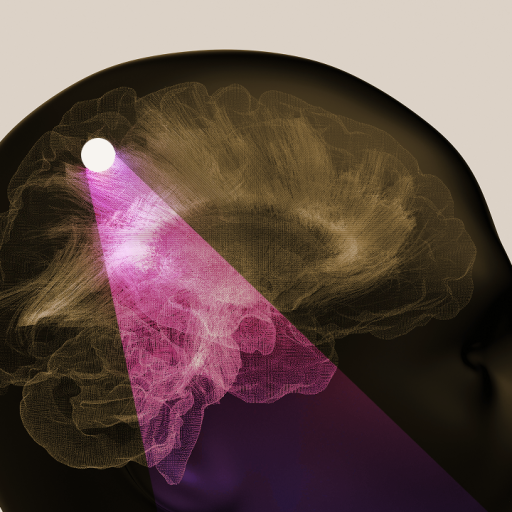
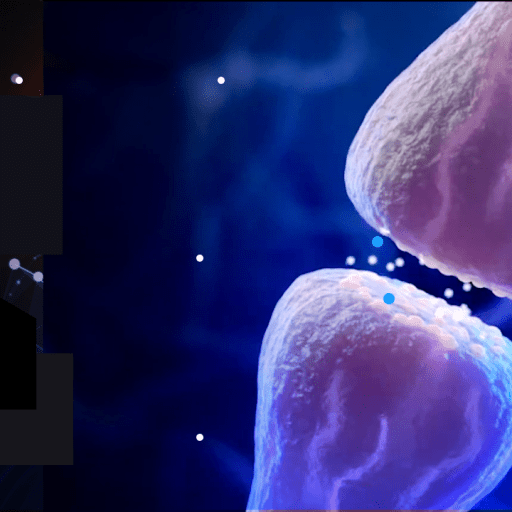
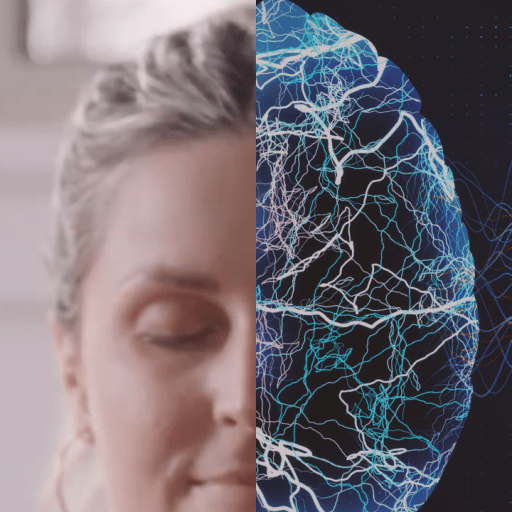












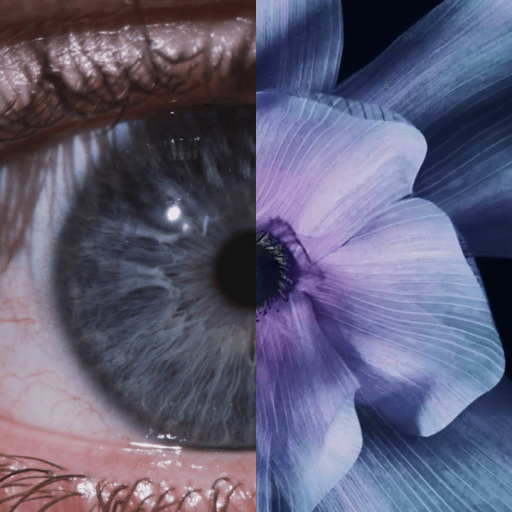
Your brain didn't evolve in isolation. It evolved to run the economy of your body, and every heartbeat, breath, and moment of thirst or anxiety is evidence of that system at work.
Neuroscientist and author Aditi Nerurkar, neuroscientist Wendy Suzuki, and neurologist-philosopher Antonio Damasio break down the science of the mind-body connection: why it exists, how it works, and why understanding it can change the way you experience the world.
We created this video for Brain Briefs, a Big Think interview series created in partnership with Unlikely Collaborators. As a creative non-profit organization, they’re on a mission to help people challenge their perceptions and expand their thinking. Often, that growth can start with just a single unlikely question that makes you rethink your convictions and adjust your vantage point. Visit Perception Box to see more in this series.
We have a brain for a very interesting reason. With the brain, we can run the economy of the body in a better way. As a result of this, there's a very tight bond between body and brain.
What you do with your body affects your brain and what you think with your brain also has an effect on the physiology of your body.
Your mind-body connection is working in the background like gravity. It's all around you, it's happening to you all day, all night, but you're just not aware of it. Butterflies at falling in love. Your face flushing at an embarrassing moment. These are all experiences of your mind-body connection at work.
And so the idea of mind and body comes from that very peculiar relationship.
Throughout evolution, you have organisms that are bodies without brains, and they do a pretty good job of running their economy and running their life. However, with the brain, you have the possibility of constructing maps of our own organism. And of course those maps exist for a very simple reason. You need the maps in order to portray the structure of the body, portray the state of the body so that the brain can construct a response and generate some kind of corrective action.
Take for example, what happens if the level of water is diminishing. Because, for example, you took a meal that was very salty, you will very rapidly develop a thing called thirst. Now, thirst is a very conscious expression of the fact that there are sensors going like crazy, saying, "Water too low, water too low, water too low, make a correction." And then you go and drink. So what is happening is that the body itself is being the translation service that will allow the outside world to come into the brain. The body is constantly the broker.
So there's this beautiful way in which the brain through its mind operations creates maps of its own organism, some of which are so complex that will actually be mapping the outside world that is peripheral to that organism.
The reason your breath is such a great first step in understanding, tapping into, and then influencing your mind-body connection is because your breath is the only physiological process in the body that is under both voluntary and involuntary control. So you and I can sit here and we're just hanging out and talking and breathing without thinking about it. That's involuntary control. Or you can modulate your breath and do certain breathing exercises. That's voluntary control.
Your heart can't do that. It just beats as it does. Your digestion can't do that. Your brainwaves can't do that. So you can use your breath as a way to tap into your mind-body connection to understand it, and then later influence it to serve you.
This is a three-second exercise. Stop, breathe, and be. The instructions are in the name. The first thing you're gonna do is no matter what you're doing, you're just gonna stop. Take a beat and take a pause. Next, you're going to breathe. Take a deep breath in and out. And then you're going to be. Just ground yourself in the here and now in the present moment.
Your brain and your body are in constant communication and inextricably linked. What's good for your body is good for your brain and vice versa. And when you do better, you feel better.
Physical activity is the most transformative thing that you can do, not only for your body, but for your brain as well. Every single time you move your body, you are giving your brain what I like to call a wonderful bubble bath of neurochemicals: dopamine, and serotonin, and noradrenaline, and endorphins. And that's really key to the mood-boosting effects of exercise.
But it also includes what's called growth factors that can actually help grow and strengthen two key brain areas. One is the hippocampus, critical for long-term memory, and the second is the prefrontal cortex, critical for your ability to shift and focus attention. In fact, we know that even 10 minutes of walking can improve our mood, decrease depression and increase focus.
Move more, it'll benefit your body and your brain.
Mind is not something disembodied, it's something that is, in total essential intrinsic ways, embodied. And as you change what you know about the brain and body, you change how you're going to control your perception of the world.
We used to think that your brain, what you had at birth is what you have for life, but now we are learning that your brain in fact changes, grows, and adapts based on life's circumstances, situations, and stimulation. The beauty of the mind-body connection is that you can learn to tap into it first by understanding what it is and bringing a deeper awareness to it, but then tap into it to adapt, recover, and grow in the face of life's challenges.