

Ayaan Hirsi Ali was born in Somalia but spent her formative teenage years in Nairobi, Kenya. For most of her youth, Islam was a distant, habitual backdrop. She observed the fasts, went to the mosque now and then, and perhaps idly carried a string of tasbih prayer beads. Then, in 1985, the Muslim Brotherhood swept through her community. Under the tutelage of a charismatic female teacher, Ali transformed. The casual tradition was replaced by a rigid, politicized fervor; she put on the heavy black hijab and learned to renounce Western culture.
Today, Ali is a Christian, a research fellow at Stanford’s Hoover Institution, and a conservative powerhouse. But the path between then and now reveals a fracture in modern identity politics. When Ali first arrived in the Netherlands in 1992, fleeing a forced marriage, she was lauded as a survivor — a Black, female, Muslim survivor. Here was someone who had been subjected to awful things — including genital mutilation — and her activism brought her recognition and celebration across the West.
But then, she started to say other things. She refused to blame “culture” while absolving scripture. She leaned in too hard, arguing that violence was not a structural aberration or the result of unseen power dynamics, but a feature of the faith, and she went on to call Islam “a destructive, nihilistic cult of death.”
Eventually, the mood changed. Ali lost the room. Suddenly, she was no longer a brave survivor or part of a certain political tribe but a “native informant” and an “Islamophobe.”

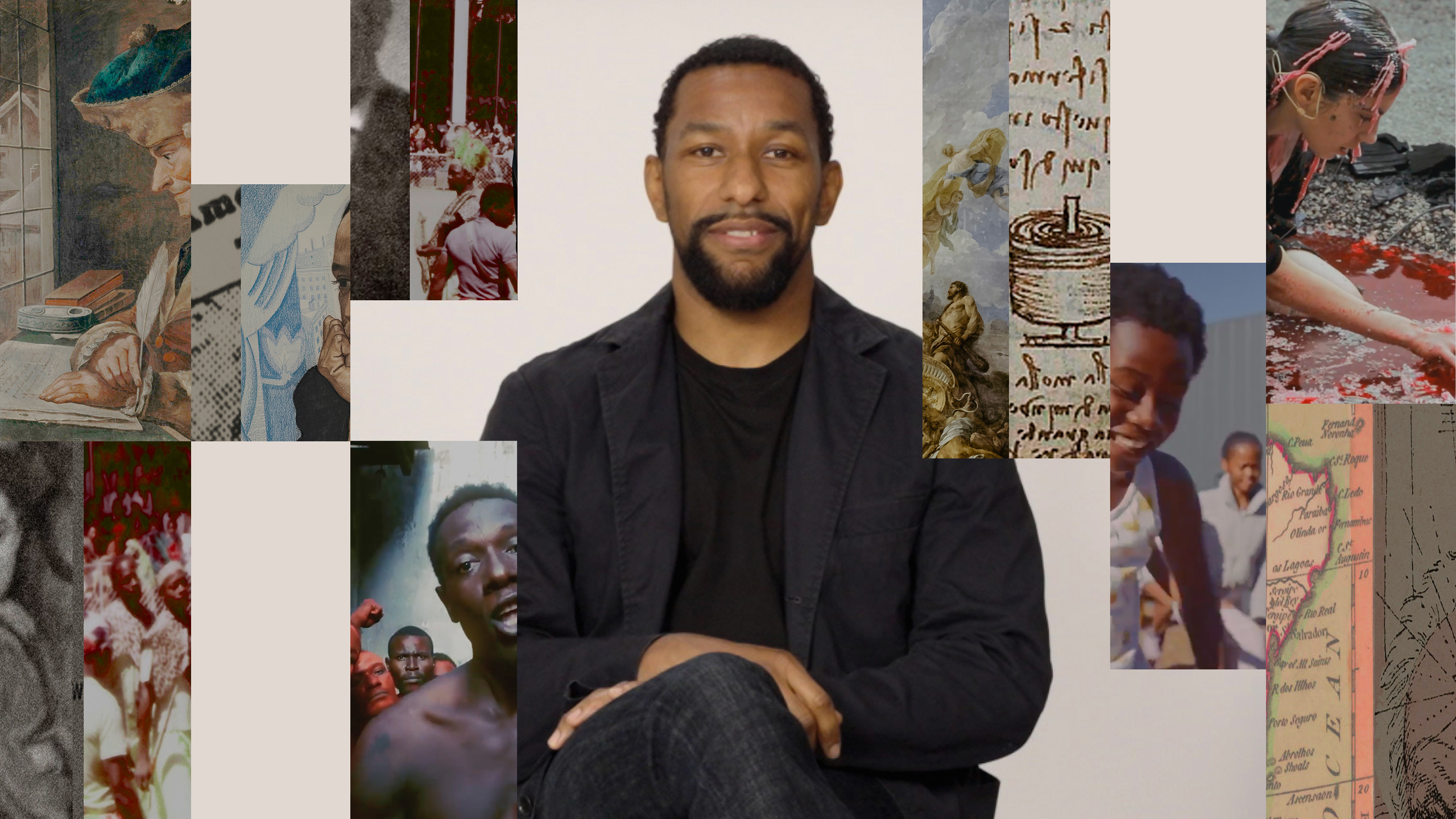
In this week’s Mini Philosophy interview, I spoke with the British-Ghanaian-American philosopher Kwame Anthony Appiah about cosmopolitanism, identity, and culture. And Ali’s story is a great example of what Appiah talks about in the shift between “dialogical” identity formation and the “tyranny of identity-based movements.”
For Appiah, identity is a spectrum with the need and struggle for recognition on one end, and draconian, inquisitorial oversight on the other.
Dialogical recognition
A lot of how we talk about “identity” these days can be traced back to Hegel. In fact, it can be traced back to a very specific section of his Phenomenology of Spirit where he talks about the “Lord and his Bondsman.” This passage is often described as the “master-slave dialectic,” and the basic idea is that some people exist as a “Lord” whose nature “exists for itself” and others exist as a “bondsman” where their life “is dependent, [on the] existence of another.”
Now, Hegel argues that neither party can exist on their own. Neither the absolute independence of the master nor the radically subsumed personhood of the bondsman can be recognized, except by the eyes of the other. The left hand is defined by the right, and the right hand is defined by the left. As Hegel put it, “the master gets his recognition through another consciousness [that of the bondsman], and the bondsman affirms itself as unessential.”
And so, a great tension emerges. The bondsman wants recognition desperately — to be seen as independent and a consciousness in its own right. The master wants a bondsman to reaffirm itself as the master. Either this tension carries on in resentful power struggles, or it will eventually erupt in an upheaval of some sort (that Karl Marx interpreted as revolution).
Appiah doesn’t particularly agree with Hegel’s vision. Or, at the very least, he thinks the idea has occupied too much of our modern understanding of identity. “I must say when I first read it I was surprised how much people had gotten out of [this line],” Appiah says.
Appiah instead prefers something closer to philosopher Charles Taylor’s idea that all human identities are made in dialogue with each other. “What it is for me to be Black,” says Appiah, “or for somebody to be a man or for somebody to be gay — the meaning of that depends to a good extent on how others in general, but especially significant others, think about what it is to be one of those things.”
Ideally, this “dialogical” formation of selfhood occurs between friendly equals. I let you sit at the table, we talk companionably as human beings, and then we go about our lives. In that conversation, we both come to accept ourselves as individuals with worth. But, of course, this dialogue is not always so rose-tinted. “The word dialogical makes it sound like something perhaps moderately positive,” Appiah says. “But, of course, it can be oppressive if the social conception of your identity is profoundly negative.”
The anti-Semite “recognizes” the Jew as inferior. The homophobe “sees” the homosexual as abhorrent. The bigot interacts with a woman but treats her as below him.
Appiah argues that almost all identities are forged in this dialogical interaction between people. But even if you possess immense personal pride, it is incredibly difficult to sustain a healthy sense of self when the world reflects a distorted image back at you. We are not solitary islands; we are shaped by the gaze of those around us, for better or worse. As Appiah notes, “It doesn’t matter how much self-respect you have; it’s very hard to live an identity if it’s stigmatized and derogated among the people who are your others.” And so, the goal of social progress is to reshape that gaze, ensuring that our inevitable dependence on one another becomes a source of dignity rather than oppression or erasure.
The tyranny of recognition
In many cases, there is a struggle for recognition. Various minorities or marginalized identities work hard to get themselves seen. They fight and campaign to get a seat at the table – to be allowed to speak as their identity.
The problem is that in the fight to establish these clear identity lines, the identities become rigid. If you fight for so long to recognize this or that characteristic as the criterion for entry, you start to police those characteristics with puritanical intensity.
“These identity-based movements can also themselves become tyrannous,” Appiah told me. “They can tell you that there’s only one proper way to be gay or Black or something. These liberation processes have to be careful. They have to be aware that people are diverse. And that means that women are diverse and Blacks are diverse and gay people are diverse and White people are diverse and Catholics are diverse.”
For example, when the tech billionaire Peter Thiel endorsed Donald Trump, The Advocate, a leading LGBT publication, ran an article arguing that while Thiel has sex with men, he is not “culturally gay.” Here, we have a certain wing of the LGBT movement claiming that being “gay” isn’t just about sexuality anymore; it is a political package deal. If you don’t vote the right way, your identity is revoked.
During the 2020 election, Joe Biden told a radio host, “If you have a problem figuring out whether you’re for me or Trump, then you ain’t Black.” While he quickly and frantically rowed back, the gaffe revealed a tacit cultural rule: Blackness is increasingly treated as a political ideology rather than a racial reality. If you are a Black conservative, like Larry Elder or Tim Scott, you are frequently treated as having defected from your own race, with Elder being labeled “the Black face of white supremacy” and Scott facing racial slurs like “Uncle Tim” trending on social media.
Appiah’s point is that our identities are essential tools for dignity, but they must be managed with care, so that recognition doesn’t harden into expectation. Identities should be loose garments that allow for movement and fit the person wearing them. An identity is not a uniform. True freedom isn’t just the right to be seen by the world — the right to be different, even from your own tribe.

The Energy Transition