This content is locked. Please login or become a member.


Most people spend years searching for a mentor who will change their life, never realizing the most valuable lessons are already happening around them.
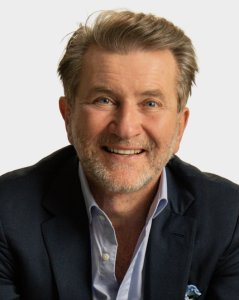
Shark Tank’s Robert Herjavec breaks down why the traditional idea of mentorship is not only outdated, but actively getting in the way of your growth.
ROBERT HERJAVEC: One of the most common questions we get or emails I get is, "Robert, can you be my mentor?" No. No. I'm way too busy. I have a lot of stuff going on. Biggest myth with mentorship is that you need a guy from Shark Tank to be your mentor, or you need some celebrity or some leader everybody knows. The entire role of a mentor is to teach you something that helps you at this point in your career. You can learn from anybody.
The second myth of mentorship is that it's a constant. It's just not true. When you're 23 and starting in an organization, the advice you need is going to be completely different than when you're a senior vice president at 45 in an organization. So your mentors, like your life, will change over time.
One of the other big myths is that there is a formal process of being a mentor, that you somehow sign this invisible contract or something that you're a mentor. Some of my biggest mentors in my life had no idea they were mentors to me. Like, one of the biggest mentors I ever had was Warren Avis, the guy who started Avis Rent A Car. I mean, if he was still alive today and you asked him, "Were you a mentor to Robert?" He would say, "I have no idea what you're talking about." Mentorship sometimes is simply by watching, learning, and osmosis by taking it all in. So it doesn't have to be a formal relationship. You can just learn, read, engage in many, many different ways, especially today with YouTube. I've done thousands of hours of YouTube videos. There's probably no question you want to ask me I haven't answered somewhere out there in the world.
The first key to learning and finding a mentor is to be completely open to it. Ego has killed more careers than anything else in the world. As great as you are, as incredible as you are, as great as your idea is, a little bit of humility helps. The first key to it is being open to the idea that you may not have all the answers. And it's great to be confident. It's bad to be arrogant. You can't learn from the world if you feel the world has nothing to teach you. Mentorship is really about learning. It's about being a constant learner in life, and you can learn from everybody. One of the greatest lessons I ever learned was from a janitor, who had an incredible work discipline and a really fanatical drive for perfection and constant improvement. So it's all around you.
This idea of mentorship or opportunity was really driven home to me by somebody I considered a mentor who told me about the red car theory. So if I asked you today how many red cars you saw on the way to work, you probably would think about it. You'd say, "I don't really know. Maybe I saw a couple. I'm sure I saw a couple." But you wouldn't know. But if I said to you, "Tomorrow on the way to work, count the amount of red cars that you're going to see," you would do it. Opportunity is like that, and mentorship is like that. When you're open to it, it's all around you. So be open to it, look for it, and then never be afraid to ask.
My general experience in life is while there are people who go home and beat their dogs, and they're not nice people, 98 percent of the people I've encountered are super nice. And if you ask for help, most of the time, people will help you. So never be afraid to ask for help.
What is the key to a great mentor, mentee — always a funny word. It's like manatee. I don't know why. I always think of the word manatee. Relationship. Number one is respect for time. I am a very, very busy guy. Now I don't mean that in an arrogant way. And if I have free time, you know what I want to do? I want to hang out with my kids. I probably don't want to hang out with with you. So number one, it's respecting the mentor's time. The other one is finding the right time to ask the right questions. And, you know, things that are natural and flow in the course of a relationship work out really well and knowing how to communicate.
I'll give you an example. Mark Cuban doesn't talk on the phone ever. He hates talking on the phone. But if I emailed him at 10:30 tonight, he'd get back to me within three minutes. So it's knowing how to communicate with somebody, and I'm the same way. I hate talking to people on the phone because a phone call requires me to disrupt my day in order to talk to you, whereas an email, I can respond to in the right amount of time.
And I think the other one is there's an element of personal and work. There's a line. You know? People often say at work that work is like we're one big family, and the reality is we're not. You know? My company was not my family. It was a business. My family was my family. And so there's always that line that made me uncomfortable where people wanted to cross it at night or at certain times that took away from my family. So I think it's clearly understanding what the boundaries are, and everyone is different. Some people are incredibly social, and they want you calling them on the weekends. I don't want you calling me on a weekend. So it's just understanding that. But I'm also up at five o'clock in the morning every day, and, typically, I don't get bombarded with emails at nine. So if you reach out to me between five and nine, that's a great time for me. But that's on you. You have to know how I work in order to get the most effect from me to help you.