

Authors write novels for many reasons. Anthony Burgess, of A Clockwork Orange fame, was once described as a man “always on a money-fishing expedition.” Ernest Vincent Wright wrote Gadsby, a novel that avoids using the letter E, as a self-imposed challenge. Joan Didion processed her grief following the sudden death of her husband in her memoir The Year of Magical Thinking.
The books on this list were basically written as propaganda. Their authors devised them to advance a particular ideology or party line, with the hope that readers would be persuaded to take up the cause. We’ll dive into why they were written, what ideology they promoted, and how effective they were at achieving their goals.
Before that, we should note that we aren’t using the term propaganda in a moral or artistic sense. We’re instead using it to describe works that place heavy emphasis on influencing readers through symbolism and emotional appeals. Whether they are narrative masterpieces or utter dreck, whether they conform to reality or distort it beyond recognition, and whether we agree or disagree isn’t the point. For these authors, the top priority was to maintain the agenda while shifting public opinion.
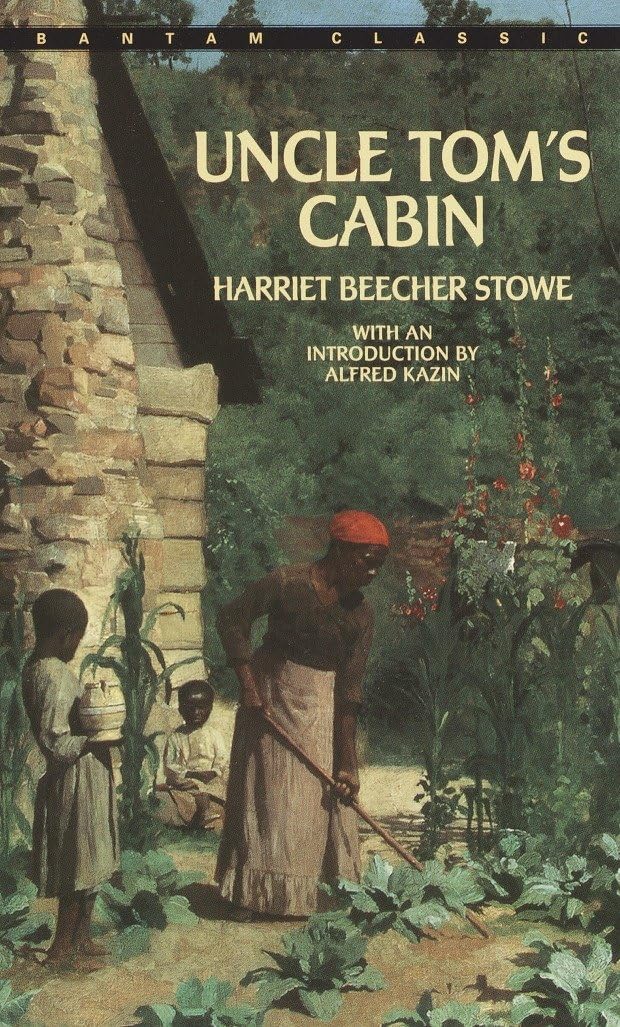
Uncle Tom’s Cabin; or, Life Among the Lowly by Harriet Beecher Stowe (1852)
Any mind that is capable of a real sorrow is capable of good.
The little book that started a great war, Uncle Tom’s Cabin explores the horrors of slavery in the 19th-century United States. The novel centers on a group of enslaved people initially on a plantation in Kentucky as they attempt to survive the wretched conditions they find themselves in. Some try to escape to the Northern free states, while others are sold further and further down the river. Some die valiantly, some survive, but none escapes unscathed.
James Baldwin thought it was a “very bad novel,” one that relied too much on “self-righteous, virtuous sentimentality.”
In many ways, Uncle Tom’s Cabin is as much counterpropaganda as it is propaganda. The antebellum South and slavery apologists went to great lengths to portray slavery as a benign, even benevolent, institution — one ordained by God and that was ultimately beneficial to the enslaved. Stowe’s novel shattered this illusion for many Americans. The story drew on accounts written by former slaves, but rather than a straight retelling, Stowe heightened the emotional appeal to sermon-like levels—she once claimed she had a “vocation to preach on paper.” She also infused the novel with religious symbolism. The eponymous Uncle Tom, for example, is a Christ-like figure who suffers greatly despite his immense kindness and unyielding faith.

Stowe wrote the novel in direct response to the Fugitive Slave Act of 1850, which required officials to arrest people suspected of escaping slavery and punish anyone found aiding them. Originally published it as a serial in an anti-slavery newspaper, the book went on to become one of the most read in 19th-century America. In fact, it proved so effective at illustrating the odious reality of slavery that counter-counterpropaganda was produced in the form of anti-Tom novels and plays. These tried to mimic Stowe’s storytelling but distorted the message toward a pro-slavery agenda.
Over the past 150 years, Uncle Tom’s Cabin has garnered its share of criticism for how it depicts Black people — the title character’s name has become something of a slur, and many of the characters are stereotypical by today’s standards. James Baldwin thought it was a “very bad novel,” one that relied too much on “self-righteous, virtuous sentimentality” from Stowe, whom he called less a novelist than an “impassioned pamphleteer.” Nonetheless, its legacy as part of the 19th-century abolitionist movement endures.
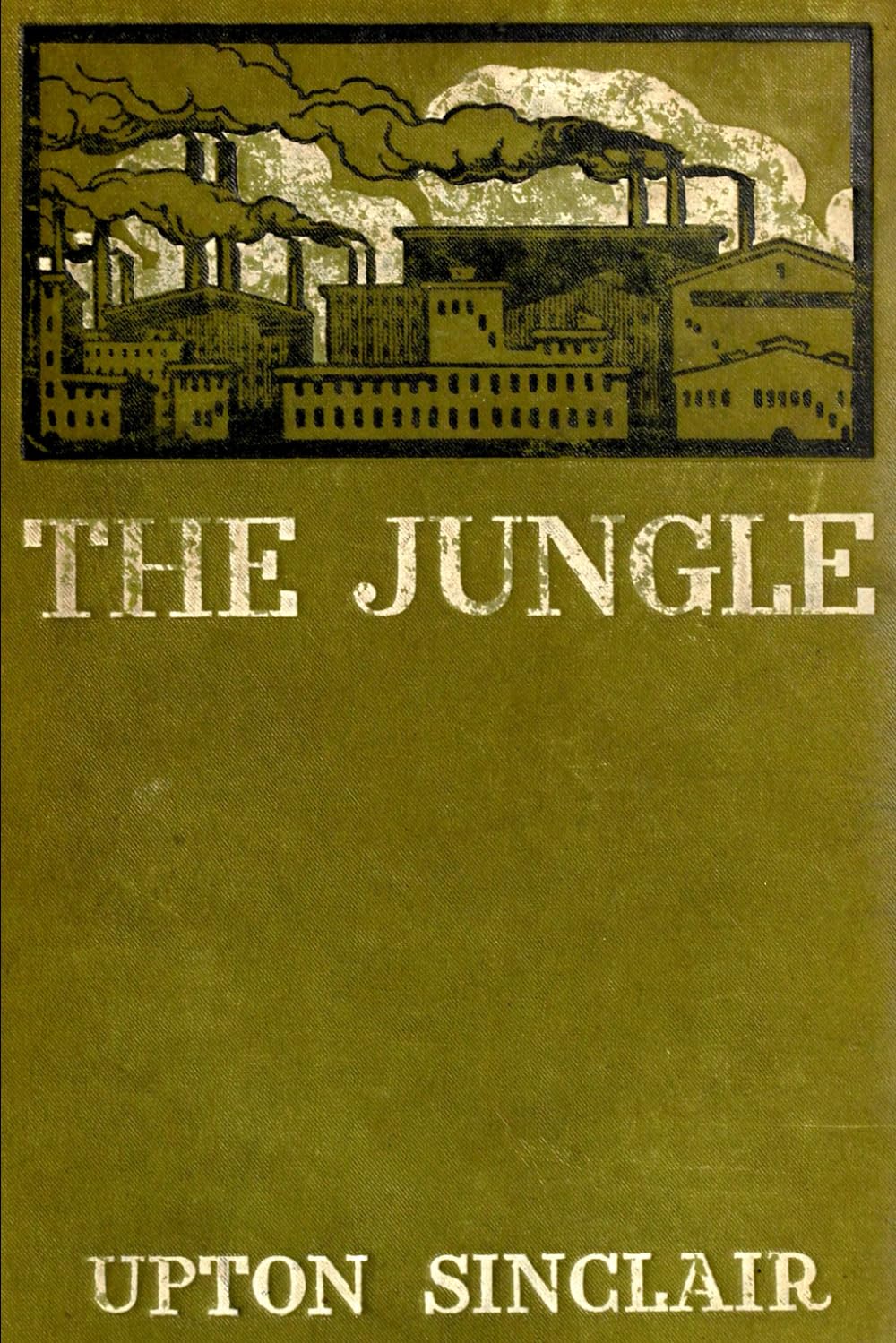
The Jungle by Upton Sinclair (1906)
Chicago will be ours!
The Jungle is the story of Jurgis Rudkus, a Lithuanian immigrant to the United States who works in the Chicago stockyards. He and his family came to America with dreams of a better life, only to encounter every misfortune that could befall a working-class family in early-20th-century Chicago.
His situation improves only after he encounters members of the Socialist Party, who offer him support and a sense of agency. The novel ends at a rally where participants cheer the coming socialist control of the city.
To write The Jungle, Sinclair, a muckraking reporter, spent several weeks working in stockyards and slaughterhouses to collect information on the conditions he found there. Initially rejected for being too shocking to publish, the book was eventually serialized in Appeal to Reason, a socialist newspaper. The first hardbound copies even featured the Socialist Party’s logo.
The novel wasn’t quite as effective as Sinclair might have hoped. It garnered some positive reviews and massive sales. Jack London, a fellow socialist, even deemed it “the Uncle Tom’s Cabin of wage slavery.” But while Sinclair wanted people to focus on the plight of workers, most readers — including President Theodore Roosevelt — were more concerned with the depictions of the filthy slaughterhouses. The public became incensed over impurities in the food supply — even if Sinclair’s depiction of human meat accidentally making it into sausages was never confirmed.
Sinclair mused that he “aimed at the public’s heart, and by accident I hit it in the stomach.” As a committed democratic socialist, he favored abolishing capitalism and the wage-labor system in favor of a more cooperative system. His depictions of life for the Chicago proletariat are designed to make the reader feel, not just know, that some workers’ lives were miserable under turn-of-the-century capitalism.
Later in life, he would run for governor of California on the socialist End Poverty In California (EPIC) platform. Given the radical nature of his platform and the nationalization of businesses hit hard by the depression, which would then be given to the unemployed workers to operate as co-ops, his earning 37% of the vote proved a respectable showing.
The Moon Is Down by John Steinbeck (1942)
No little appetite or pain, no carelessness or meanness in him escaped her; no thought or dream or longing in him ever reached her. And yet several times in her life she had seen the stars.
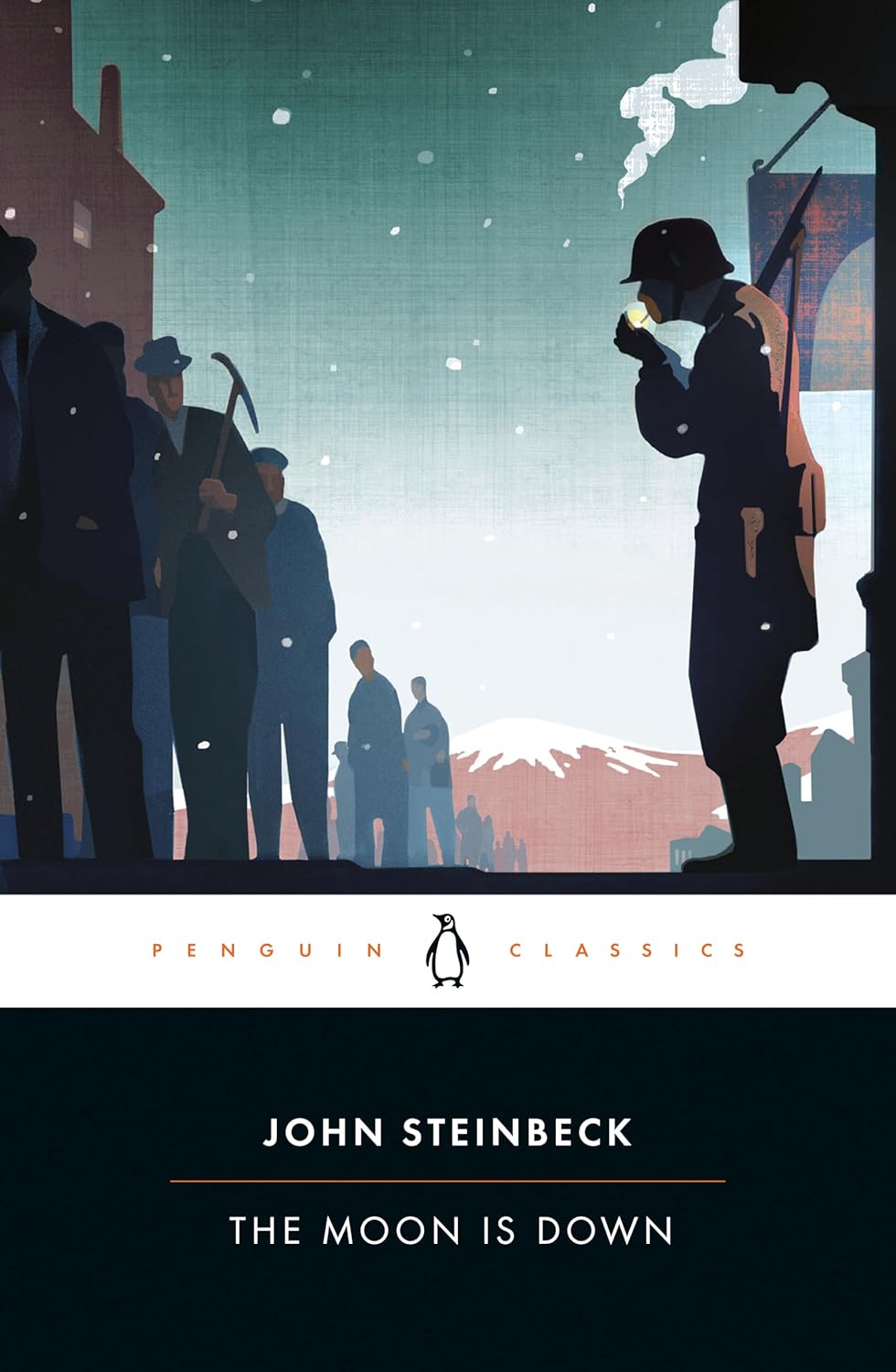
Written specifically to encourage resistance movements during WWII, The Moon Is Down tells the story of the occupation of a Northern European city by an unnamed army at war with both Britain and Russia. Feel free to guess who that might be.
The story follows the citizens of the unnamed coastal town under occupation. Colonel Lanser, the invading forces’ leader, establishes fascist control over the town, which the people find more and more unbearable over time. After the execution of one of their own, the townspeople are roused to resistance. They sabotage the machinery and railway lines that the invading army relies on. Eventually, Allied forces begin airdropping supplies, including explosives, for the freedom fighters. But as the invaders’ fear grows, so too do their oppressive tactics.
Of all the books on this list, The Moon Is Down is the most obviously propaganda. The symbolism is less an abstract wink at a deeper meaning and more a knowing nudge. At one point, the fascist forces literally establish their base of operations in the home of the town’s democratically elected mayor. Many of the characters give speeches on democracy, freedom, and the unconquerable human spirit — concepts that would obviously have immense emotional appeal during World War II.
For that reason, Steinbeck’s book was smuggled into Nazi-controlled Europe for distribution among occupied peoples in hopes of fermenting a continued resistance. While it is difficult to tell if the book served that purpose effectively, it did earn Steinbeck the King Haakon VII’s Freedom Cross for outstanding service to Norway during wartime.
Atlas Shrugged by Ayn Rand (1957)
Who is John Galt? This is John Galt speaking.
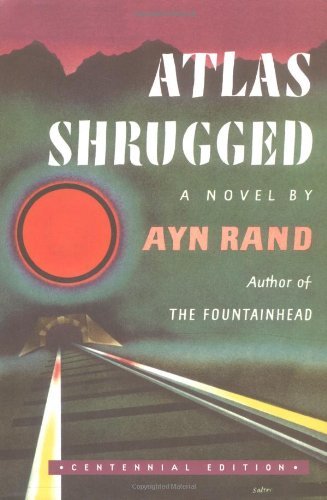
Atlas Shrugged is Ayn Rand’s magnum opus. The massive novel weighs in at more than 1,000 pages — over half a million words — meaning this overview will, by necessity, be cursory.
In a near-future, semi-dystopian United States, businesses are regulated to death, society is becoming less functional, and the successful are hounded by the unproductive masses. Against this backdrop, innovative businessmen and scientists have started to go missing. One daring industrialist, Dagny Taggart, seeks not only to endure in a world that both relies on and resents her, but also to learn what is becoming of some of her vanishing associates.
She eventually comes across others who share her capitalist worldview in an increasingly socialist world, and heaps of discussion over the merits of free markets and acting out of “rational self-interest” follow.
Atlas Shrugged is unapologetic propaganda for Rand’s Objectivist worldview. While Rand illustrated her ideas in several branches of philosophy, her political and ethical stances — namely her love of capitalism and ethical egoism — tend to attract the most attention. The novel clearly shows what she thinks happens when people are unable to pursue their own self-interest, and her take on the fate of unfree societies.
The book even includes a 40-page monologue on the virtues of Rand’s worldview, which the character of John Galt offers his full-throated endorsement. The section makes little attempt to disguise its status as an author filibuster. Rand herself was open about how the text was “to show how desperately the world needs prime movers and how viciously it treats them.”
The plot occasionally verges on the absurd in order to do this. For instance, the vanishing industrialists must have managed every aspect of their corporate empires themselves, given how poorly their companies fare without them — that or they were poor delegators with abysmal records for hiring competent managers.
The novel has sold well over the decades, but has generally collected mixed reviews. While academic writers have avoided Rand’s work in favor of other authors, her ideas have served as the nucleus of a school of thought. They also served as the foundation for the video game Bioshock, though the game is less enthusiastic about Objectivism than Rand is.

The Energy Transition