
Test Special Issue

Game Change

Do elite athletes really make elite employees?

Sports, we tend to assume, offer a sharp-edged reflection of business life in microcosm — leadership under pressure, the winning mentality, valuable lessons drawn from loss. It’s all there. Just kick back with a beer and a pizza and watch your pathway to workplace success unfold on game day. Well, it turns out that the connections are often far more nuanced than we might have presumed. Do elite athletes really make elite employees? What’s the connection between Swedish pragmatics in soccer and a thriving startup culture? Have you factored in the difference between “wicked” and “kind” environments (and what does that even mean)? We investigate all of these pivotal tangents, and much more, in this Big Think special collection of essays, interviews, and curated book excerpts. Forget everything you’ve been told about the synergies between sports and business. It’s time to rewrite the rules.


Blue background with the words "Game Change" in white, surrounded by strategic game symbols and graphs in the background.
Presented by
John Templeton Foundation
F = ma fall up
From high school through the professional ranks, physicists still take incredible lessons away from Newton's second law.
Two people sit on a deck at night, illuminated by red light, looking up at a star-filled sky with mountains silhouetted in the background.
It’s something to wrestle and live with, says behavioral scientist Arthur Brooks.
A painting depicts compassionate leaders, as a person in a blue robe carries an injured figure on a brown horse, set against swirling blue and yellow brushstrokes in the background.
The benefits of compassion in the workplace are manifold — but leaders should retain an intentional focus on mental, emotional, and physical balance.
A silhouette profile of a person with long hair against a blue background featuring faint circuit board patterns; a warm light highlights their face.
9mins
Today’s technologist archetypes share a blind spot. Brendan McCord, founder of the Cosmos Institute explains why “philosophy is essential” when building planetary-scale technology.
Cosmos Institute
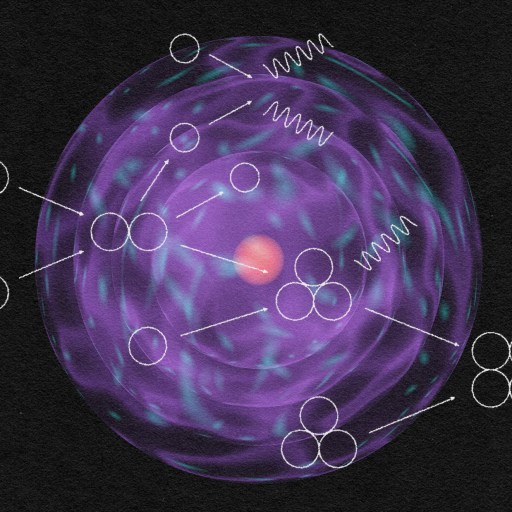
A colorful, abstract scientific illustration with a central glowing sphere, circular patterns, and various lines and circles suggesting quantum connections or uncertainty data points, on a dark background with blue accents.
No matter what it is that we discover about reality, the fact that reality itself can be understood remains the most amazing fact of all.
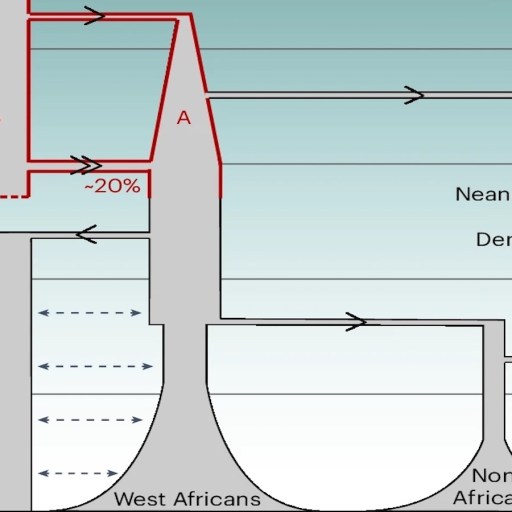
Diagram showing human evolutionary relationships and gene flow among Khoisan, West Africans, Non-Africans, Neanderthals, and Denisovans over time, with percentages of genetic admixture indicated.
After more than a million years of separation, two branches of humanity reunited around 300,000 years ago, suggests new research.
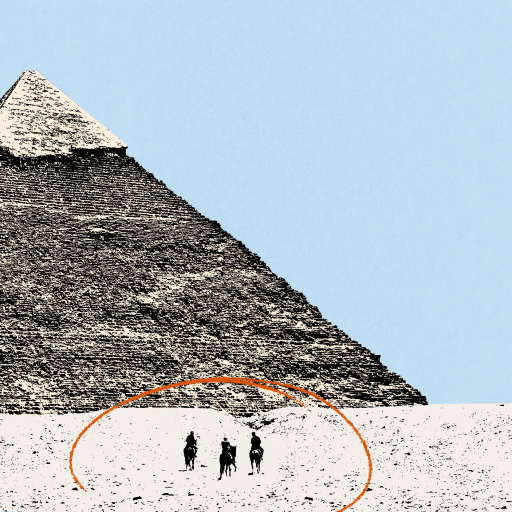
A pyramid stands in a desert with three people in front, evoking experimental archeology; a modern McDonald's restaurant is visible in the background on the right.
In "Dinner with King Tut," Sam Kean examines how a burgeoning field is recreating ancient tasks to uncover historical truths.
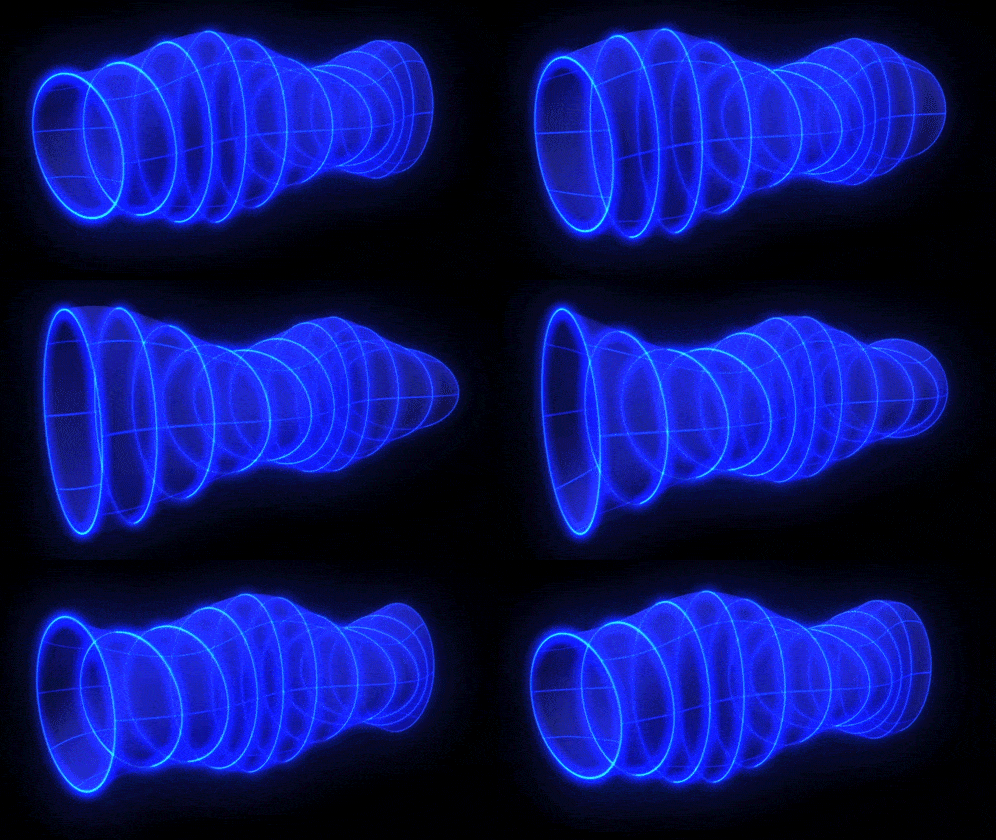
gravitational wave effects on spacetime
With over 300 high-significance gravitational wave detections, we now have a huge unsolved puzzle. Will we invest in finding the solution?
Book cover for "The Generalist Advantage" by Mansoor Soomro, PhD, next to text reading "an excerpt from," all set against a light green background—highlighting the value of generalist superpowers.
From Apple to Airbnb to OpenAI the generalist mindset has been an invaluable source of advantage — and we can all learn from these successes.
A grayscale photo of the sculpture "The Thinker" with a digitally added yellow halo above its head, set against a black background.
3mins
Philosopher Meghan Sullivan challenges the idea that religious texts can’t be taken seriously in modern philosophy. She explains how parables, scripture, and debate have always been connected to asking life’s biggest questions:
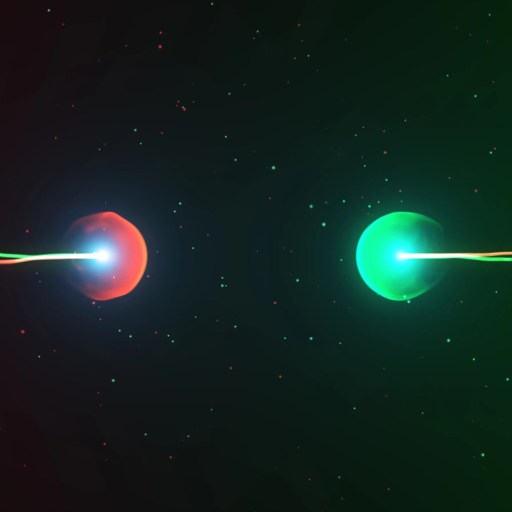
Two glowing spheres, one red and one green, face each other in space with a wavy line of light—like a particle physics collision—connecting them against a speckled dark background reminiscent of the last collider’s discoveries.
Will we build a successor collider to the LHC? Someday, we'll reach the true limit of what experiments can probe. But that won't be the end.
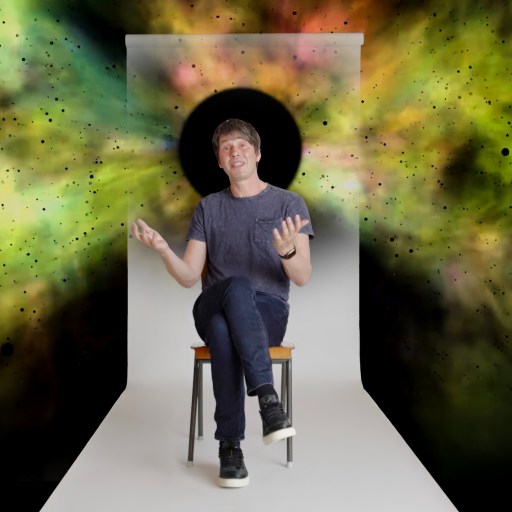
A man sits on a stool in front of a white backdrop with a black circle behind his head, surrounded by colorful, nebula-like clouds.
1hr 18mins
“Could black holes be the key to a quantum theory of gravity, a deeper theory of how reality, of how space and time works?”
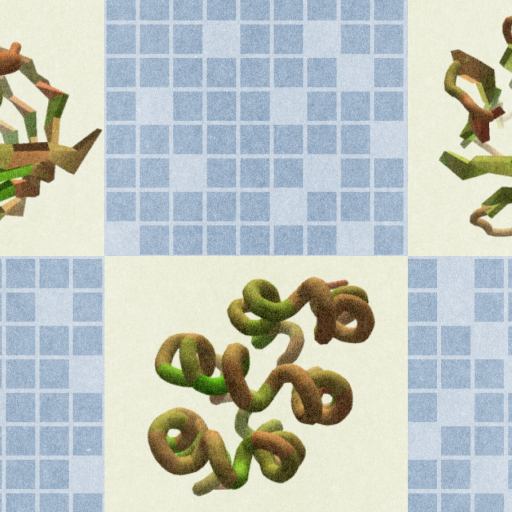
Three different 3D protein structures are displayed on a light grid-patterned background, each occupying a separate quadrant in the image.
By inviting players to tackle real scientific problems, games can offer a hand in solving medicine’s toughest challenges.
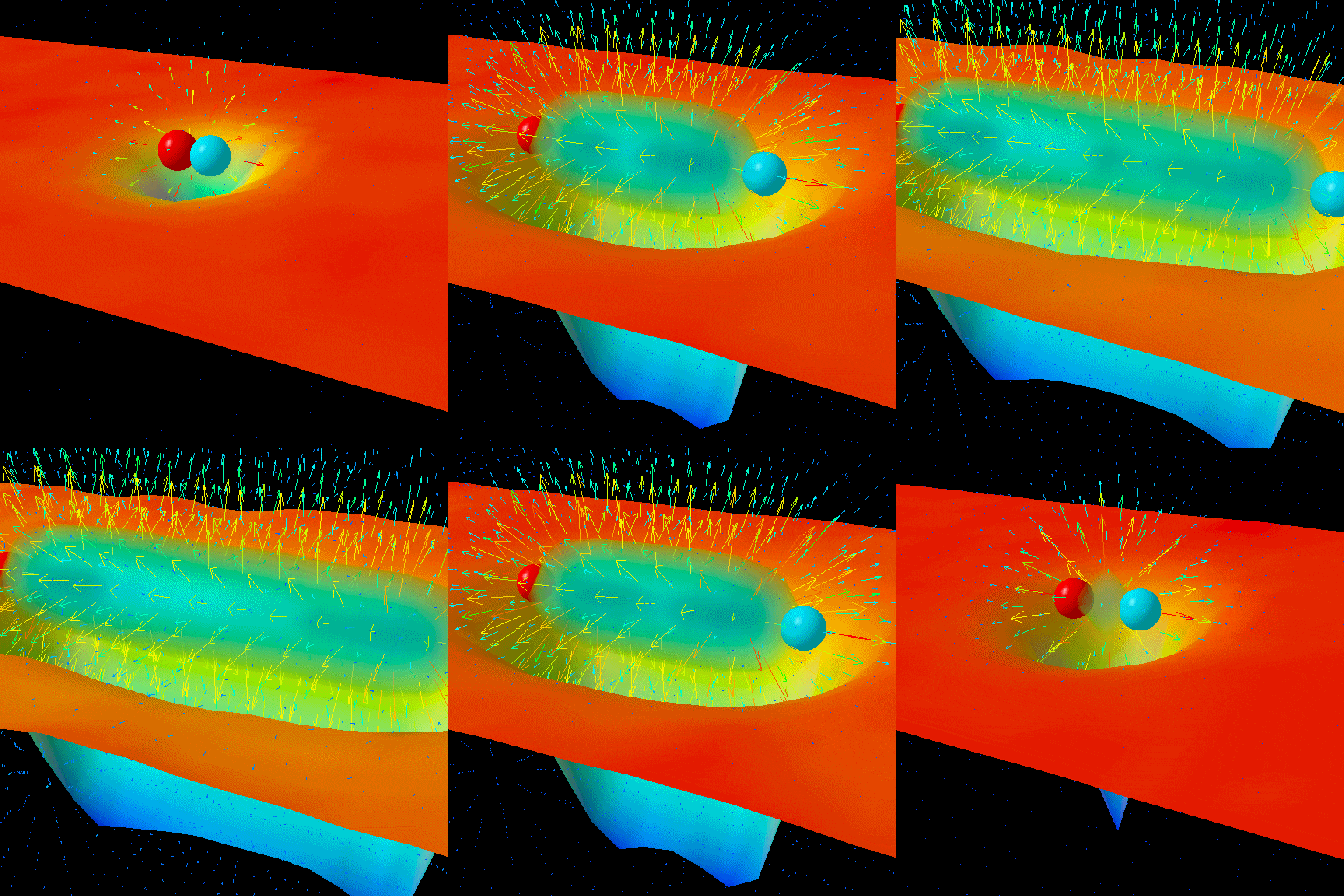
A visual simulation of two objects orbiting and merging, distorting a red-orange grid representing spacetime—illustrating gravitational waves once thought to be the worst prediction in science.
The measured value of the cosmological constant is 120 orders of magnitude smaller than what's predicted. How can this paradox be resolved?
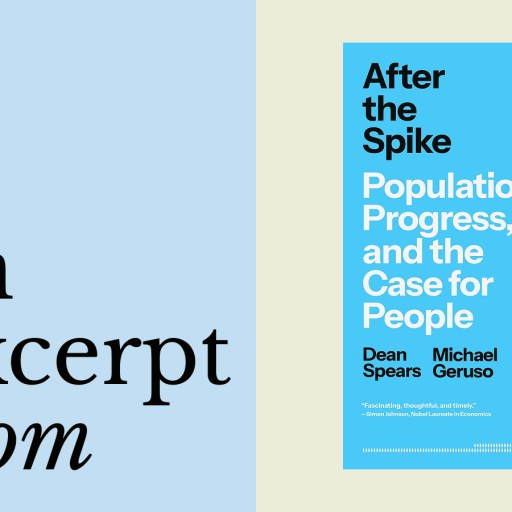
Split-screen image: left side has the words "an excerpt from" on a pale blue background; right side shows the book cover of "After the Spike," which explores how population and environment shape our future, by Dean Spears and Michael Geruso.
In "After the Spike," Dean Spears and Michael Geruso show why policy, rather than high population density, has the most significant impact on the environment.
Collage featuring photos of wildlife, ancient stone carvings, and a camel, with the text "THE NIGHTCRAWLER" at the top on a gray grid background—an homage to Sean B. Carroll’s explorations of nature and history.
Welcome to The Nightcrawler — a weekly newsletter from Eric Markowitz covering tech, innovation, and long-term thinking.
A radio telescope points at the night sky, where stars are arranged in the shape of a large question mark.
13mins
"We've sent out one or two little messages, but we certainly aren't investing billions of dollars shouting out into the cosmos saying, "Hey, we are here. Come say hi.""
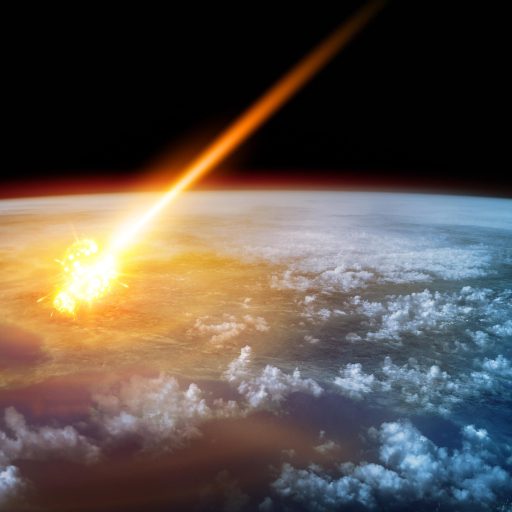
comet collide with earth
65 million years ago, a massive asteroid struck Earth. Not only did Jupiter not stop it, but it most likely caused the impact itself.