







Test Special Issue

Game Change

Do elite athletes really make elite employees?

Sports, we tend to assume, offer a sharp-edged reflection of business life in microcosm — leadership under pressure, the winning mentality, valuable lessons drawn from loss. It’s all there. Just kick back with a beer and a pizza and watch your pathway to workplace success unfold on game day. Well, it turns out that the connections are often far more nuanced than we might have presumed. Do elite athletes really make elite employees? What’s the connection between Swedish pragmatics in soccer and a thriving startup culture? Have you factored in the difference between “wicked” and “kind” environments (and what does that even mean)? We investigate all of these pivotal tangents, and much more, in this Big Think special collection of essays, interviews, and curated book excerpts. Forget everything you’ve been told about the synergies between sports and business. It’s time to rewrite the rules.

Blue background with the words "Game Change" in white, surrounded by strategic game symbols and graphs in the background.
Presented by
John Templeton Foundation
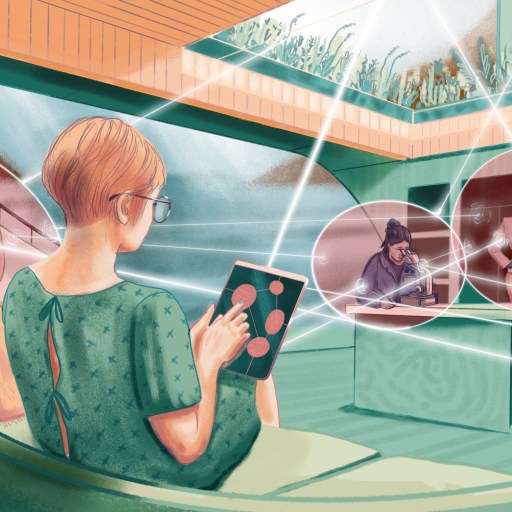
Illustration of a person using a tablet in a modern office space interconnected with colleagues via virtual communication technology.
Susannah Fox, former chief technology officer for the HHS, explains how technology has empowered us to help fill in the cracks of the healthcare system.
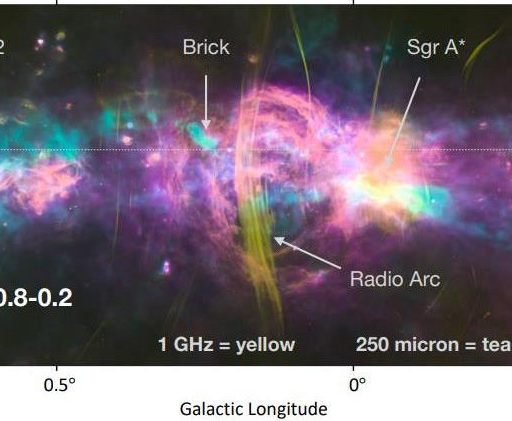
Annotated map of the milky way's center in multiple wavelengths with identified regions and sources.
The center of the galaxy doesn't just host stars and a black hole, but an enormous set of rich gassy and dusty features. Find out more!
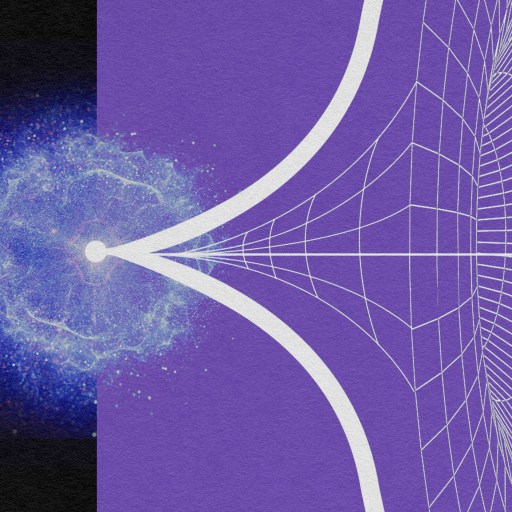
Abstract representation of a cosmic event with a burst of particles emanating from a central point, blending astrophysical imagery with geometric designs.
The "first cause" problem may forever remain unsolved, as it doesn’t fit with the way we do science.
Three red dice in mid-roll on a green surface.
6mins
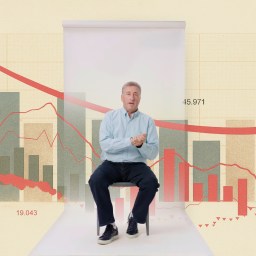
Why most billionaires aren’t geniuses and most geniuses aren’t billionaires, explained by political scientist Brian Klaas.
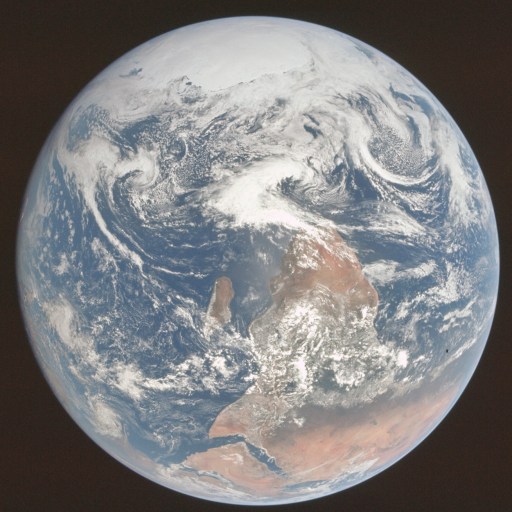
Although human beings arrived on Earth just ~300,000 years ago, we've transformed the entire planet completely. Here's how we did it.
Pressed and dried ginkgo biloba leaf with visible veins and a tear.
Well-preserved ancient plants and other finds at the Clarkia fossil beds hint at what kind of evidence any Martian life may have left behind.
A bright star illuminates the surrounding space with a spectrum of colors in a nebula.
From before the Big Bang to Voyager 1, particle physicist Harry Cliff takes us on a whiz-bang tour of the Universe's evolution.
A senior man, Daniel Kahneman, with glasses, wearing a dark suit and a blue shirt, standing against a gray background.
Kahneman was a world-changing psychologist — even with his lesser known ideas on life satisfaction.
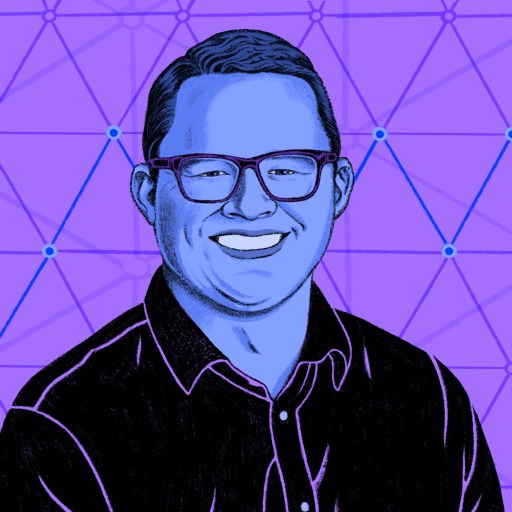
Illustration of a smiling man wearing glasses against a geometric background, unraveling the secret of good AI.
The technology is not a replacement for human labor — it's a way to complement existing human tasks.
scholz's star
Despite billions of years of life on Earth, humans first arose only ~300,000 years ago. It took all that time to make our arrival possible.
Four earth-like planets from a multiverse, in varying colors, aligned in space against a starry background.
Some physicists are besot with the multiverse, but if we can't detect these other universes, how seriously should we take them?
A person dressed in a tailored suit emerges from a cloud of smoke against a backdrop adorned with kelvin physics equations and diagrams.
Lord Kelvin is thought to have said there was nothing new to discover in physics. His real view was the opposite.
Elderly woman with a gentle smile wearing a turquoise blouse and a neck scarf.
8mins
Dr. Temple Grandin shares how we can unlock the hidden gifts of neurodivergent minds.
Two men smiling and riding in a convertible during a parade, surrounded by a crowd of onlookers.
According to Harvard career advisor Gorick Ng, this time-saving system can help us reclaim our work-life sanity.
Prehistoric landscape with a mammal-like creature, where mammals appeared, in the foreground and dinosaur skeletons depicted in the overlaying sketches.
Although mammals may be the dominant form of life today, we're relative newcomers on planet Earth. Here's our place in natural history.
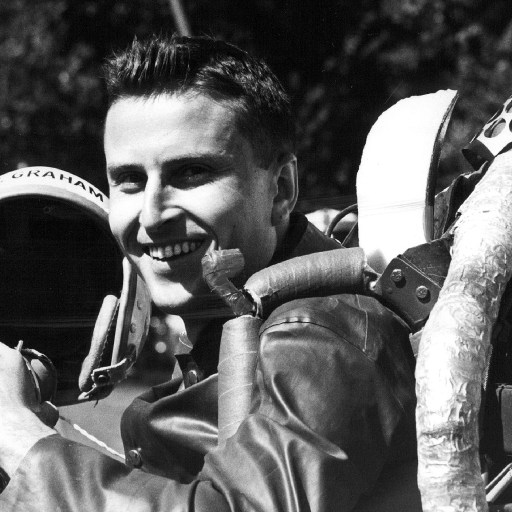
Smiling pilot holding a helmet, wearing a flight suit with a u.s. insignia and a jet pack.
On the morning of April 20, 1961, all conditions were "go" for an attempt at free flight. A man was on standby with a fire extinguisher. Just in case.
A digital image of a star's structure superimposed on a futuristic tunnel with neon arrow accents.
In the infant Universe, particle physics reigned supreme.
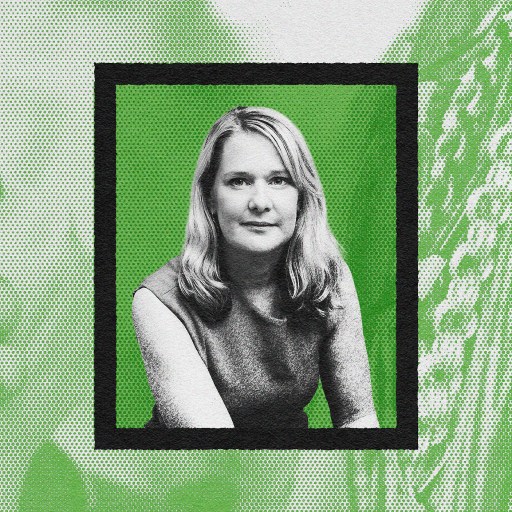
Black-and-white portrait of a woman with an empathetic gaze and a black frame, set against a green patterned background.
Sam Smith — founder and former CEO of finnCap Group — argues that a culture of empathy will help superscale any business.
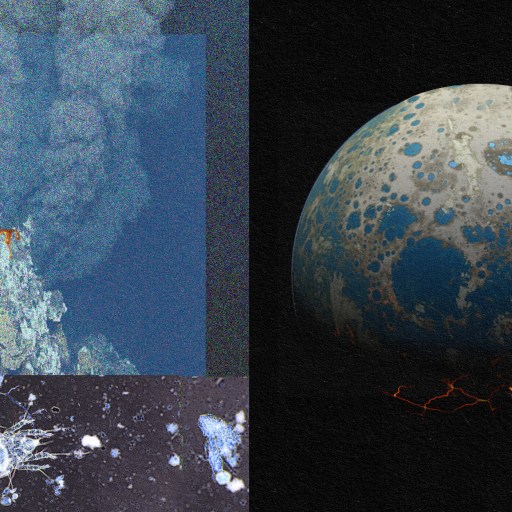
For billions of years on Earth, life was limited to simple unicellular, non-differentiated organisms. In a mere flash, that changed forever.
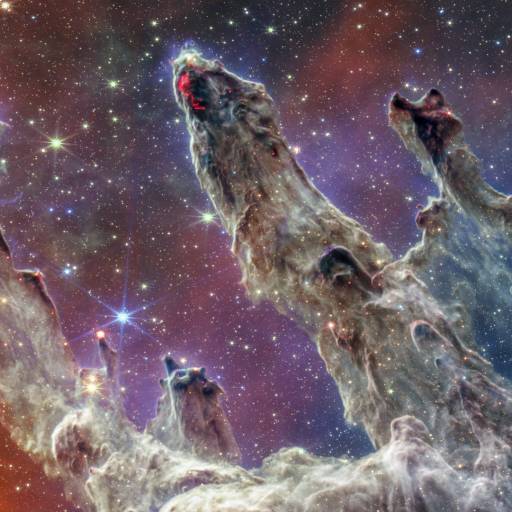
Colorful interstellar gas and dust form towering pillars in a star-forming region of space.
A deep dive into the chaotic journey of star formation.