The diversity of life on our planet is amazing, especially considering it all begins with essentially the same ingredients — every cellular organism that has ever existed, from bacteria and birch trees to dinosaurs and humans, is built on DNA-based biochemistry.
But how much more diverse might life be on other worlds? Planets with different geology and chemistry, orbiting different types of stars, could yield an endless variety of life-forms.
Science fiction authors and filmmakers have already imagined some of the possibilities. Here, we look at five sci-fi aliens to see how they measure up against modern scientific thinking about what kinds of extraterrestrial life might exist.
1. Mr. Spock: The humanoids

Filmmakers often give us human-looking aliens, presumably so they’ll be relatable. You can immediately tell that E.T., the Na’vi people in Avatar, and most of the gang at the Star Wars cantina are not from Earth, but they still have recognizably human features: two arms, two legs, two eyes, and faces that convey familiar emotions. The only obvious difference between Mr. Spock — the Vulcan science officer from Star Trek — and your next-door neighbor is that the former has pointy ears and eyebrows that suggest a constant state of surprise. He’s not even very far outside the range of natural variation in facial features among humans. True, he has green blood (more on that later) and can do the mind-meld thing. But in a crowd, he’d hardly stand out.

In reality, a human-like form is probably the least likely for an extraterrestrial. Even if evolution started over here on Earth, we wouldn’t necessarily end up with the exact same intelligent bipedal primates (us) at the top of the food chain. In fact, no particular body plan seems to be favored by biology, though most animals are anatomically symmetrical. The evolutionary reason for that, according to a 2022 study, is that symmetry requires less information for DNA to encode and allows more flexibility for developing traits that may be advantageous. Even if aliens used an alternative genetic encoding system, the same principle should hold.
If aliens are intelligent, they’re probably more likely to be similar to animals than plants.
Is there any reason to think intelligence requires a body like ours? Not really — dolphins, crows, and octopuses are all highly intelligent. That hasn’t stopped sci-fi from serving up plenty of humanoid aliens, however, oftentimes with oversized brains, undoubtedly to emphasize that they’re smarter than us. But depicting aliens with brains just like ours, only bigger, is way too anthropocentric. The octopus has most of its neurons in its tentacles. Many birds are more intelligent than a simple brain-mass to body-mass ratio would suggest, too — this is because they need to fly, and lugging around a heavy head wouldn’t be beneficial. Nature’s solution, in that case, is to pack the neurons in birds’ brains more tightly than the ones in mammals’. Intriguingly, this suggests that some bird-like dinosaurs, such as the Troodon, were probably much smarter than we once thought.
If aliens are intelligent, they’re probably more likely to be similar to animals than plants. Plants generally can’t move by themselves (apologies to sci-fi author John Wyndham’s triffids), which means they can’t evade predators or — barring a few exceptions — prey on other creatures. Despite recent theorizing about plant intelligence, if you’re stationary, you just don’t need to be that smart — animals have to escape danger or hunt to survive, so natural selection in that kingdom tends to favor intelligence.
More broadly, an alien’s anatomy would likely reflect its environment. If evolution follows similar paths elsewhere as it does on Earth, we could expect well-developed sensory organs — most terrestrial species have the equivalent of eyes, ears, and noses — and appendages for manipulating materials. Even on a planet orbiting a star dimmer than our Sun, surface-dwelling organisms would face strong evolutionary pressure for light-sensing organs. The requirement for “eyes” still allows for a lot of variation, however, from the compound eye of a fly to the eyespots of certain microorganisms. In an environment that doesn’t transmit sound, aliens might not need ears. As for appendages, arms and legs are useful on land, while flippers or tentacles are more suitable for an ocean world.
2. Alien: Bugs and other critters
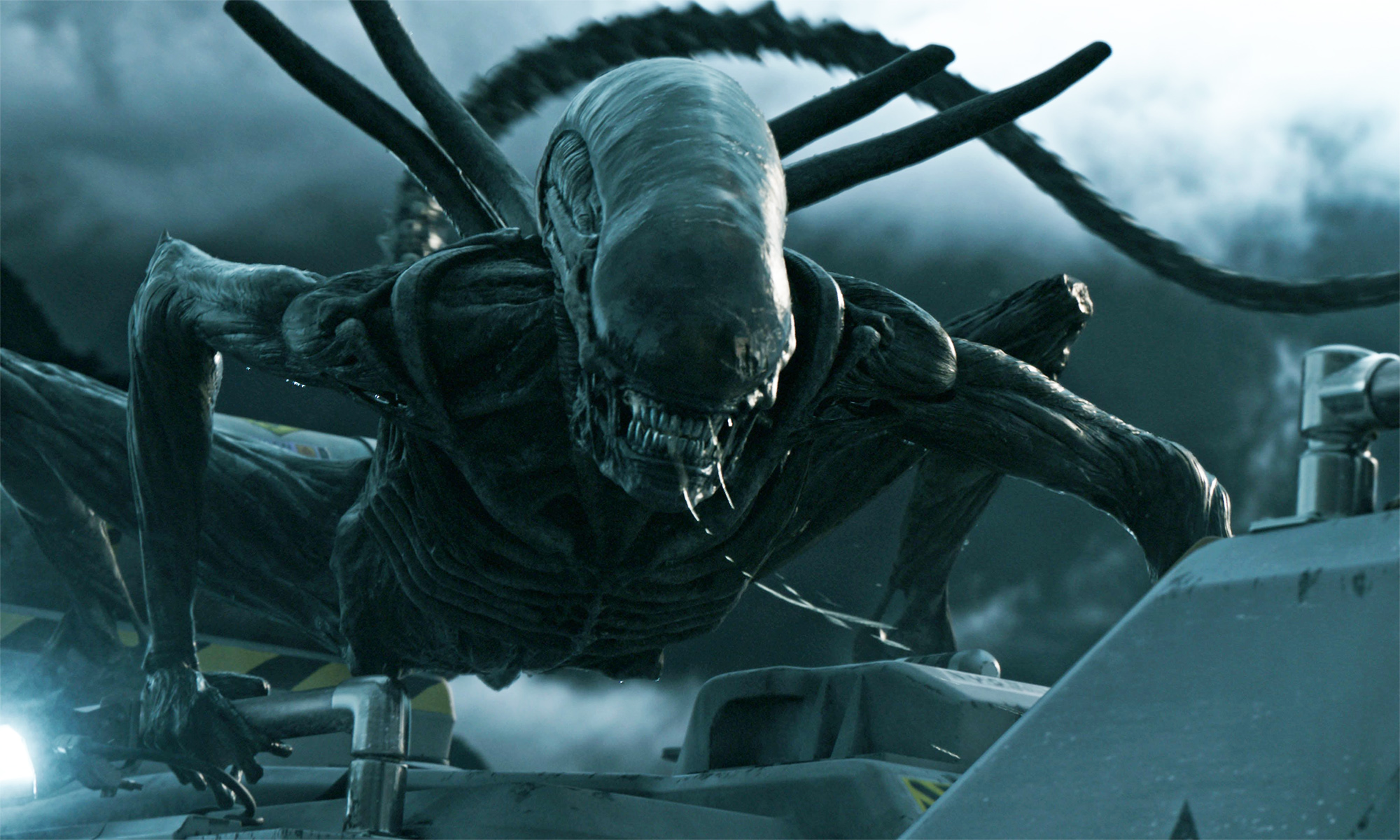
Alongside the humanoids are the many giant insects, arachnoids, and tentacled creatures that have starred in hundreds of sci-fi books and movies. Is that a more likely look for extraterrestrials? The creators of Alien, District 9, A Quiet Place, and Starship Troopers must have thought so. In his 2015 novel, Children of Time, Adrian Tchaikovsky imagines spacefaring spiders, challenging assumptions about what an intelligent species might look like.
One thing Alien and the other bugs-from-space movies have right: We would probably find extraterrestrial life repulsive. Humans instinctively feel more empathy toward life-forms closely related to us. A bear is far more dangerous to humans than a tarantula, yet we feel more at ease around our fellow mammal — few children sleep with stuffed spiders, though teddy bears do usually come without sharp claws and teeth. Most of us are creeped out by tarantulas’ scuttling movements and “extra” eyes and legs, not to mention how they feed by liquefying interior parts of their prey and sucking it up into their stomachs.
Eusocial aliens are a popular sci-fi theme, from Independence Day to The Edge of Tomorrow.
Speaking of spiders, different species have different colors of blood, and we might expect the same of aliens. Humans and most vertebrates have red blood due to iron-containing hemoglobin, which carries oxygen from lungs (or gills) to tissues throughout the body. The blood of some octopuses is blue when oxygenated — that’s because they use copper-containing hemocyanin instead of hemoglobin. Ladybugs have yellow blood, lamp shells have purple blood, and some creatures living in cold environments have translucent blood because cold water can hold so much oxygen that hemoglobin becomes unnecessary. Some lizards, earthworms, and leeches have green blood, as did the half-alien Mr. Spock (and never mind how his human mother and Vulcan father managed to have a child).
Some aliens may be eusocial, emphasizing the welfare of the brood over the individual. This is, in fact, a popular sci-fi theme, from Independence Day to The Edge of Tomorrow. The “swarm intelligence” of social insects, such as bees, ants, and termites, is often quite impressive. There are even a few eusocial mammals, including naked mole rats, which display sophisticated social cohesion, rudimentary language, sustainable farming practices, and complex, self-built housing structures that they keep in sanitary conditions. An alien eusocial society with a queen might experience less internal conflict. Could this lead to faster technological progress than our more individualistic species has managed so far? Or does having to consider a variety of conflicting ideas foster greater innovation?
3. The Thing: Spores, parasites, and invasive species
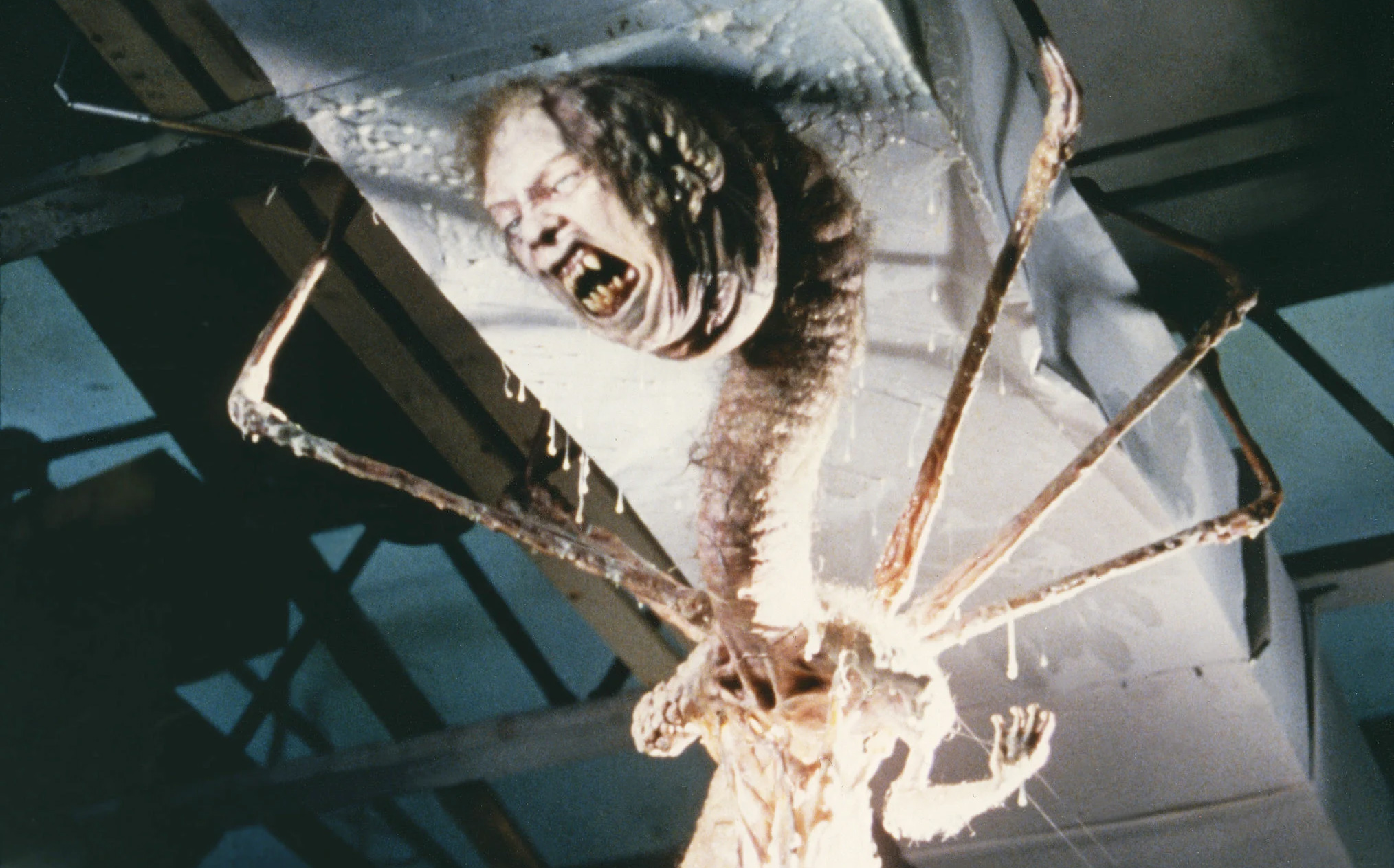
Perhaps the most unsettling kind of extraterrestrial invader is the type featured in films like The Thing, Invasion of the Body Snatchers, The Andromeda Strain, and the recent Apple TV series Pluribus. These aliens are pure biological imperative — they just want to spread, like Kudzu, and they can colonize a single body or a whole society. There’s no philosophy, no desire either to befriend us or conquer us with photon torpedoes. There’s no heart-breaking attempt to escape a dying planet. These aliens are just seeding themselves — it’s no more complicated than crabgrass taking over your backyard.
One frequent argument against the possibility of extraterrestrial visitors is that it would take too long for aliens to cross the enormous gulf between stars. But time might not be a barrier for alien spores — in sci-fi, they often reach Earth after a long interstellar journey.
If invading aliens are like some species on Earth, they could be playing a very long game indeed.
Some terrestrial organisms enter states of dormancy in order to survive harsh environmental conditions. This adaptation strategy isn’t limited to simple organisms, either. Plants in temperate zones lose their leaves and go dormant during the winter. Bears hibernate — a type of dormancy — to conserve energy when food is in short supply. And whole broods of cicadas will spend 17 years dormant underground, emerge for a few months to reproduce, and then start the cycle over again.
A form of suspended animation practiced by tardigrades, called the tun state, allows these amazing creatures to withstand temperatures close to absolute zero and exposure to space conditions for long periods. Tardigrades can reduce their water content to less than 1% of normal and drop their metabolism to a few hundredths of a percent of its normal active level. It’s not clear exactly how long they can survive in the tun state, but the answer appears to be at least 30 years.
If invading aliens are like some species on Earth, they could be playing a very long game indeed. One study identified an ancient bacterium closely related to Bacillus sphaericus that had a dormancy period of 25 million years. In another published case, researchers revived a bacterium retrieved from a 250 million-year-old brine trapped within a salt crystal. This suggests that there may be no practical limit to how long alien microbial life could survive in a dormant state. In fact, this survival strategy may be common throughout the Universe. And the possibility that alien equivalents of Earthly bacteria or viruses could infect us is the main reason space agencies attach great importance to the concept of planetary protection — making sure that samples retrieved from other worlds don’t accidentally cause pandemics here on Earth.
4. The Transformers: Robots and AIs

As artificial intelligence seeps into every aspect of our culture, opinions about its future impact run the full gamut: AI will either be humanity’s salvation or its undoing. The Terminator series is probably the best sci-fi portrayal of humankind losing control over its own machines. Let’s hope the real future is brighter, but however it evolves, AI is almost certain to have a profound effect on society, and an advanced space program without AI is difficult to imagine.
Spacefaring robots and sentient machines have long been a staple of sci-fi, from the Transformers franchise to the Cylons of Battlestar Galactica. And with good reason: Artificial “bodies” would withstand the rigors of space travel far better than our fragile meat-sacks.
Aliens could potentially leave their bodies — robotic or organic — at home entirely.
Of course, there’s a middle ground between all-natural and all-artificial bodies, and 21st-century technology has already arrived at that point. In philosopher Andy Clark’s words, we are “natural-born cyborgs.” New replacement body parts are invented every day, from titanium hips to pacemakers. This trend will undoubtedly keep advancing, and even without AI, future Earthlings are likely to be a hybrid of flesh and machine.
If the aliens choose an even more efficient way to cross the interstellar void, they could leave the bodies — robotic or organic — at home entirely, and just send a digital recipe for constructing new bodies, or spaceships, or whatever, at the destination planet. Think Pluribus, or Carl Sagan’s Contact. We shouldn’t be surprised, then, if the first aliens to arrive here are robots or cyborgs — or possibly just the instructions for how to make them.
5. The Solaris Ocean: Aliens so strange we may not recognize them
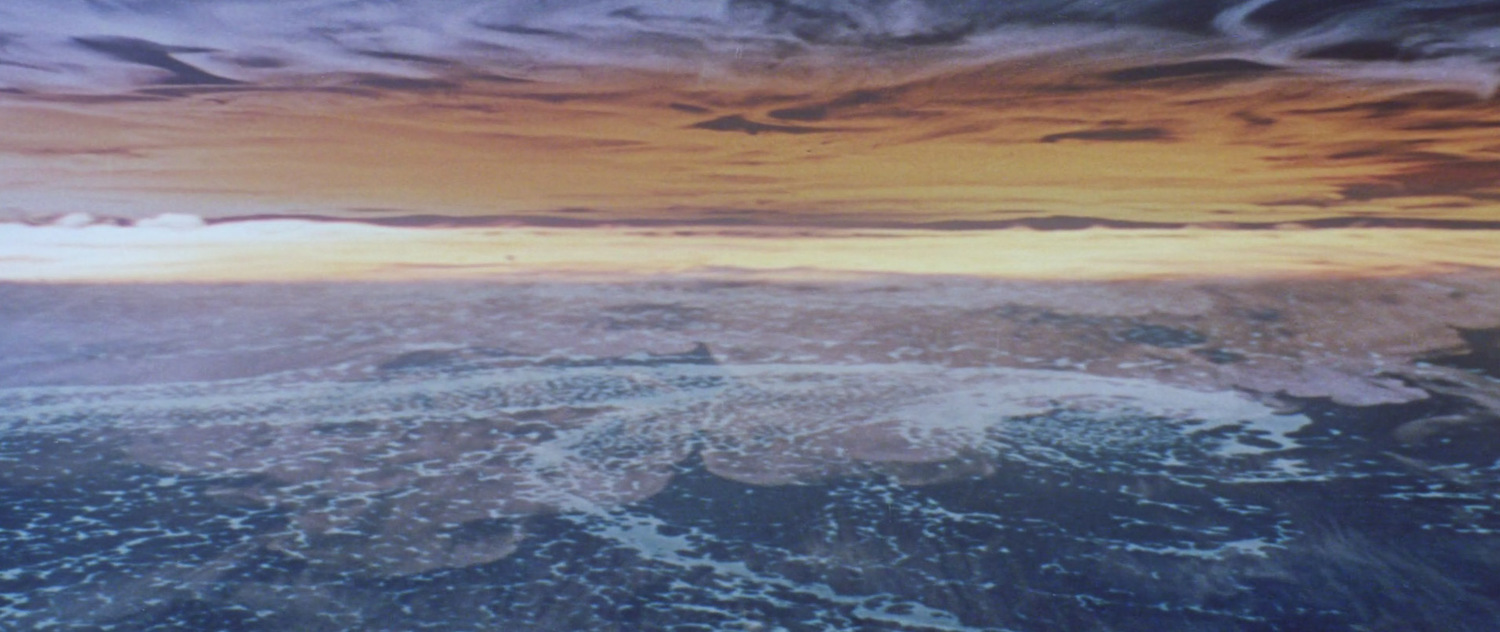
Some of the most iconic sci-fi films stretch our concept of extraterrestrial life to — or even past — the limits of understanding. The otherworldly beings in movies like 2001: A Space Odyssey, Arrival, and Solaris (in both its Russian and American versions) defy easy description — it’s hard to say exactly who, or even what, they are.
Non-carbon-based life is at least scientifically plausible — it might not exist on Earth (as far as we know), but it’s based on scientific principles. The classic example is the rock-like Horta species in Star Trek, which is based on silicon rather than carbon. The miners who collect their eggs don’t even realize they are living creatures, and therein lies the classic problem of alien encounters leading to misunderstanding and conflict. Even weirder is the Dikironium Cloud Creature, also from Star Trek, a kind of sentient gas that preys on humans. Or the mysterious ocean in Solaris — it remains beyond the comprehension of even the humans in contact with it.
Is the entire Universe alive? Is that the real lesson awaiting us as we head out into space?
At this point, astrobiology — at least as far as it has advanced in our pre-alien-contact era — offers little insight. In fact, the concept of “life” still stubbornly defies precise description. Nearly every scientist in the field has a preferred definition. Most are based on properties we associate with life, similar to how chemists once described water as being translucent, dissolving certain chemicals, freezing at 0oC, etc., before molecular theory allowed them to define it simply as H2O.
Philosopher of science Carol Cleland has argued that all approaches to defining life are deeply flawed. She believes we should be on the lookout for biological anomalies — phenomena that resist classification as “living” or “nonliving” — when exploring other planets. Such anomalies, Cleland argues, are usually the driving force behind scientific discoveries because they challenge current thinking. Taking her approach would allow us not only to find life as we know it on other planets, but also to recognize truly novel forms of life instead of dismissing them as another kind of abiological phenomenon.
Which leads to a final thought: Certain animistic spiritual traditions, notably among indigenous Australians and Native Americans, would say the entire Universe is alive. Is that the real lesson awaiting us as we head out into space?
This article is part of Big Think’s monthly issue Biology’s New Era.


The Energy Transition