




















Search
Latest Articles
The newest essays, interviews, and features from Big Think.

Moving the needle forward on psychedelic research.

One Juul representative told high-school students that Juul products were "99% safer than cigarettes," according to congressional testimony.

In 2018, The New York Times published a comprehensive expose on the burgeoning crypto movement that detailed the luxurious lives of the newly crypto rich. The article, aptly titled, "Everyone […]

Bill Maher called for fat shaming last week. His argument makes sense.

3mins
When it comes to job security in the future, instead of acting "professional" you may want to act more human.

Critics complain that Maslow's hierarchy of needs focuses too much on the West. Yet other cultures often have similar ideas about personal development.

A group of at least 20 kids in Spain gets a rare illness with historical roots.

The large-scale study got it right for 83 percent of participants. Would you take the blood test?

Barbara J. King on animal emotions, anthropomorphism, and the future of the planet.

7mins
Correlation doesn't equal causation — we all know this. Well, except robots.
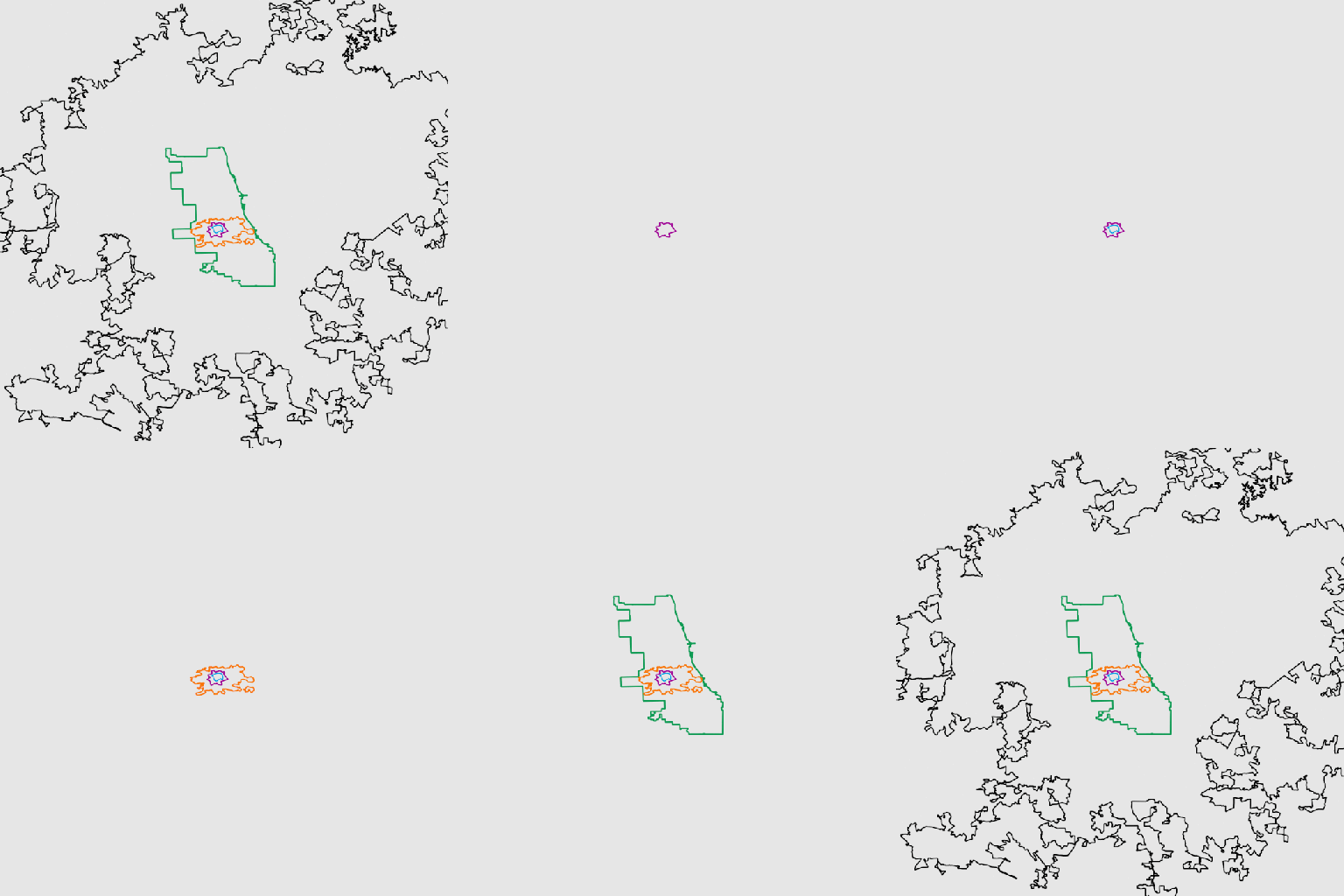
How the half-hour commute and motorised transport changed our cities into huge metropolises.

Virtual borders have also been subtly dividing the world

How much are free online goods worth to people, anyway? Researcher attempt to find an answer.

A scientist in Sweden makes a controversial presentation at a future of food conference.

Humpbacks swap songs at remote group of islands in the South Pacific.

Taped on the Asian side of Istanbul, Turkey: The ancient art of coffee ground reading. Food as a citizen of geographic, not national borders. Chef and food ethnographer Musa Dağdeviren, author of THE TURKISH COOKBOOK, and his ambitious project to preserve Turkey's rich and diverse cuisine.

8mins
What can a learning space achieve when it's optimized for both student and parent expression?
yes. every kid.

Politically incorrect speakers seem less calculated and more "real," according to the authors of a new Berkeley study.

Could this be a new trend in the social media landscape?

Although they may be healthier in many ways, more ethical, and better for the environment, restrictive diets don't come without their challenges.