




















Search

The night sky is already noticeably different, and bigger changes are ahead. For all of human history until the launch of Sputnik, the only objects in the night sky were naturally […]

Journalists, doctors, and others you should know.

Identifying primordial ripples would be key to understanding the conditions of the early universe.


History is not the story of great people directing the course of the world. It’s about networks. Sure, great people may have had an outsized pull on certain events. But […]

A new survey, the DESI Legacy Imaging Survey, has found more lenses than all others put together. One of Einstein’s most revolutionary predictions is that mass bends light. During a […]

The main bioactive compound in catnip seems to protect cats from mosquitoes. It might protect humans, too.

A unique exoplanet without clouds or haze was found by astrophysicists from Harvard and Smithsonian.

People often make a killing in stocks, but there are other ways to potentially turn major profits.

NASA is scrapping its Apollo-era launcher platform to make room for new infrastructure that will support upcoming Artemis missions.

Darwin was right again—sort of.

Scientists discover burrows of giant predator worms that lived on the seafloor 20 million years ago.

The idea behind the law was simple: make it more difficult for online sex traffickers to find victims.

We have two ways of measuring the expansion rate. Here’s the harder one. If you want to understand where our Universe came from and where it’s going, you need to measure […]

When someone is lying to you personally, you may be able to see what they're doing.

The newly discovered galaxies are 62 times bigger than the Milky Way.

Psychologists point to specific reasons that make it hard for us to admit our wrongdoing.
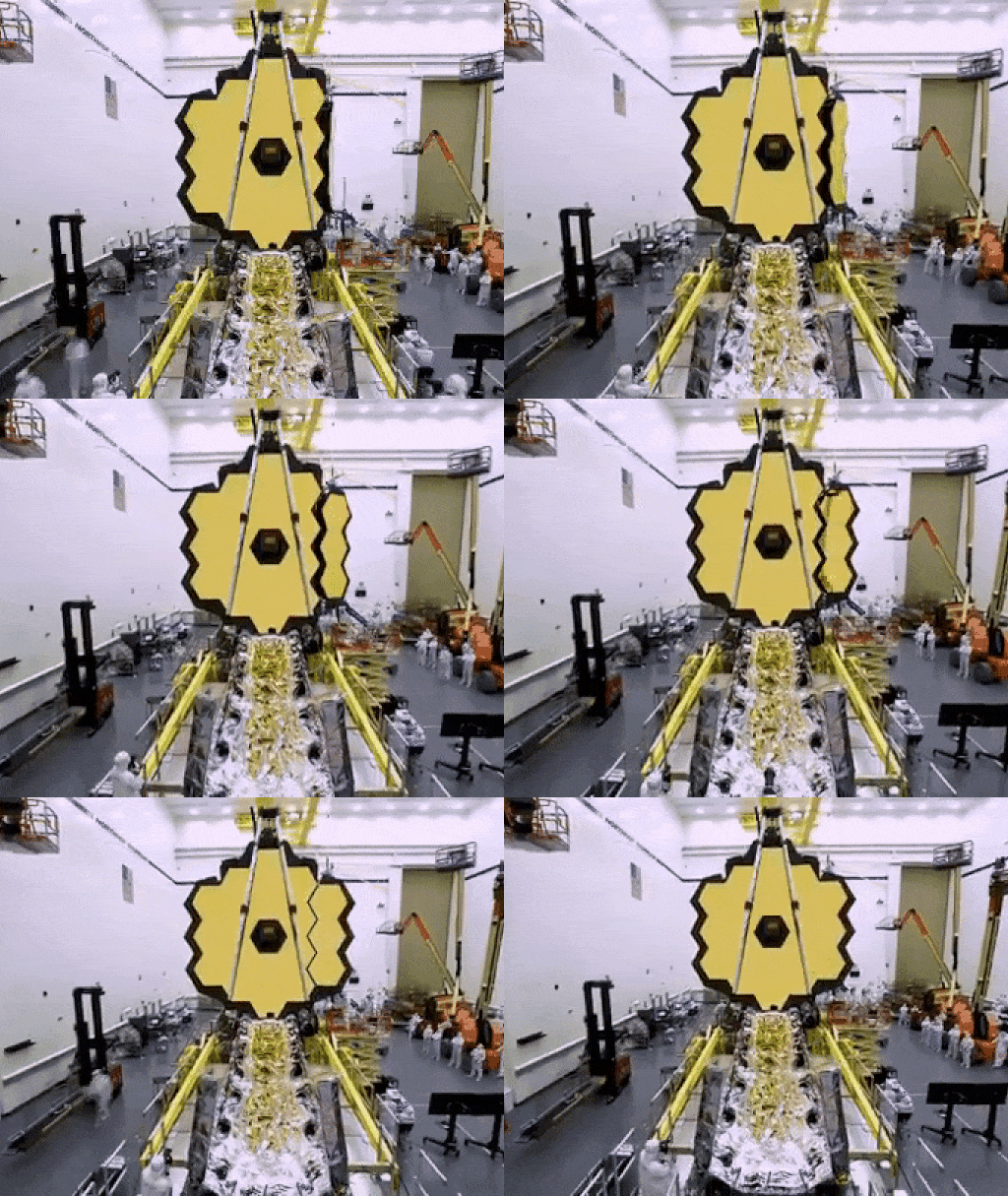
The successor to Hubble is almost ready for launch. It’s really coming this year, too! NASA’s James Webb Space Telescope, originally proposed in the 1990s, is finally slated to launch later […]

Workaholism is perhaps the most socially accepted addiction, but a new paper shines light on the serious health risks that accompany it along with which occupations are most at risk.

User-driven sites lead to user-based bias.