




















Search
Mind & Behavior
Study the science of how we think, feel, and act, with insights that help you better understand yourself and others.

17mins
“Anxiety is focused on things that are important to you in life. That is the key.”

2mins
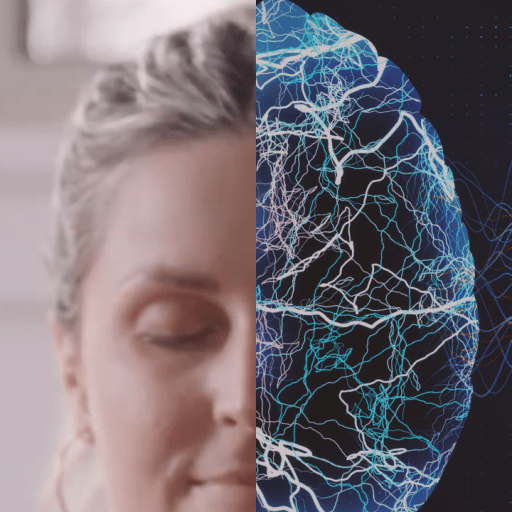
Your brain changes when you experience something, and it changes again when you remember it. Two neuroscientists explain what that means for memory, perception, and identity.
Unlikely Collaborators
7mins
Three doctors break down brain function, somatic awareness, and how to recover from bad experiences.
Unlikely Collaborators

3mins
What if emotional regulation isn’t just a trait, but a skill parents and teachers can help develop? Ethan Kross reveals what science says about shaping young minds.

17mins
"The sense that we are a solid entity, an unchanging entity that exists someplace in our body and takes ownership of our body, and even ownership of our brain rather than being identical to our brain, that is where the illusion lies."
7mins
From trepanning to lobotomies, humans have long struggled to manage emotion. Today, we have better tools. Psychologist Ethan Kross shares what actually works, and why.

18mins
“By not focusing on the outcome and instead designing a tiny experiment, what you can do is letting go of any definition of success, letting go of that binary results that you're looking for, and instead focusing something that makes you feel curious and that you want to explore.”

1hr 25mins
"Virtually everything we're taught about sexuality for the first two decades of our lives is wrong."

1hr 40mins
“Fraud never sleeps. It's really a global problem. Fraud is a trillion dollar problem, about $5 trillion today, with that number increasingly rising annually.”

21mins
"You can't possibly exaggerate how much better it is to live in a peaceful, orderly society, and to be wealthy, and healthy, and surrounded by people who you love."
8mins
Rediscovering competition in an unexpected place helped her rewrite what was possible — and go on to win gold.
Unlikely Collaborators

16mins
“CIA classifies their secrets according to different terminology. There's confidential secrets, there are secret level secrets, and then there are top secret secrets. And the way that they define each of these different levels actually has to do with the impact that would occur if the secret became public knowledge.”

18mins
“We know that as little as 10 minutes of walking can improve your mood, that is getting that bubble bath with the dopamine, serotonin, endorphins going, anybody can do that.”
Why do we fall in love with one person over another? The late biological anthropologist Dr. Helen Fisher unpacks the evolutionary roots of romantic love, sex, and attachment. Using research […]

4mins
"If we did create beings that were more like non-human animals, we ought to treat them much better than we now treat non-human animals."

12mins
“You can debate all sorts of things about how the texture of American life has changed. What you can't debate is the sheer, objective, existential fact that Americans are more alone than ever.”
6mins
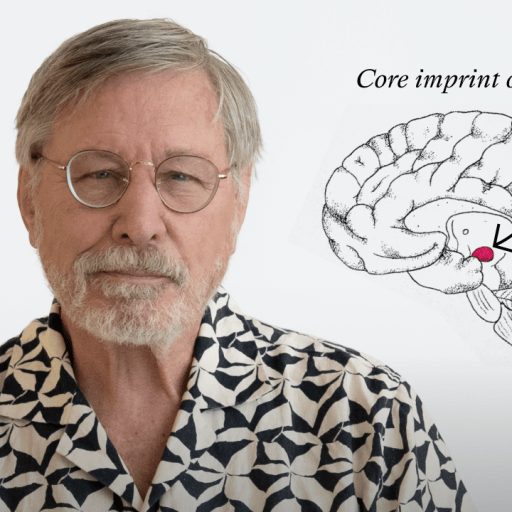
Psychiatrist Dr. Bessel van der Kolk discusses key methods for rewiring the brain, kickstarting the healing process, and opening your mind to new perspectives.
Unlikely Collaborators

1hr 16mins
“We know that as little as 10 minutes of walking can improve your mood, getting that bubble bath with the dopamine, serotonin, endorphins going. Anybody can do that.”

10mins
“The voice in your head is not you. You are listening to that voice. It’s a heckler, trying to make you feel bad.”

12mins
“The very same time that’s making you anxious is actually your most valuable asset. You can always create more energy and more money—but you can never create more time.”