




















Search
Ethan Siegel
Theoretical astrophysicist and science writer

Ethan Siegel is a Ph.D. astrophysicist and author of "Starts with a Bang!" He is a science communicator, who professes physics and astronomy at various colleges. He has won numerous awards for science writing since 2008 for his blog, including the award for best science blog by the Institute of Physics. His two books "Treknology: The Science of Star Trek from Tricorders to Warp Drive" and "Beyond the Galaxy: How humanity looked beyond our Milky Way and discovered the entire Universe" are available for purchase at Amazon. Follow him on Twitter @startswithabang.
Read Less

It started with a bang, but won't end with one. Instead, it will "rage against the dying of the light" like nothing you've ever imagined.

Even with only 12.5 hours of exposure time, James Webb's first deep-field image taught us lessons we've never realized before.

Now that it's fully commissioned, the James Webb Space Telescope begins its exploration of the Universe. Here are its first science images!

With its very first deep-field view of the Universe now released, the James Webb Space Telescope has shown us our cosmos as never before.
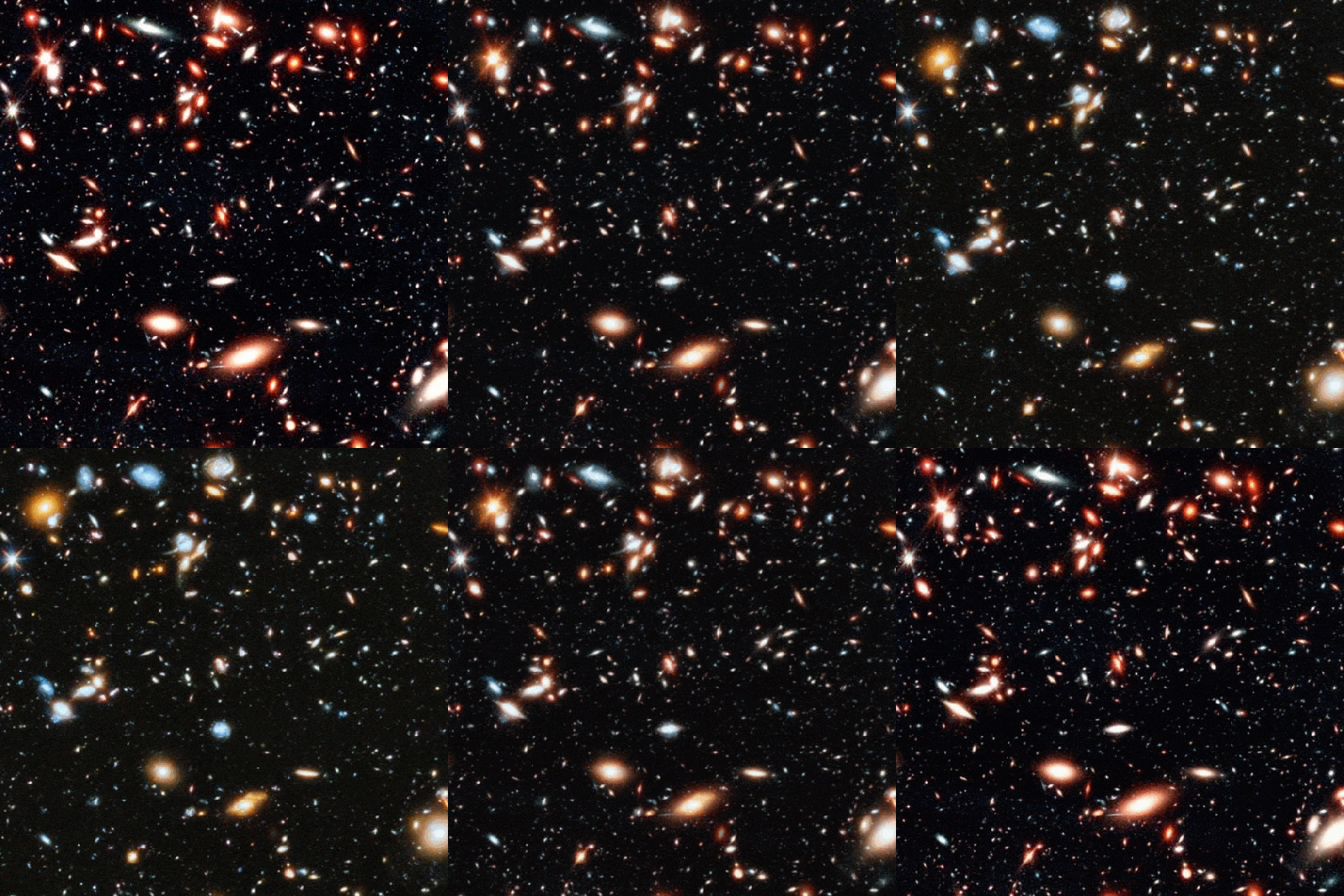
The James Webb Space Telescope has chosen 5 targets for its first science release. Here's what we know on the eve of JWST's big reveal!

The neutrino is the most ghostly, rarely-interacting particle in all the Standard Model. How well can we truly make "beams" out of them?

The way to understand the earliest moments of creation is to recreate those conditions and study them. Why would we stop now?

LIGO can detect the inspirals and mergers of the lowest-mass black holes, but not the biggest ones. Here's how pulsars can help.

At all distances, the Universe expands along our line-of-sight. But we can't measure side-to-side motions; could it be rotating as well?

From the explosions themselves to their unique and vibrant colors, the fireworks displays we adore require quantum physics.

1859's Carrington event gave us a preview of how catastrophic the Sun could be for humanity. But it could get even worse than we imagined.

The idea of gravitational redshift crossed Einstein's mind years before General Relativity was complete. Here's why it had to be there.

No matter how beautiful, elegant, or compelling your idea is, if it disagrees with observation and experiment, it's wrong.

The Universe is expanding, and the Hubble constant tells us how fast. But how can it be a constant if the expansion is accelerating?

There’s an enormous evolutionary advantage for flamingos to stand on one leg, but genetics doesn't help. Only physics explains why.
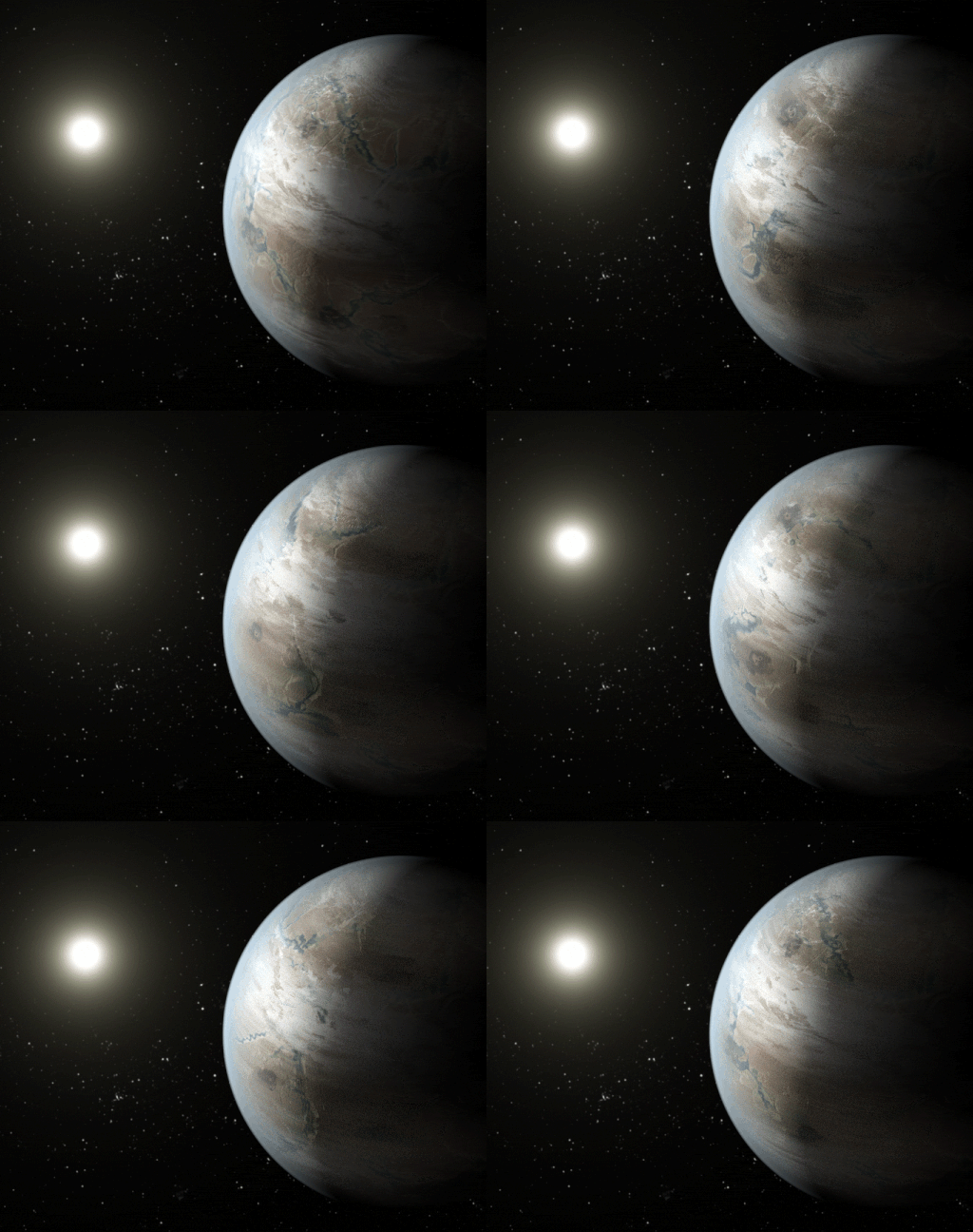
There are billions of potentially inhabited planets in the Milky Way alone. Here's how NASA will at last discover and measure them.

Do you think you know the Solar System? Here's a fact about each planet that might surprise you when you see it!
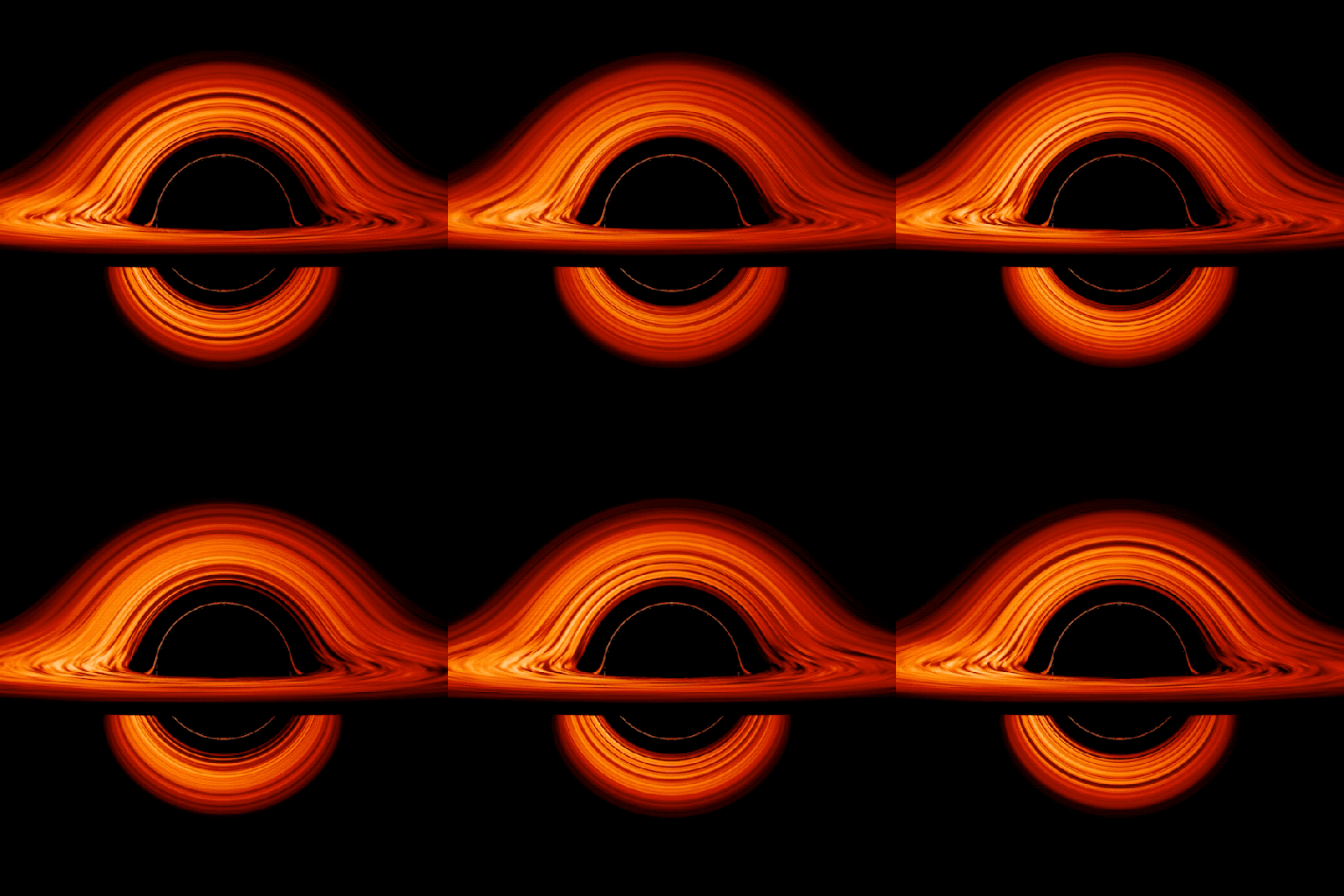
With two different black hole event horizons now directly imaged, we can see that they are, in fact, rings, not disks. But why?

When stars form, they emit energetic radiation that boils gas away. But it can't stop gravitational collapse from making even newer stars.

If you think you know how an astronomical nova works, buckle up. You're in for a ride like you never expected.