




















Search
Kristin Houser

Kristin Houser is the Managing Editor of Big Think. Her articles on science and technology have been featured in NBC News, RealClearDefense, and the World Economic Forum’s Agenda, among other publications, and Stephen Colbert once talked about a piece on “The Late Show,” to her delight.
Kristin is currently based in Pittsburgh, and prior to joining Big Think, she was a staff writer for Futurism, launched an LA-based music blog, and wrote several animated and live action web series.
Read Less

There are hints that it could lead to new treatments for Parkinson’s, Alzheimer’s, and other brain disorders.

CRISPR, stem cells, and even cancer drugs are helping shape an AIDS-free future.

The asteroid is expected to come within 140,000 miles of Earth — well inside the moon’s orbit.

The brain implant lets her talk four times faster than the previous record.

Today's popular weight-loss drugs could soon be joined by brain stimulation and gene therapies.

By looking down, scientists are looking back in time.

"They decreased their drinking to the point that it was so low we didn’t record a blood-alcohol level."

Whether you call it 10 quintillion, 10 million trillion, or 10 billion billion, it's a 1 followed by 19 zeroes.

It could cut the time needed to reach Mars in half.

It could explain why so many people don’t respond to common antidepressants.

Ironically, the company did so using technology perfected by the oil industry.

The topical gene therapy could one day help millions regain their vision.

The $300,000 Model A is a true flying car — it can be driven on roads as well as flown in the air. And it's one step closer to your garage.

It could lead to earlier diagnoses, better treatment, and fewer deaths from pancreatic cancer, which kills 88% of patients within five years.

But it's still challenging to build a 22,000-mile elevator.
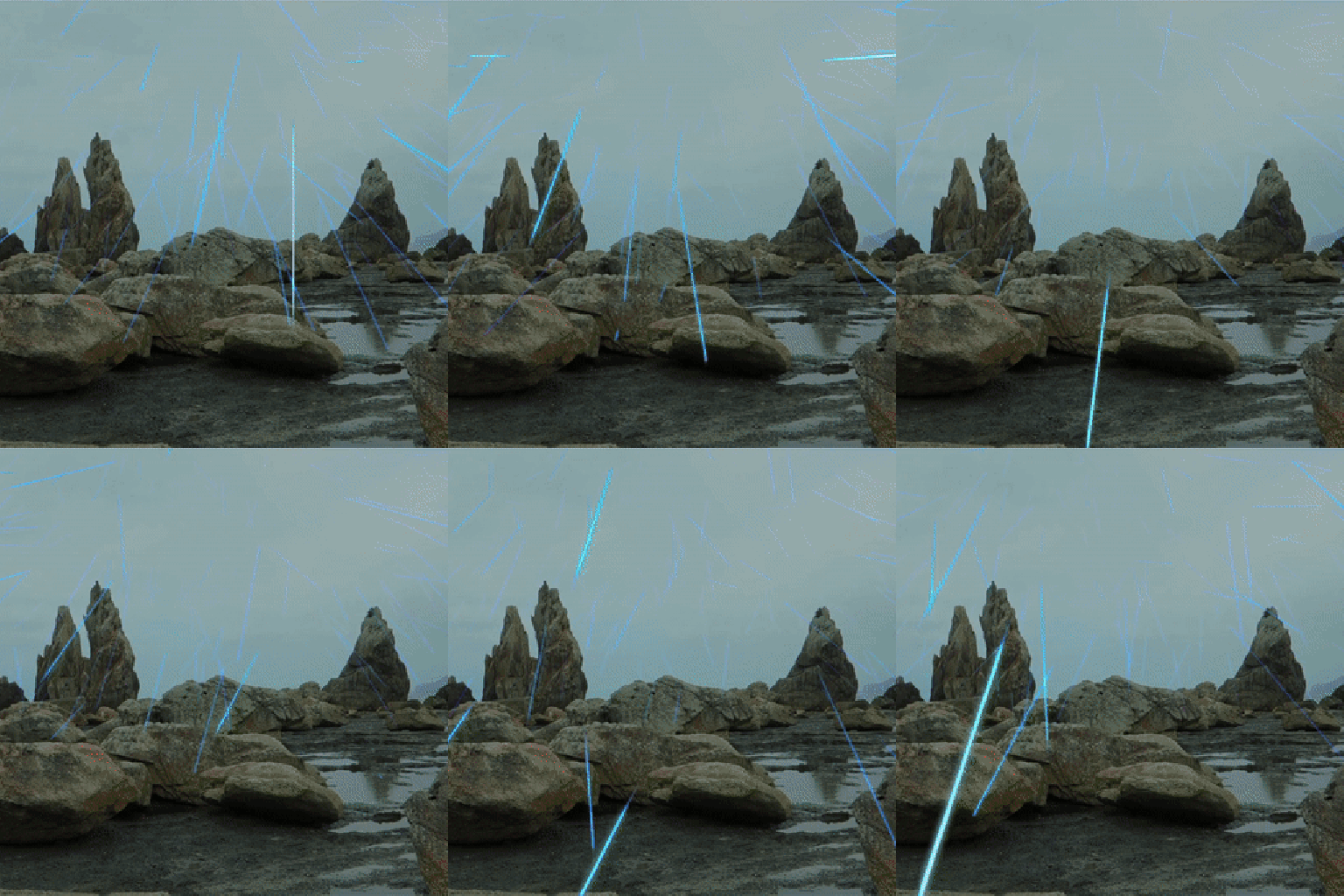
Lost in a building or underwater? A new muon-based navigation system could be your guide.

Particles behave differently when freed from the force of gravity. A new space factory aims to use this to synthesize pharmaceuticals.

And it seems to work alongside popular weight-loss medications, like Ozempic.

There are 40 billion billion black holes in the universe. Here’s how our Solar System stacks up against ten of them.

Named "Phoenix," this AI-powered humanoid could be your next coworker.