




















Search
Philosophy
Examine life’s biggest questions, from ethics to existence, with curiosity and critical thinking.

18mins
“By not focusing on the outcome and instead designing a tiny experiment, what you can do is letting go of any definition of success, letting go of that binary results that you're looking for, and instead focusing something that makes you feel curious and that you want to explore.”
3mins
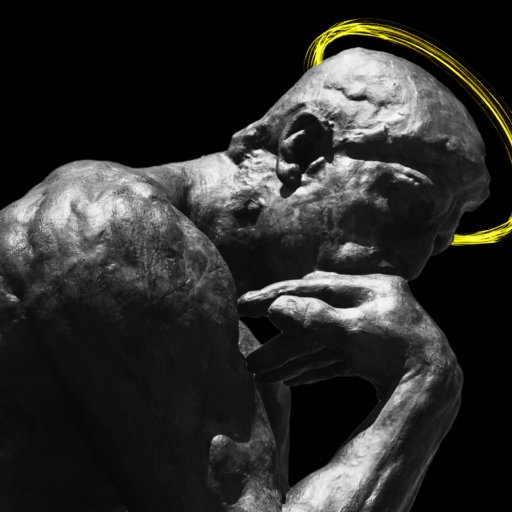
Philosopher Meghan Sullivan challenges the idea that religious texts can’t be taken seriously in modern philosophy. She explains how parables, scripture, and debate have always been connected to asking life’s biggest questions:

1hr 18mins
“Could black holes be the key to a quantum theory of gravity, a deeper theory of how reality, of how space and time works?”

13mins
"We've sent out one or two little messages, but we certainly aren't investing billions of dollars shouting out into the cosmos saying, "Hey, we are here. Come say hi.""

19mins
"It's a very, very beautiful calculation, but it's the best example I know of the relationship between these rather abstract quantities perhaps and something that you can look at in a telescope."

3mins
According to philosopher Meghan Sullivan, effective altruism may overlook the moral importance of seeing others as individuals. She explains how love should guide how we care for both present and future humans.

21mins
"You can't possibly exaggerate how much better it is to live in a peaceful, orderly society, and to be wealthy, and healthy, and surrounded by people who you love."
8mins
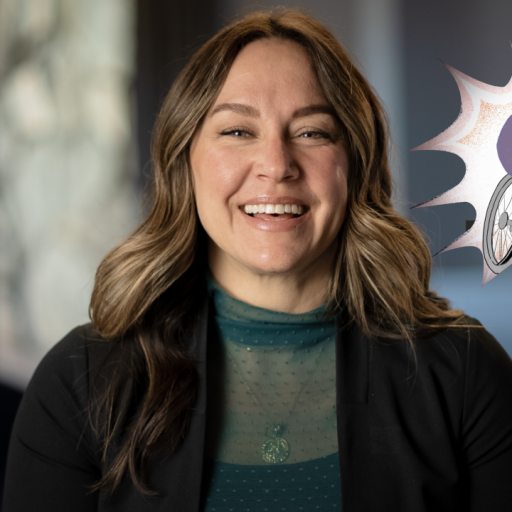
Rediscovering competition in an unexpected place helped her rewrite what was possible — and go on to win gold.
Unlikely Collaborators
2mins
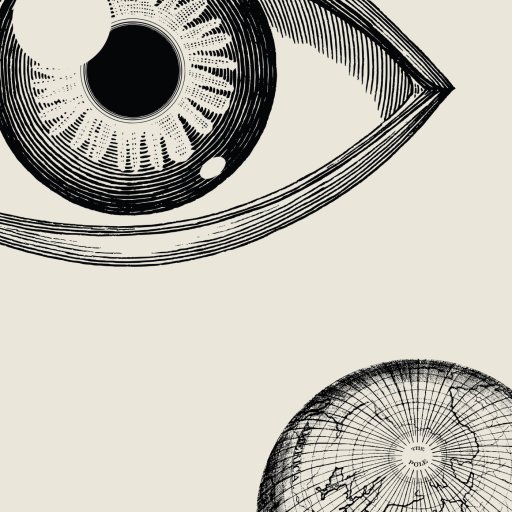
We may be close to finding life beyond Earth. But would we even recognize it if we did? Astrobiologist Betül Kaçar explains what signs NASA is looking for.
3mins
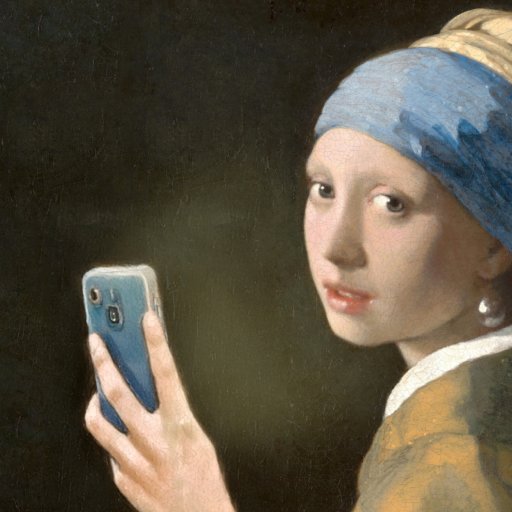
From the printing press to the internet, every technological revolution in history has reshaped human thought. Now, with AI accelerating by the day, philosopher Meghan Sullivan asks: Are we ready for the philosophical shift that must follow?

4mins
"If we did create beings that were more like non-human animals, we ought to treat them much better than we now treat non-human animals."

5mins
“When you think about this interconnection of all these tiny causes and effects which add up to the way the world unfolds, it becomes impossible to imagine that we have complete control.”

6mins
Aristotle thought that a friend you love is considered your ‘second-self’, someone whose pain feels like your own. Philosopher Meghan Sullivan asks, what happens when you extend that kind of love to strangers?

1hr 11mins
“It's a remarkable series of events that were required for us to be here, and that so many things could have happened in a different way that we wouldn't be here at all, both individually, and as a species.”

20mins
“Even if there are beliefs that we hold that are true, if we prevent people
challenging those beliefs, we will lose our understanding of why they're true.”

18mins
“We are beginning to take our first steps out into the cosmic ocean… and the water seems inviting.”

1hr 19mins
“We don't have enough knowledge to precisely calculate what is going to happen, and so we assign probabilities to it, which reflects our ignorance of the situation.”

1hr 55mins
“It’s not about being perfect. It’s about reducing suffering where we can, and right now, we’re choosing not to.”

5mins
"I think happiness is not a smiling face, it's more a smiling soul."

1hr 36mins
"It's a true fact, but a bizarre one, that the reason why hundreds of thousands of people died in Hiroshima and Nagasaki rather than Kyoto and Kokura, is because of a 19-year-old vacation and a passing cloud."