




















Search
Philosophy
Examine life’s biggest questions, from ethics to existence, with curiosity and critical thinking.

3mins
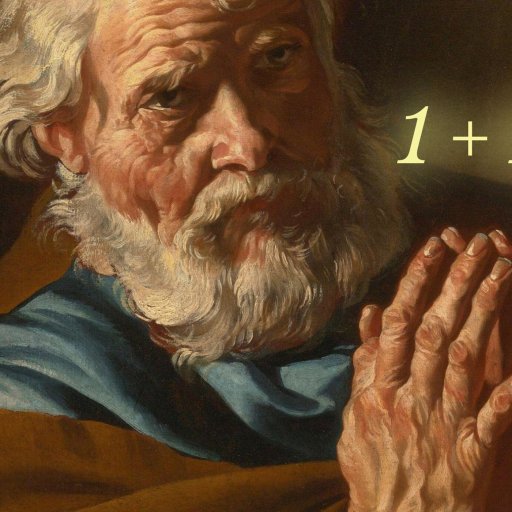
From nothing to everything: How zero changed our understanding of the universe, forever.

Desire is like a drug. But is an addict always an addict?

5mins
Who decides what’s “normal” and why? As social norms increasingly dissolve, here’s how to find true guidance.

1mins
What would the world be like if we focused on “the inherent beauty of math,” rather than its technical aspects? A statistician reflects:

Welcome to The Nightcrawler — a weekly newsletter from Eric Markowitz covering tech, innovation, and long-term thinking.

Taught in every introductory physics class for centuries, the parabola is only an imperfect approximation for the true path of a projectile.

8mins
How can ancient philosophical wisdom guide us in ensuring that artificial intelligence enhances human flourishing rather than diminishing it?
Cosmos Institute

There's value to be found in the arguments that make you uncomfortable — especially in a culture that has trained us to avoid them.

"The Big Map of Who Lived When" plots the lifespans of historical figures — from Eminem all the way back to Genghis Khan.
2mins
Statistician Talithia Williams on how math is the clearest path to understanding our existence.

With the right prompts, large language models can produce quality writing — and make us question the limits of human creativity.

Why human attempts to mechanize logic keep breaking down.

Philosophy cures no disease and invents nothing new. What's even the point?

3mins
How do scientists measure and define life in the natural world? Dr. Lee Cronin gives us a definition, in 4 minutes:

The mass that gravitates and the mass that resists motion are, somehow, the same mass. But even Einstein didn't know why this is so.

Thinking of a number between one and ten? Here's how predictable human responses create the illusion of telepathy.

Welcome to The Nightcrawler — a weekly newsletter from Eric Markowitz covering tech, innovation, and long-term thinking.

As creatures and machines meld together in increasingly advanced forms, ethicists are starting to take note.

Most leaders get the psychology of human motivation all wrong — here’s how a presidential encounter with a leaf-sweeper puts it right.

For extraordinary long-term success in business we can look to insights from British Olympic cycling, Roger Federer and neuroeconomics.