




















Search
Science & Tech
Explore the discoveries that reveal how the world works, alongside the technologies that extend, reshape, and sometimes challenge what’s possible.

Going back to 1990, we hadn't even found one planet outside of our Solar System. As we close in on 6000, we now see many of them directly.

Since even before Einstein, physicists have sought a theory of everything to explain the Universe. Can positive geometry lead us there?

Across all wavelengths of light, the Sun is brighter than the Moon. Until we went to the highest energies and saw a gamma-ray surprise.

The Juno spacecraft, orbiting and imaging Jupiter since 2016, is still succeeding. Without a further extension, the mission now faces death.

The African Union argues that the Mercator projection distorts the continent, both in size and global attention.

With several seemingly incompatible observations, cosmology faces many puzzles. Could early, supermassive stars be the unified solution?

As we look to larger cosmic scales, we get a broader view of the expansive cosmic forest, eventually revealing the grandest views of all.

Explanations for the cosmic speed limit often conflate mass with inertia.
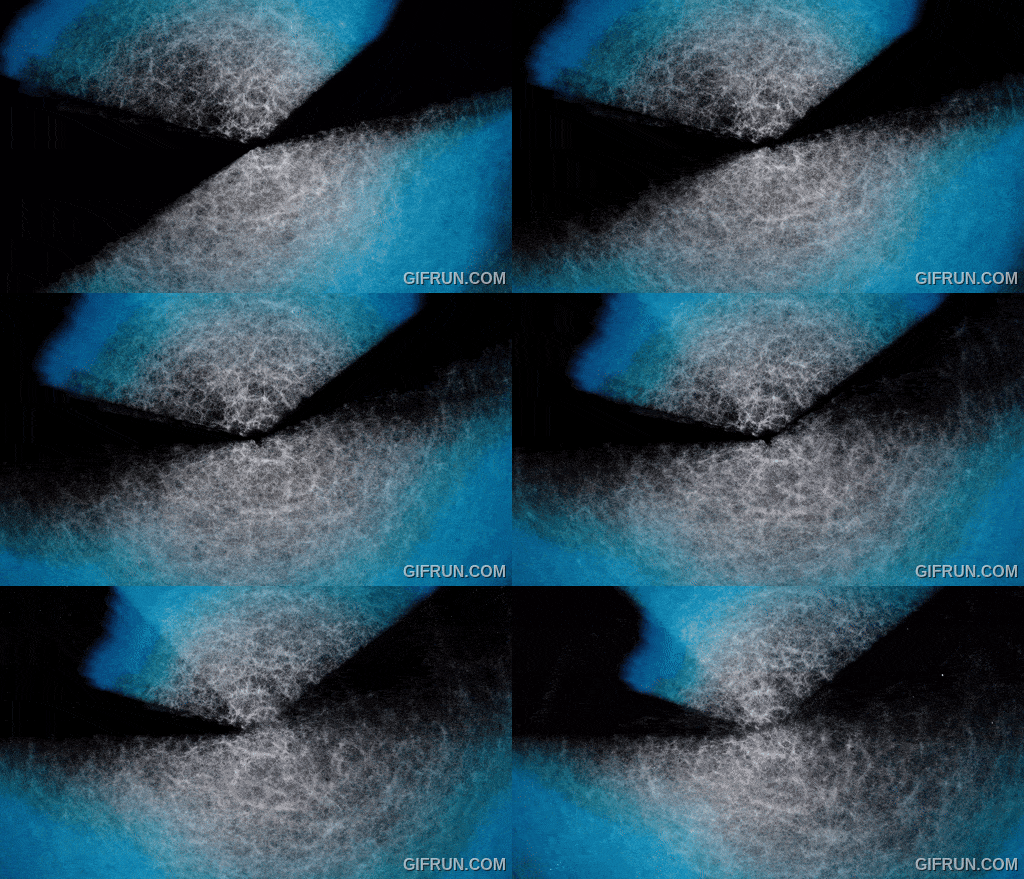
The Universe isn't just expanding; the expansion is accelerating. If different methods yield incompatible results, is dark energy evolving?

When you don't have enough clues to bring your detective story to a close, you should expect that your educated guesses will all be wrong.
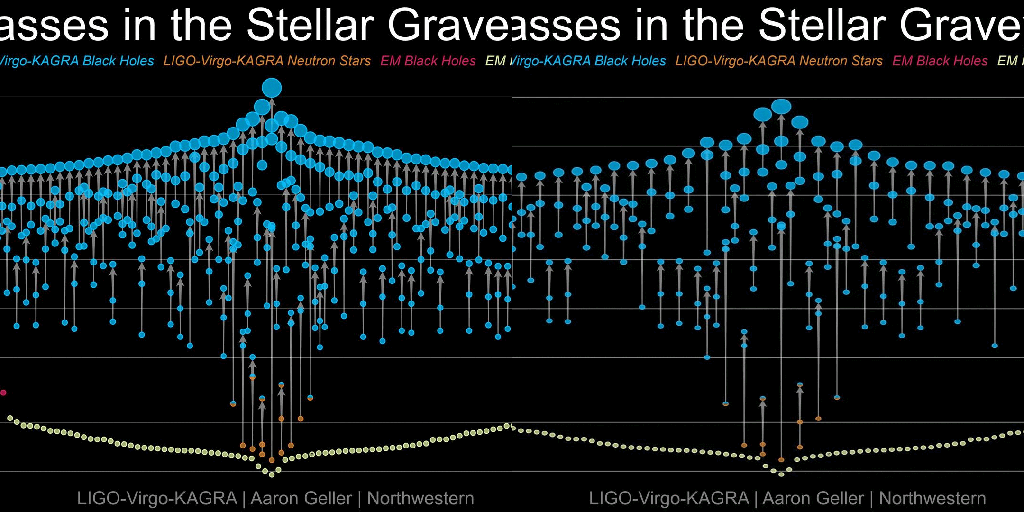
10 years ago, LIGO saw its first gravitational wave. After 218 detections, our view of black holes has changed forever. Can this era endure?

In this excerpt from "Tales of Militant Chemistry," Alice Lovejoy exposes how the need for uranium during WWII led the Allied governments to turn a blind eye to colonial exploitation.

The latest "Superman" film sets Metropolis in the First State.
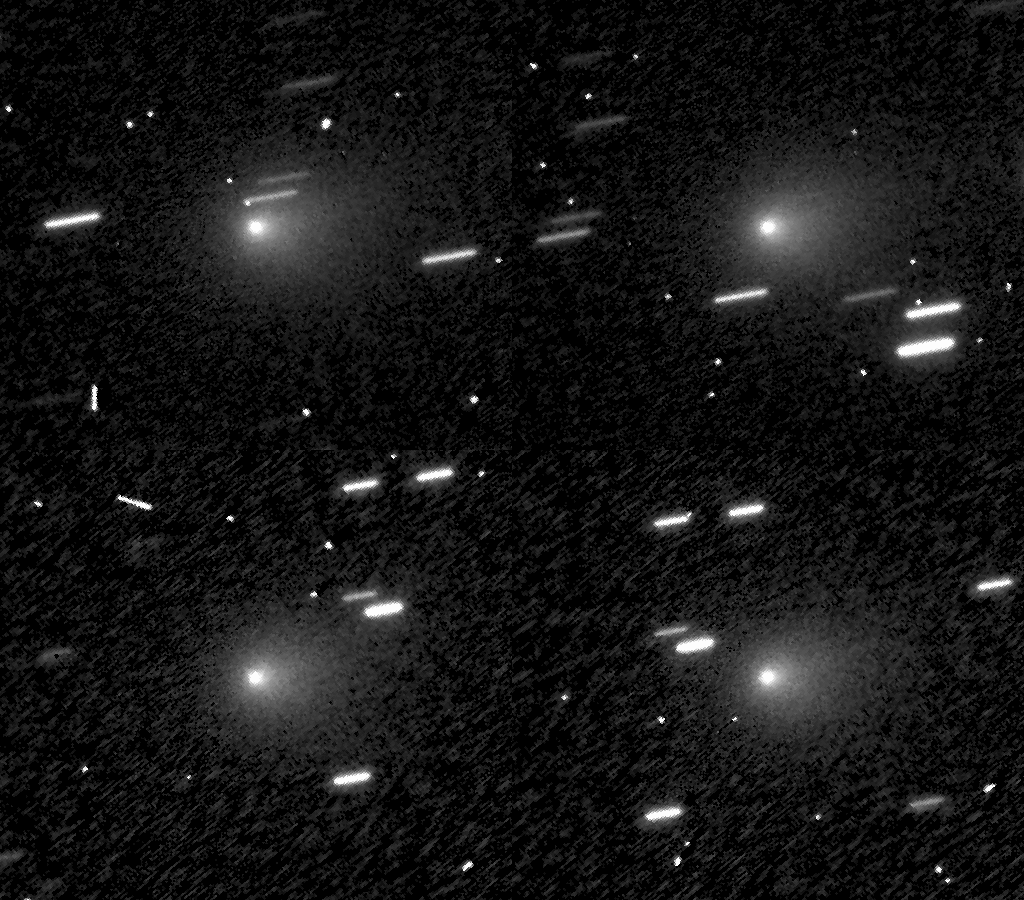
Designed to map galaxies, the SPHEREx mission's first science result is instead about interstellar interloper 3I/ATLAS. No, it's not aliens.

In our own Milky Way, a recently deceased star creates a ghostly, hand-like shape in X-rays some 150 light-years wide. Here's how it's made.

Throughout history, "free energy" has been a scammer's game, such as perpetual motion. But with zero-point energy, is it actually possible?

In “The Secret History of Denisovans,” Silvana Condemi and François Savatier trace the story of our mysterious hominin ancestor.

There could be variables beyond the ones we've identified and know how to measure. But they can't get rid of quantum weirdness.

A conversation with neuroscientist Erik Hoel about the future of consciousness research.

A conversation with Annaka Harris on shared perception, experimental science, and why our intuition about consciousness is wrong.