




















Search
Science & Tech
Explore the discoveries that reveal how the world works, alongside the technologies that extend, reshape, and sometimes challenge what’s possible.

Physicists have increasingly begun to view life as information-processing "states of matter" that require special consideration.

From the explosions themselves to their unique and vibrant colors, the fireworks displays we adore require quantum physics.

The structure of our Solar System has been known for centuries. When we finally started finding exoplanets, they surprised everyone.

50 years ago, Herman Chernoff proposed using human faces to represent multidimensional datasets. It was a good idea in theory — but a disaster in practice.

“Isn’t it enough to see that a garden is beautiful without having to believe that there are fairies at the bottom of it too?”

There are many things that separate science from ideology, politics, philosophy, or religion. Follow these 10 commandments to get it right.

New tests to detect species being traded, as well as population studies, aim to help save them.

A long view of biological survival might point us to new possibilities for finding life elsewhere in the Universe.

Architecture in the age of AI — argues professor Nayef Al-Rodhan — should embed philosophical inquiry in its transdisciplinary toolkit.

The last infant stars are finishing their formation inside these pillars of gas. The evaporation of those columns is almost complete.
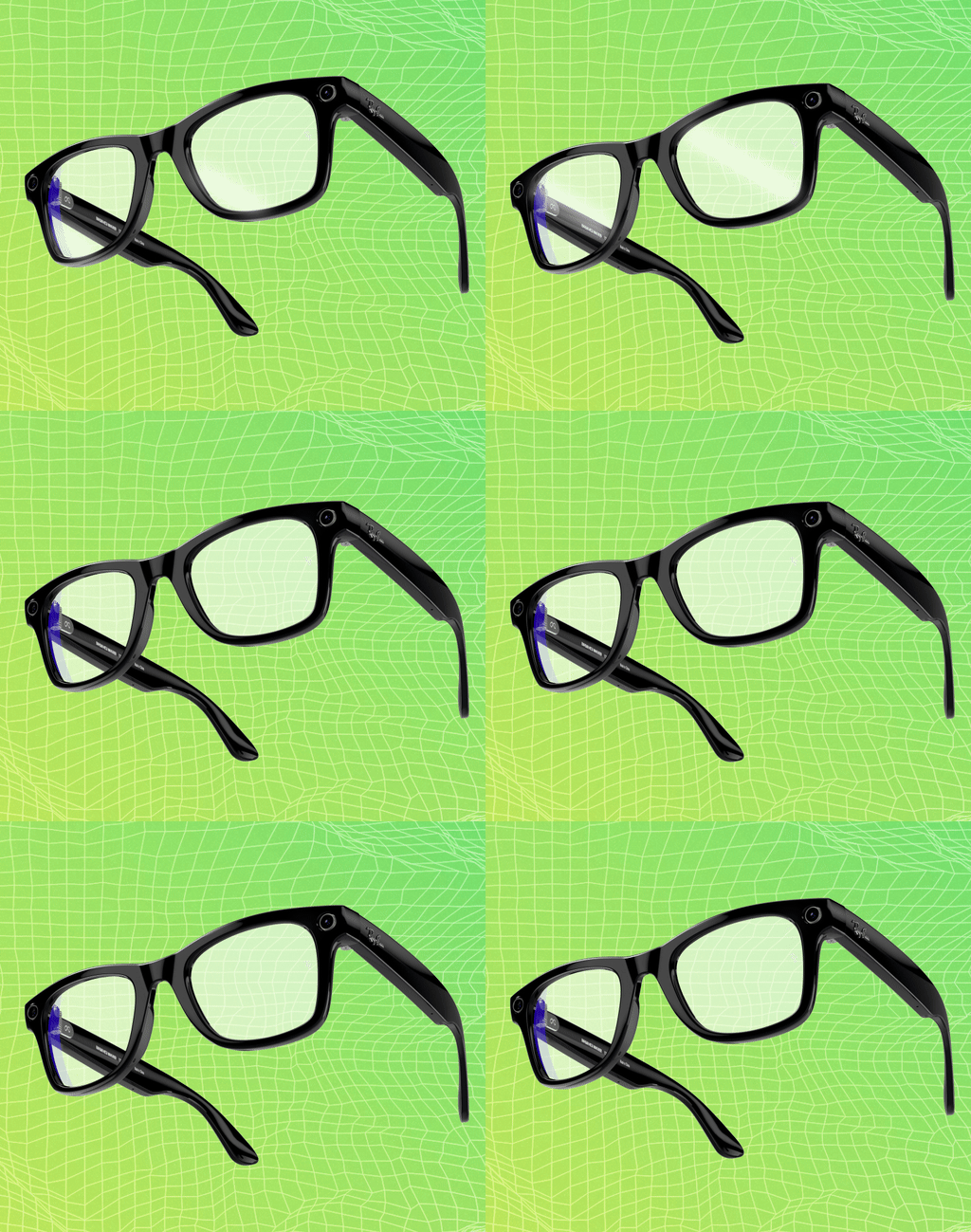
Smart glasses have flopped before. AI could finally make them mainstream.

Kurzweil predicts that AI will combine with biotechnology to defeat degenerative diseases this decade. Then things will get really interesting.

Sure, there's less daylight during winter than summer, as your hemisphere is tilted away from the Sun. But darkness goes deeper than that.

"We should be informed and educated about the risks of AI, but we can’t be afraid,” Khan Academy founder Sal Khan told Big Think.

Our thermodynamic arrow of time explains why the entropy of any isolated system always increases. But it can't explain what we perceive.

The near and far sides of the Moon are so different from each other, and no one is sure why. New lunar samples could confirm a wild theory.

This research team is working out how to detect extraterrestrial cells in the liquid water ocean hidden beneath Enceladus’s icy crust.

The evolution of quantum technology is far from over.

Our “embodied minds” suggest an eventual escape from mortality via computer is unlikely.

All telescopes are fundamentally limited in what they can see. JWST reveals more distant galaxies than Hubble, but still can't see them all.