




















Search
Science & Tech
Explore the discoveries that reveal how the world works, alongside the technologies that extend, reshape, and sometimes challenge what’s possible.
12mins
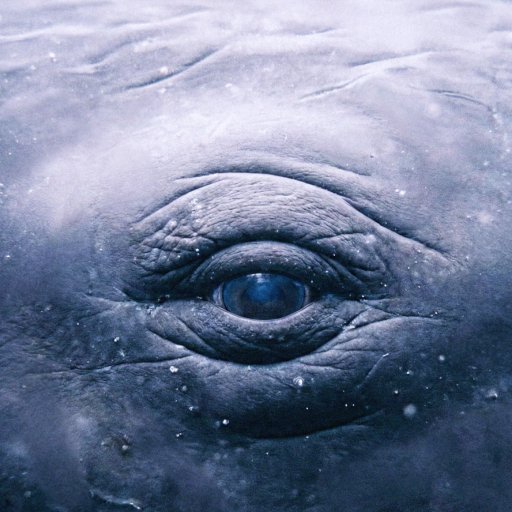
Ninety million years after our lineages split, humans are beginning to listen to whales in a new way. Marine biologist David Gruber shares the work that has become his life’s pursuit: learning how to hear the planet’s largest mammals.

15mins
“Until very recently, I thought I would die with the same genome that I was born with.”

55mins
“Old systems of the past are collapsing, and new systems of the future are still to be born. I call this moment the great progression.”

13mins
Everything ever seen — every star, mountain, and face — makes up less than 5 percent of the universe. Astrophysicist Janna Levin reminds us that the rest — dark matter and dark energy — is invisible, mysterious, and everywhere. We are the luminous exception in a universe of darkness.

41mins
“Progress happens when we choose to make it happen. It happens through choice and effort. And ultimately, to make progress happen, we have to believe in it.”

13mins
“People got skeptical, fearful, doubtful of the very idea of progress in the 20th century and we allowed that to slow down progress itself.”

13mins
“Chance invents and natural selection propagates that chance invention.”

16mins
“The messy reality of it is that all of these very smart people, including Isaac Newton, were talking to other people.”

13mins
“Over the last 10 or 15 years, scientists have really started to understand the fundamental underlying biology of the aging process. And they broke this down into 12 hallmarks of aging.”
14mins
If you’ve gotten goosebumps when hearing a story about a stranger’s selfless heroism, or you’ve felt your chest swell at a concert, when the audience’s voice and the musician’s instruments align, you have felt awe. And, according to professor Dacher Keltner, who has spent his life studying it, it’s one of humankind’s most unifying traits:
3mins
If the people controlling AI are biased, the output will also be. Free speech scholar Jacob Mchangama makes the case for completely open-source AI.

24mins
“Deep down the natural endpoint of this whole goal of looking for planets is to answer the question: are we alone?”

9mins
“The universe clicks along in perfect accord with the laws of physics forever.”

23mins
"Could black holes be the key to a quantum theory of gravity, a deeper theory of how reality, of how space and time works? Well, I think so."

11mins
"We're stuck at type zero. But what would it take to move between universes? What would it take to enter a black hole? What would it take to break the light barrier?"

1hr 13mins
“Nothing about human behavior makes sense except in the light of culture and in anthropology, and we need to understand the cultural component to our behaviors as well.”

1hr 26mins
“I like to say that physics is hard because physics is easy, by which I mean we actually think about physics as students.”

2mins
Astrobiologist Betül Kaçar on why the simple act of asking questions (without needing a reason) is one of the most powerful things a human can do.

1hr 8mins
“An equation, perhaps no more than one inch long, that would allow us to, quote, 'Read the mind of God.'”

2mins
Your brain changes when you experience something, and it changes again when you remember it. Two neuroscientists explain what that means for memory, perception, and identity.
Unlikely Collaborators