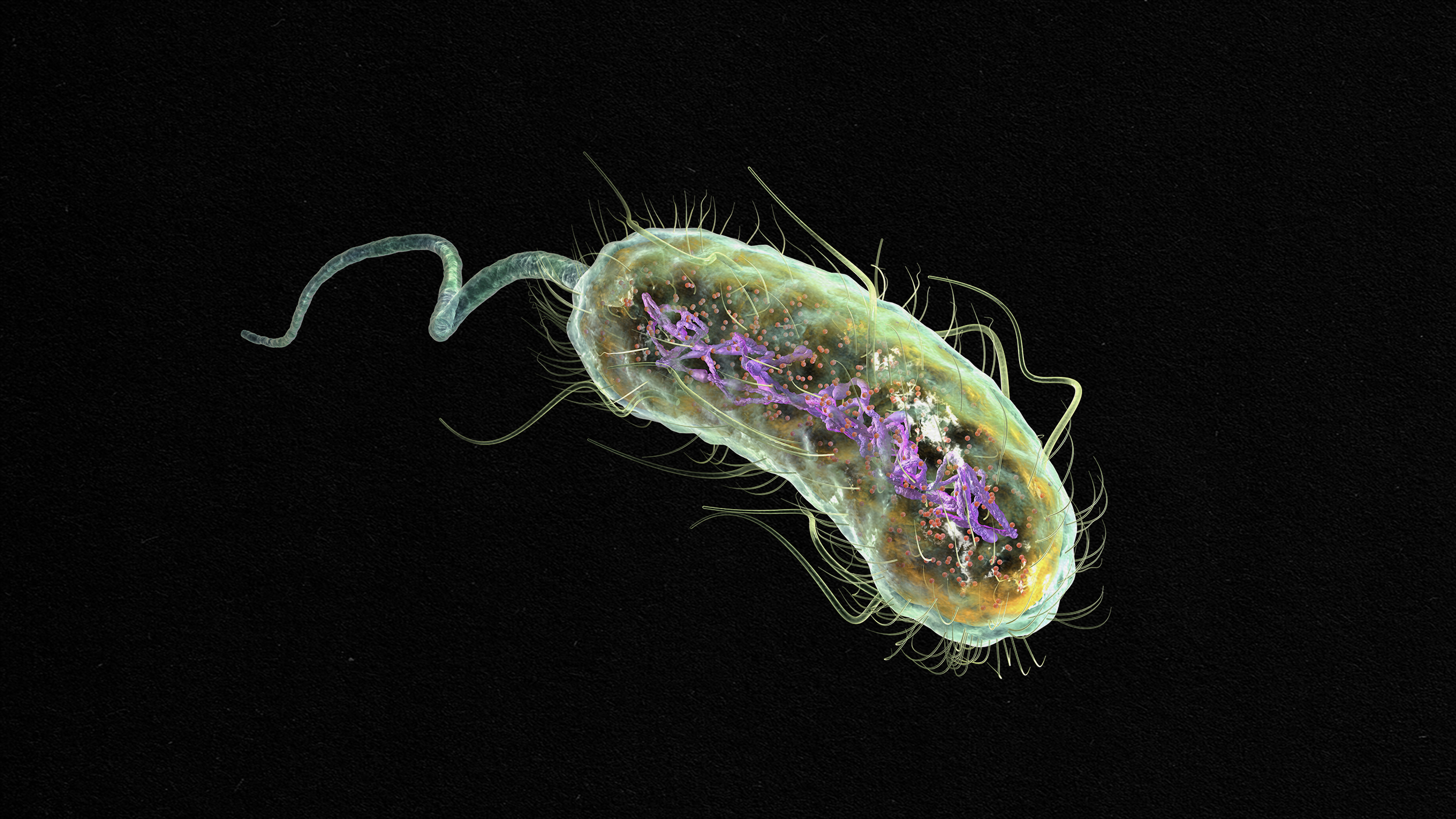
The intestinal microbes of Japanese people have enzymes that seem to be particularly good at digesting seaweed. Researchers studying a common marine bacteria found an enzyme that breaks down the carbohydrates found in the cell walls of red algae — which is also known best as the nori seaweed that is wrapped around sushi rolls. The only other place gene code for the enzyme has also been found is in the bacteria in Japanese people’s stomachs.

Monthly Issue
April 2026
The Energy Transition
In this monthly issue, we examine how our understanding of energy — and how we source and use it — is evolving.
1 video
11 articles