




















Search
Astrobiology

23mins
Brian Cox examines why, despite billions of stars and trillions of planets, we have found no evidence of other intelligent life.
3mins
Thanks to modern tech, Earth is now considered a ‘detectable’ planet. Astrophysicist Sara Seager explains how this idea can lead us to discovering life elsewhere in our universe.
3mins
Military satellite research brought us GPS. Astronomers influenced medical imaging tech. What would be invented after we discover alien life? Professor Sara Seager explains the consequences of such a groundbreaking discovery.

1hr 3mins
Astronomer Jill Tarter explains why SETI is really about technology, patience, and learning how to tell alien signals from our own.
7mins
30 years ago, we didn’t know other stars had planets orbiting them. Now, we may be on the verge of finding Earth’s Twin. Sara Seager explains.

24mins
“Deep down the natural endpoint of this whole goal of looking for planets is to answer the question: are we alone?”

11mins
"We're stuck at type zero. But what would it take to move between universes? What would it take to enter a black hole? What would it take to break the light barrier?"

2mins
Astrobiologist Betül Kaçar on why the simple act of asking questions (without needing a reason) is one of the most powerful things a human can do.

19mins
“So many things could have happened in a different way that we wouldn't be here at all, both individually, for sure, and certainly as a species.”

13mins
"We've sent out one or two little messages, but we certainly aren't investing billions of dollars shouting out into the cosmos saying, "Hey, we are here. Come say hi.""

2mins
The ocean is evolving, and it’s not based on the ‘survival of the fittest.’ Astrobiologist Betül Kaçar explains how it’s not competition that has kept the ocean alive, but collaboration.
2mins
We may be close to finding life beyond Earth. But would we even recognize it if we did? Astrobiologist Betül Kaçar explains what signs NASA is looking for.
6mins
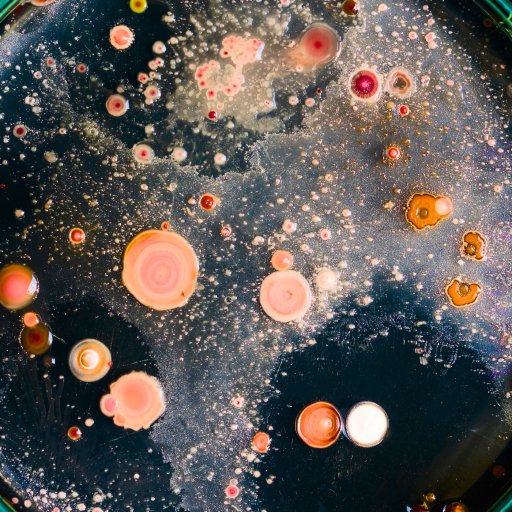
These microbes endured the unlivable. The NASA astrobiologist who studies them reveals what that means for us today

1hr 11mins
“It's a remarkable series of events that were required for us to be here, and that so many things could have happened in a different way that we wouldn't be here at all, both individually, and as a species.”

18mins
“We are beginning to take our first steps out into the cosmic ocean… and the water seems inviting.”

8mins
"There is interesting ethical questions about how we should actually conduct ourselves in [a space colonization] exploration phase."

18mins
"There's a long history of people claiming planets which look Earth-like, Earth 2.0, Earth twins."

7mins
“The physics of the universe doesn't predict the emergence of biology.” Glasgow chemist Lee Cronin explains how inanimate matter becomes evolutionary:

3mins
“I study the mineral kingdom — and its secrets could lead us to alien life.”

7mins
“We could be wrong. But if we are right, it’s profoundly important.” Leading mineralogist Dr. Robert Hazen on the missing law of nature that could explain why life emerges.
John Templeton Foundation

6mins
Physicist Sean Carroll on entropy, complexity, and the origins of life:

42mins
The Santa Fe Institute is a cradle of modern research. Our host Kmele meets some of the brilliant minds who work there.

6mins
Humanity is a type 0 civilization. Here’s what types 1, 2, and 3 look like, according to physicist Michio Kaku.

12mins
There are a few theories as to why we’ve never found other intelligent life in our Universe. Physicist Brian Cox walks us through them.

6mins
How did complex systems emerge from chaos? Physicist Sean Carroll explains.

Do aliens dream about meeting us, too?

5mins
Dr. Sara Walker is an astrobiologist and theoretical physicist, who is questioning the very nature of life and how we’re attempting to find it elsewhere.
John Templeton Foundation