




















Search
Astronomy

Red dwarfs are the Universe's most common star type. Their flaring now makes potentially Earth-like worlds uninhabitable, but just you wait.

Found by Hubble before JWST's launch, GNz7q looked like a mix of a galaxy and a quasar. Was it actually our first known "little red dot"?

24mins
“Deep down the natural endpoint of this whole goal of looking for planets is to answer the question: are we alone?”

The whole isn't greater than the sum of its parts; that's a flaw in our thinking. Non-reductionism requires magic, not merely science.

The Orionids meteor shower peaks October 20th/21st here in 2025, coinciding with a new Moon. See the brightest shooting stars of the year!

To learn how our Universe grew up, we have to look at large numbers of galaxies at all distances to find out. Good thing we have JWST!

Our Sun only arose after 9.2 billion years of cosmic history: with many stars living and dying first. How many prior generations were there?

Since the time of Galileo, Saturn's rings have remained an unexplained mystery. A new idea may have finally solved the longstanding puzzle.

By deeply imaging a large volume of space, COSMOS-Web provides JWST's widest cosmic views. Its gravitational lenses reveal a big surprise.

23mins
"Could black holes be the key to a quantum theory of gravity, a deeper theory of how reality, of how space and time works? Well, I think so."
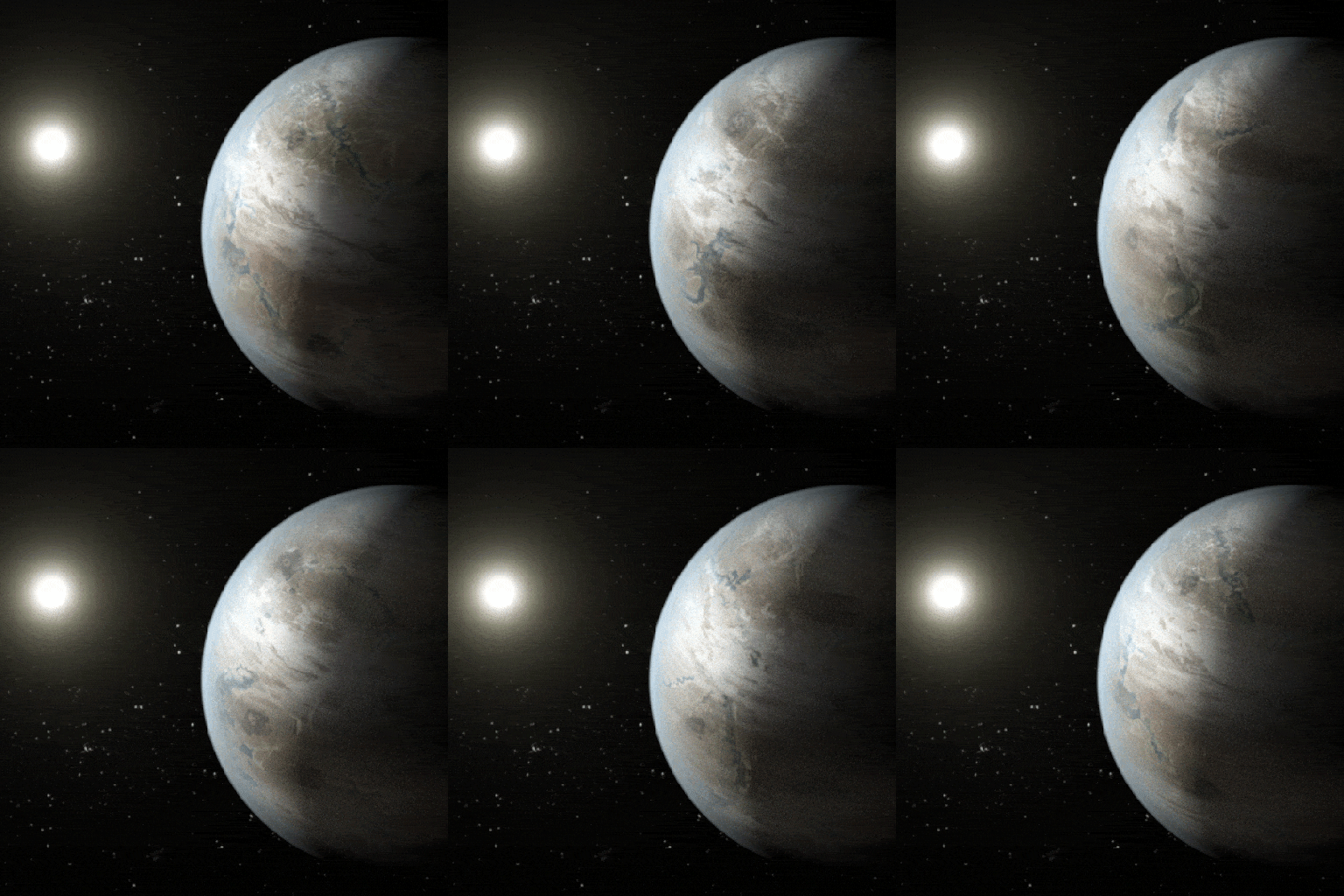
From here on Earth, looking farther away in space means looking farther back in time. So what are distant Earth-watchers seeing right now?

As October begins, thousands of longtime NASA employees are leaving the agency. 4000+ will exit by January 9, 2026, changing NASA forever.

Big Think spoke with astronomer David Kipping about technosignatures, "extragalactic SETI," and being a popular science communicator in the YouTube age.

As we gain new knowledge, our scientific picture of how the Universe works must evolve. This is a feature of the Big Bang, not a bug.

The universe is filled with unlikely events, but it is also full of ways to fool ourselves.

10 years ago, LIGO first began directly detecting gravitational waves. Now better than ever, it's revealing previously unreachable features.

Questions about our origins, biologically, chemically, and cosmically, are the most profound ones we can ask. Here are today's best answers.

The red planet, Mars, may once have been teeming with life, just as Earth is today. Finding "organics" on Mars, however, doesn't mean life.

Dust is ubiquitous in the modern Universe, appearing in nearly all galaxies. But our cosmos was born dust-free. So where does it originate?

In this excerpt from "Facing Infinity," Jonas Enander examines how John Michell conceived of "dark stars," or massive bodies with enough gravity to trap light, all the way back in 1783.
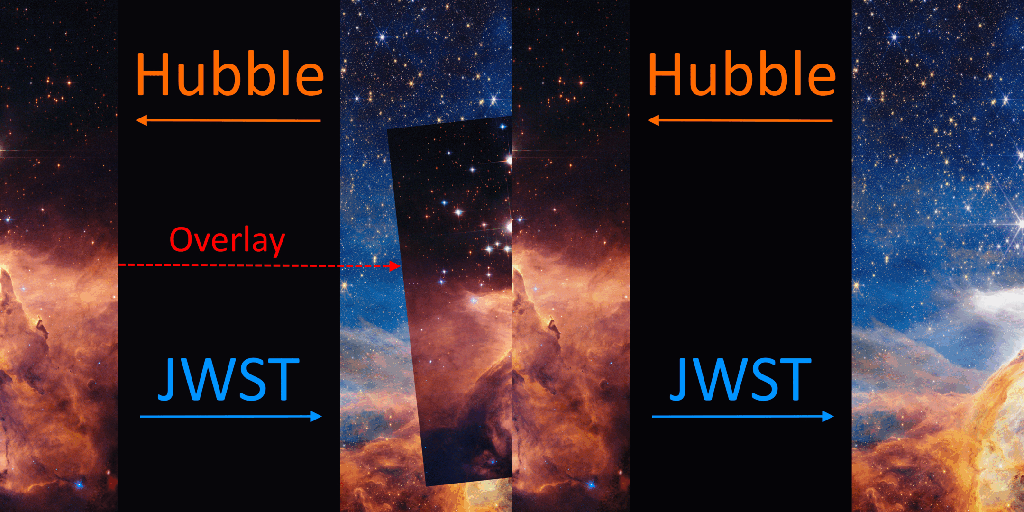
JWST isn't the first telescope to peer into this factory of star-birth some 5500 light-years away, but its views are the most educational.

Going back to 1990, we hadn't even found one planet outside of our Solar System. As we close in on 6000, we now see many of them directly.

Across all wavelengths of light, the Sun is brighter than the Moon. Until we went to the highest energies and saw a gamma-ray surprise.

As we look to larger cosmic scales, we get a broader view of the expansive cosmic forest, eventually revealing the grandest views of all.
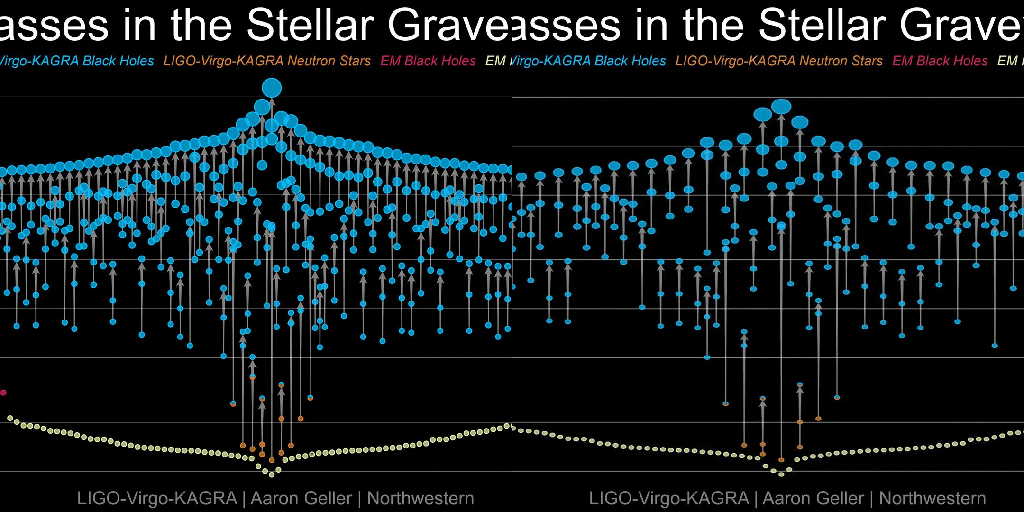
10 years ago, LIGO saw its first gravitational wave. After 218 detections, our view of black holes has changed forever. Can this era endure?
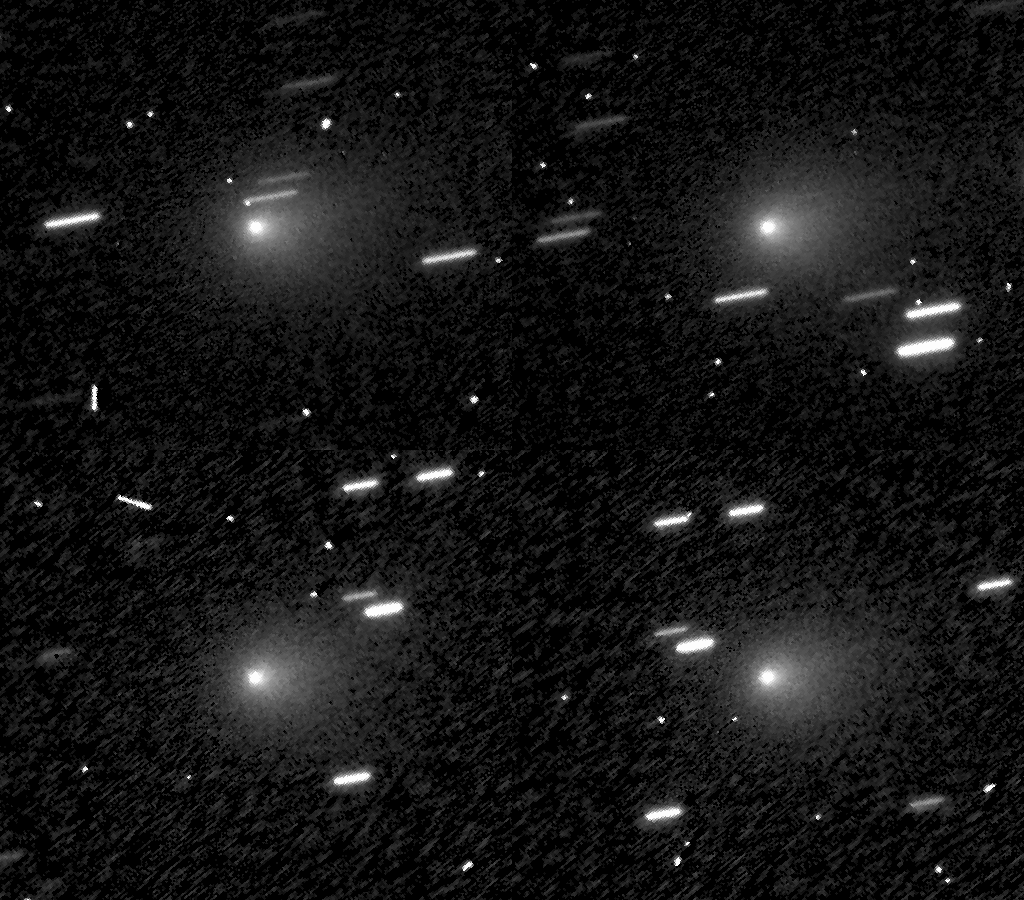
Designed to map galaxies, the SPHEREx mission's first science result is instead about interstellar interloper 3I/ATLAS. No, it's not aliens.

In our own Milky Way, a recently deceased star creates a ghostly, hand-like shape in X-rays some 150 light-years wide. Here's how it's made.

Across planet Earth, dark and pristine night skies are an increasingly rare resource. These photos showcase the best of what we still have.

In the search for life in the Universe, the ultimate goal is to find an inhabited planet beyond Earth. How will we know when we've made it?

Amplifying the energy within a laser, over and over, won't get you an infinite amount of energy. There's a fundamental limit due to physics.