




















Search
Astronomy
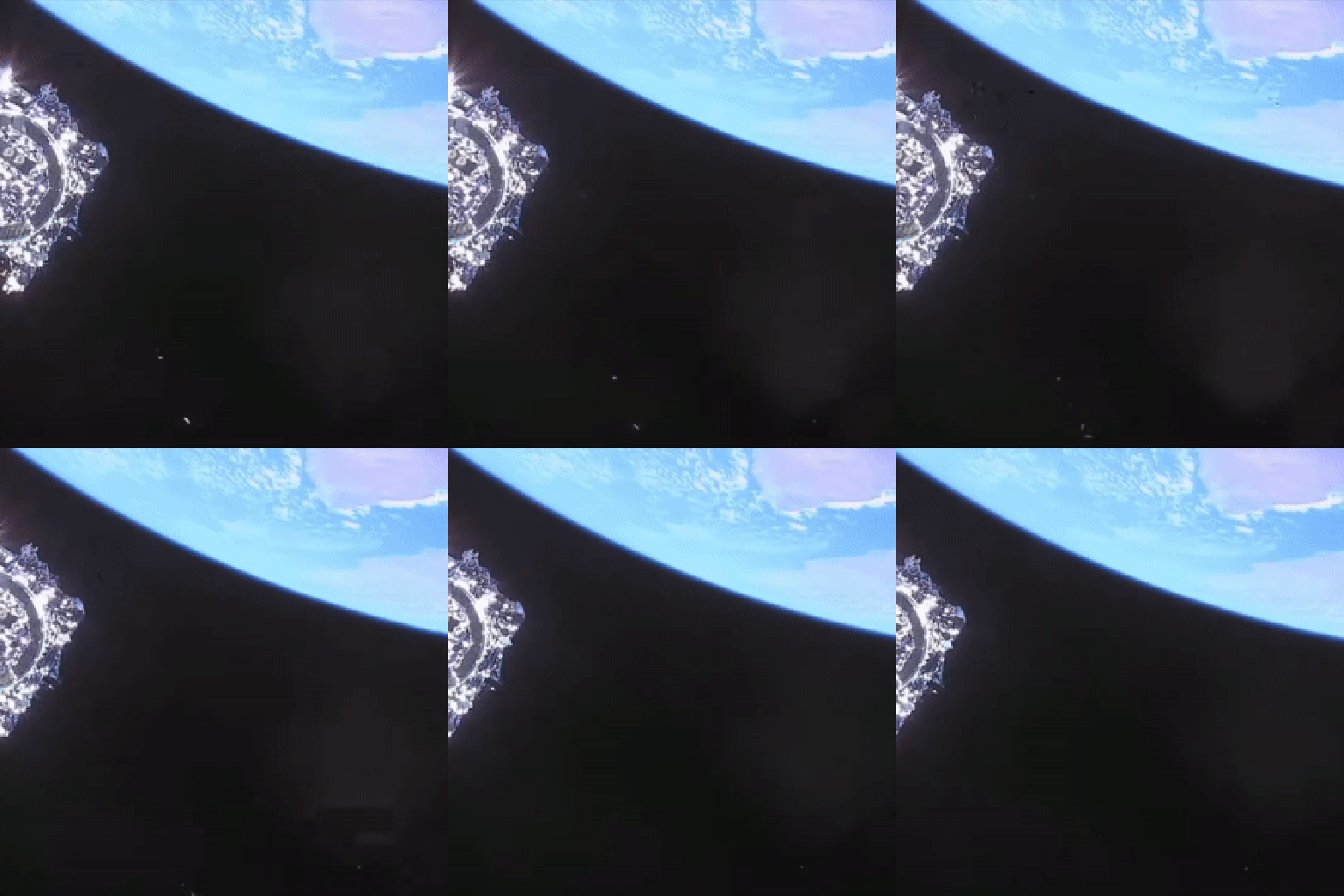
For many, it was just a successful launch like any other. But for scientists around the globe, it was a victory few dared to imagine.
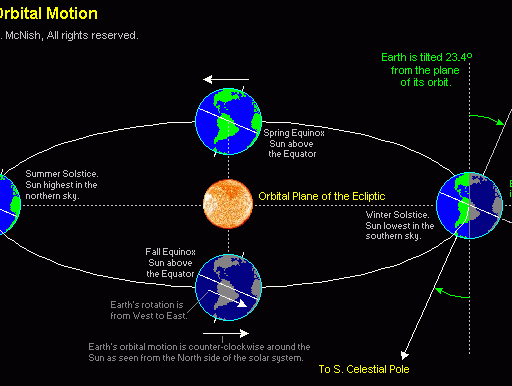
Even with leap years and long-term planning, our calendar won't be good forever. Here's why, and how to fix it.

Whether or not life exists elsewhere in the Universe, we can be assured of one thing: We are the only human beings in the cosmos.

With launch, deployment, calibration, and science operations about to commence, here are 10 facts that are absolutely true.

The photometric filters for the Vera Rubin Observatory are complete and showcase why they are indispensable for astronomy.

The boiling new world, which zips around its star at ultraclose range, is among the lightest exoplanets found to date.

Whether NASA likes it or not, humans eventually will be having space sex.

Life arose on Earth very early on. After a few billion years, here we are: intelligent and technologically advanced. Where's everyone else?

How can you "touch the Sun" if you've always been inside the solar corona, yet will never reach the Sun's photosphere?

Astrophysicists once believed in a static Universe, containing only the Milky Way galaxy. Science definitively proved otherwise.

A newly discovered “ultrahot Jupiter” has the shortest orbit of any known gas giant.
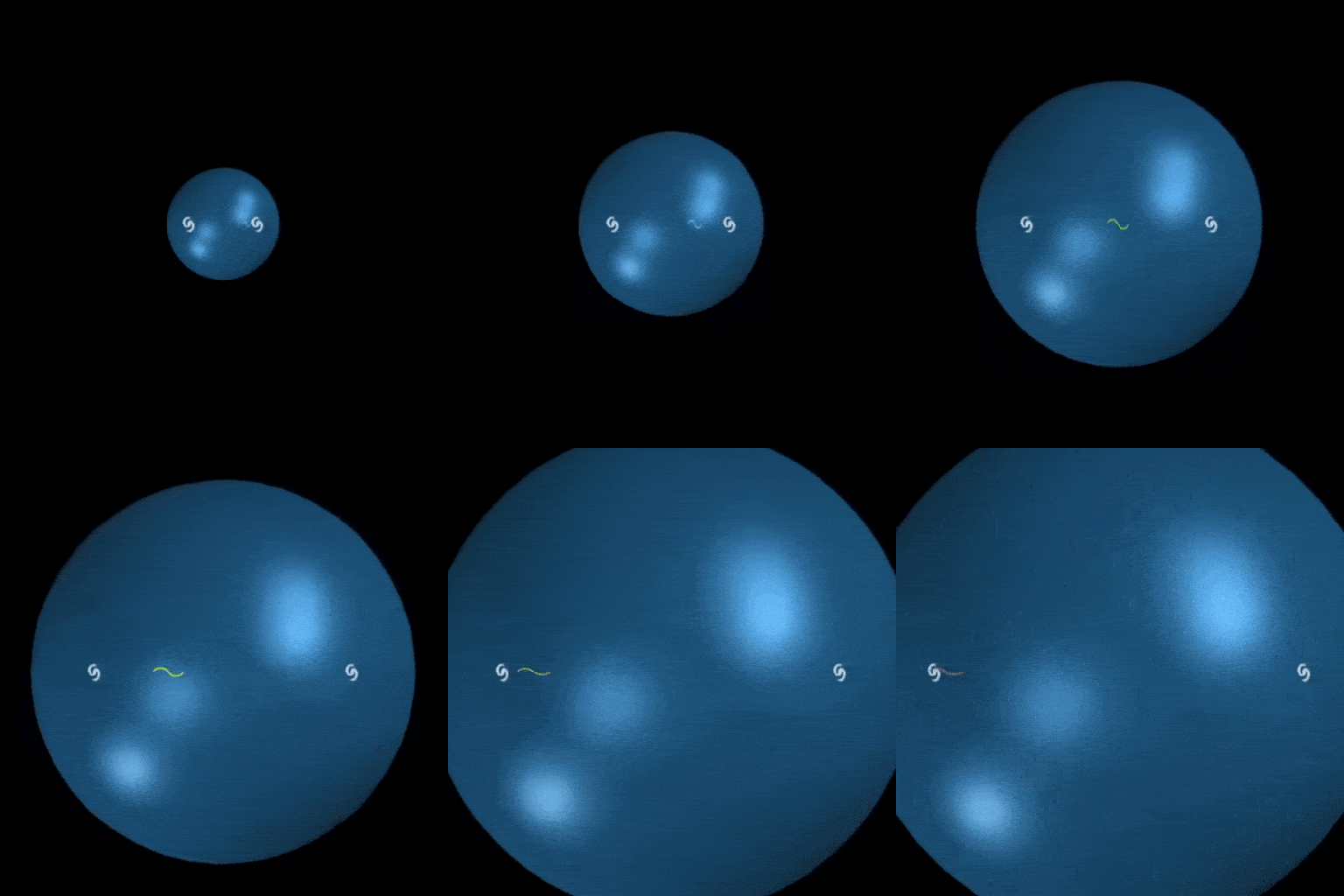
After more than two decades of precision measurements, we've now reached the "gold standard" for how the pieces don't fit.

After decades of development, whether NASA's Webb succeeds or fails all comes down to five critical milestones that are only days away.

Every December, the Geminid meteor shower reaches its peak. Its 2021 show will be spectacular, but only if you do it right.

Our Solar System's outer reaches, and what's in them, was predicted long before the first Oort Cloud object was ever discovered.

Previously, only the brightest and most active galaxies could pierce the obscuring wall of cosmic dust. At last, normal galaxies break through.

We should all pause to appreciate the awe-inspiring beauty of the Universe.

The stars, planets, and many moons are extremely round. Why don't they take other shapes?

From hellishly hot planets to water worlds, some distant planets are like nothing in our Solar System.
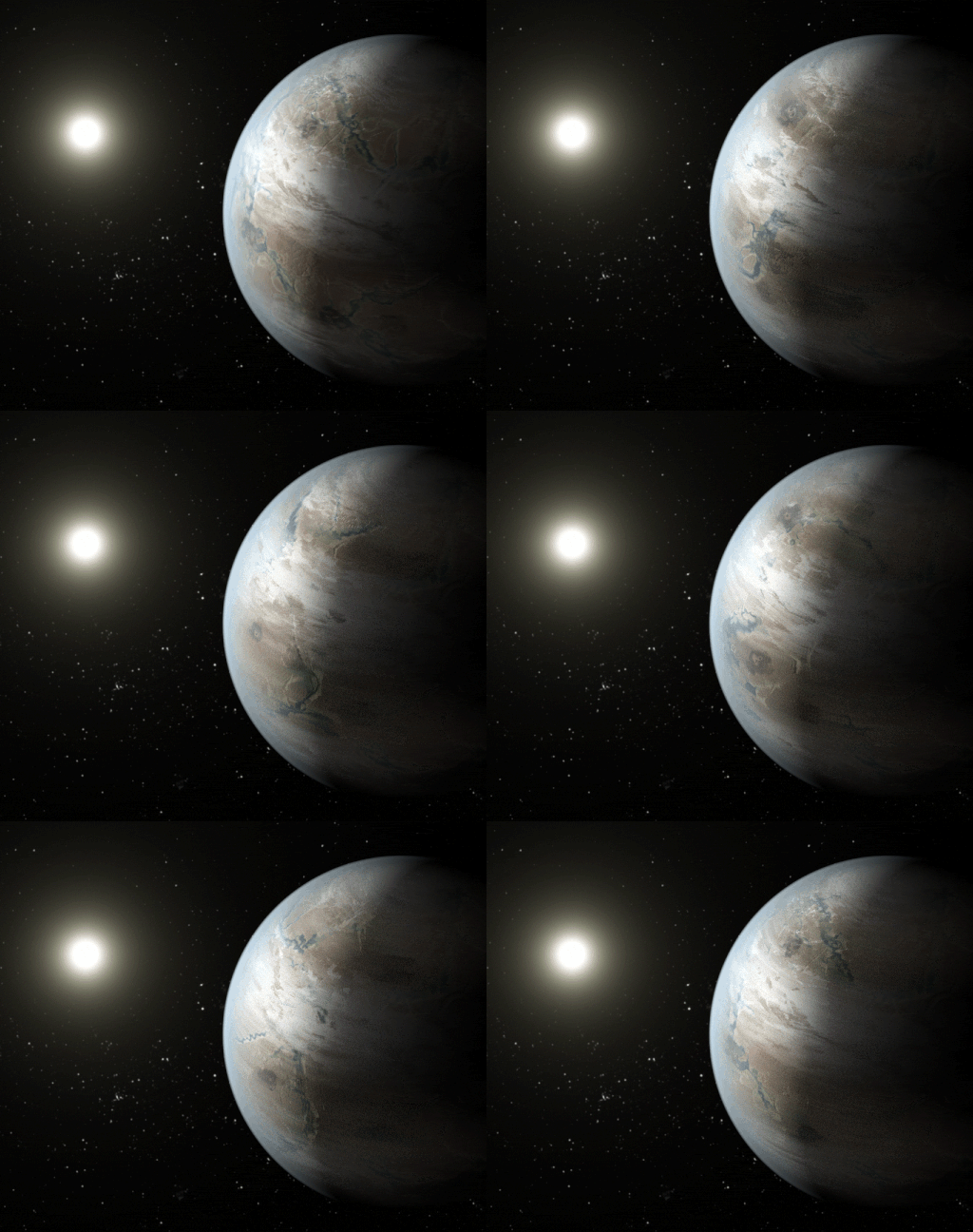
Finding out we're not alone in the Universe would fundamentally change everything. Here's how we could do it.

The most unique interloper into our Solar System has a natural explanation that fits perfectly — no aliens required.

We haven't seen a partial eclipse lasting this long since 1440, and won't again until 2669. North America is perfectly positioned for 2021's.

Based on the atoms that they're made out of, the innermost planet should always be the densest. Here's why Earth beats Mercury, hands down.

There are over 100 known elements in the periodic table. These 8 ways of making them account for every one.

But the upcoming James Webb Space Telescope compels us to add, “so far.” Beginning with its 1990 launch, NASA’s Hubble Space Telescope revolutionized our conception of the Universe. This photo of […]

How the search for alien life is taking place right here in our own Solar System. If you want to understand the origin of life in the Universe, you have three […]

The highest-energy particles of all come from space, not human-made colliders. When it comes to the most energetic particle collisions of all, you might think that the Large Hadron Collider […]

Without these two elements, we’re doomed to fail. In this day and age, it’s virtually impossible to have sufficient expertise to figure out what the complete, comprehensive, scientifically validated truth surrounding […]

Whatever’s lurking out there, it isn’t all, or even mostly, normal matter. When it comes to the Universe, it’s only natural to wonder what, exactly, it is that makes everything up. […]

“Hubble’s Law” is only an approximation, and breaks down when we need it most. From anywhere in the Universe, you can choose to look out at any other galaxy that’s present. […]