




















Search
Astronomy

1hr 16mins
NASA astronomer Michelle Thaller makes the case that quantum entanglement may be the underlying fabric from which spacetime itself emerges.

23mins
Brian Cox examines why, despite billions of stars and trillions of planets, we have found no evidence of other intelligent life.
3mins
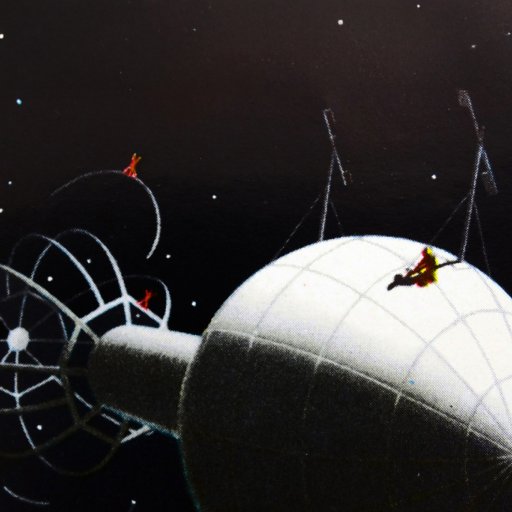
Thanks to modern tech, Earth is now considered a ‘detectable’ planet. Astrophysicist Sara Seager explains how this idea can lead us to discovering life elsewhere in our universe.
3mins
Military satellite research brought us GPS. Astronomers influenced medical imaging tech. What would be invented after we discover alien life? Professor Sara Seager explains the consequences of such a groundbreaking discovery.

1hr 3mins
Astronomer Jill Tarter explains why SETI is really about technology, patience, and learning how to tell alien signals from our own.
7mins
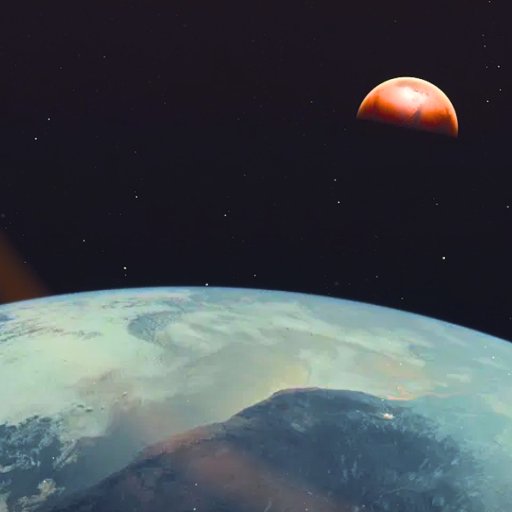
30 years ago, we didn’t know other stars had planets orbiting them. Now, we may be on the verge of finding Earth’s Twin. Sara Seager explains.

25mins
"In the process of mapping the heavens, it doesn't take long to realize the data problem they generated."

13mins
Everything ever seen — every star, mountain, and face — makes up less than 5 percent of the universe. Astrophysicist Janna Levin reminds us that the rest — dark matter and dark energy — is invisible, mysterious, and everywhere. We are the luminous exception in a universe of darkness.

24mins
“Deep down the natural endpoint of this whole goal of looking for planets is to answer the question: are we alone?”

23mins
"Could black holes be the key to a quantum theory of gravity, a deeper theory of how reality, of how space and time works? Well, I think so."

13mins
"We've sent out one or two little messages, but we certainly aren't investing billions of dollars shouting out into the cosmos saying, "Hey, we are here. Come say hi.""

1hr 19mins
“We don't have enough knowledge to precisely calculate what is going to happen, and so we assign probabilities to it, which reflects our ignorance of the situation.”

11mins
"We are all in orbit around the center of the Milky Way galaxy. How big is this collection of stars? Somewhere between 200 and 400 billion suns in the Milky Way galaxy, about 100,000 light years across."

8mins
"There is interesting ethical questions about how we should actually conduct ourselves in [a space colonization] exploration phase."

18mins
"There's a long history of people claiming planets which look Earth-like, Earth 2.0, Earth twins."

2hr 18mins
"Asking the question of, "Where did the entire universe come from?" is no longer a question for poets and theologians and philosophers. This is a question for scientists, and we have some amazing scientific answers to this question."

1hr 33mins
"Many astronomers are really driven by the search for Earth twins because I think deep down the natural endpoint of this whole goal of looking for planets is to answer the question, are we alone?"

21mins
"Asking the question of, where did the entire universe come from, is no longer a question for poets and theologians and philosophers. This is a question for scientists, and we have some amazing scientific answers to this question that have defied even the wildest of our expectations."

11mins
Humanity has two giant collisions to thank for its existence, explains biologist Sean B. Carroll.

7mins
Is information intrinsic in our universe? NASA’s Michelle Thaller explains.

38mins
Our host Kmele went inside Fermilab, America’s premiere particle accelerator facility, to find out how the smallest particles in the universe can teach us about its biggest mysteries.
35mins
Dispatches host Kmele Foster is on a journey to understand humanity’s role in the cosmos. His first stop? The Atacama Plateau in Northern Chile, home to the darkest deserts and largest telescopes on earth.

12mins
There are a few theories as to why we’ve never found other intelligent life in our Universe. Physicist Brian Cox walks us through them.

5mins
NASA’s Michelle Thaller explains what happens when the densest stars in the galaxy collide.

9mins
Ever wonder what would happen if we got sucked into a black hole? Turns out we could live in it for a while — if it was big enough.

7mins
Astronomer Michelle Thaller explains the healing power of physics after losing her husband.

4mins
Why do so many cultures celebrate holidays at the same time of year?
John Templeton Foundation

7mins
What astronaut Ron Garan saw in space changed his life forever – here’s what it taught him.

“The more we understand ourselves and the universe, the more magnificent it is.”

The concept is so complex that scientists still argue whether it exists or if it is an illusion.
John Templeton Foundation