




















Search
Astrophysics

Now that it's fully commissioned, the James Webb Space Telescope begins its exploration of the Universe. Here are its first science images!

With its very first deep-field view of the Universe now released, the James Webb Space Telescope has shown us our cosmos as never before.

Some ozone experts seriously doubt the findings.
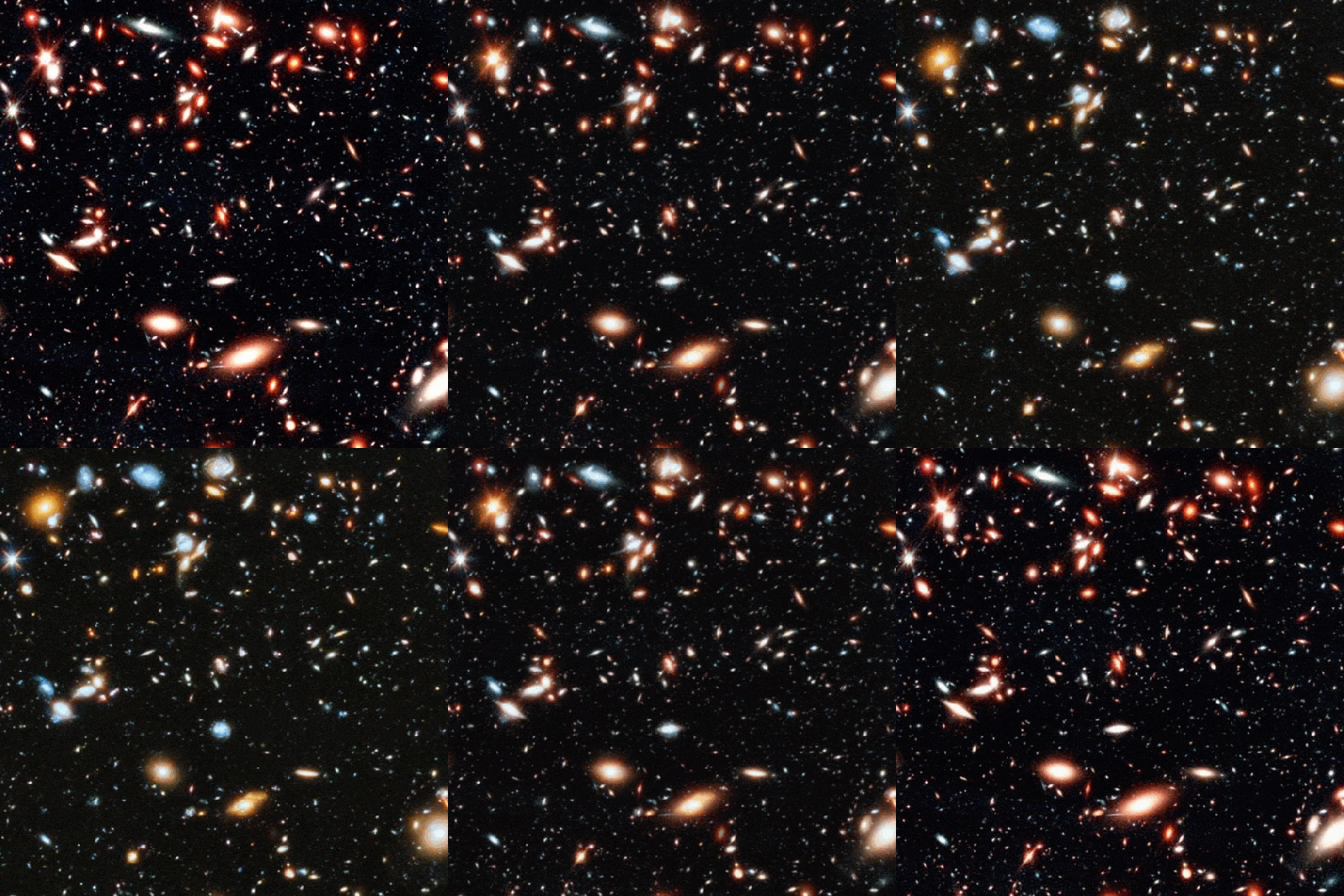
The James Webb Space Telescope has chosen 5 targets for its first science release. Here's what we know on the eve of JWST's big reveal!

It might seem like science and faith are at war, but the two have a historical synergy that extends back in time for centuries.
John Templeton Foundation

LIGO can detect the inspirals and mergers of the lowest-mass black holes, but not the biggest ones. Here's how pulsars can help.

On Earth, carbon can form millions of compounds, while silicon is largely stuck inside rocks. But elsewhere, silicon could form the basis of life.

At all distances, the Universe expands along our line-of-sight. But we can't measure side-to-side motions; could it be rotating as well?


1859's Carrington event gave us a preview of how catastrophic the Sun could be for humanity. But it could get even worse than we imagined.

Your eyes are playing tricks on you.

The idea of gravitational redshift crossed Einstein's mind years before General Relativity was complete. Here's why it had to be there.

No matter how beautiful, elegant, or compelling your idea is, if it disagrees with observation and experiment, it's wrong.

Experts believe they could cut the time it takes a rocket to reach Mars by up to 25%, shaving about two months off the trip.

The Universe is expanding, and the Hubble constant tells us how fast. But how can it be a constant if the expansion is accelerating?

Quite a lot, actually, even though it has no identifiable value as a scientific concept.

The discovery calls into question the few things scientists know about these powerful astronomical phenomena.
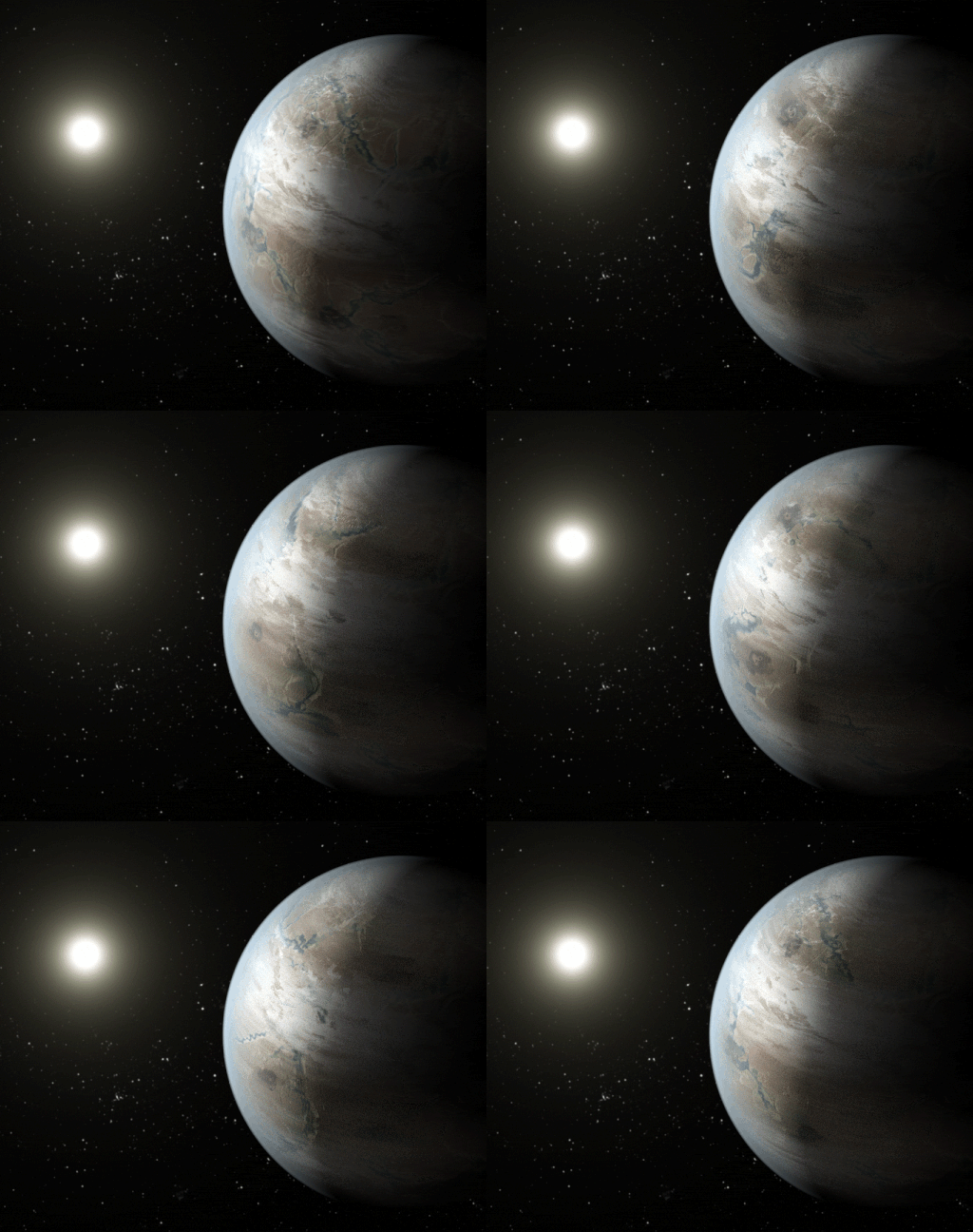
There are billions of potentially inhabited planets in the Milky Way alone. Here's how NASA will at last discover and measure them.

Do you think you know the Solar System? Here's a fact about each planet that might surprise you when you see it!
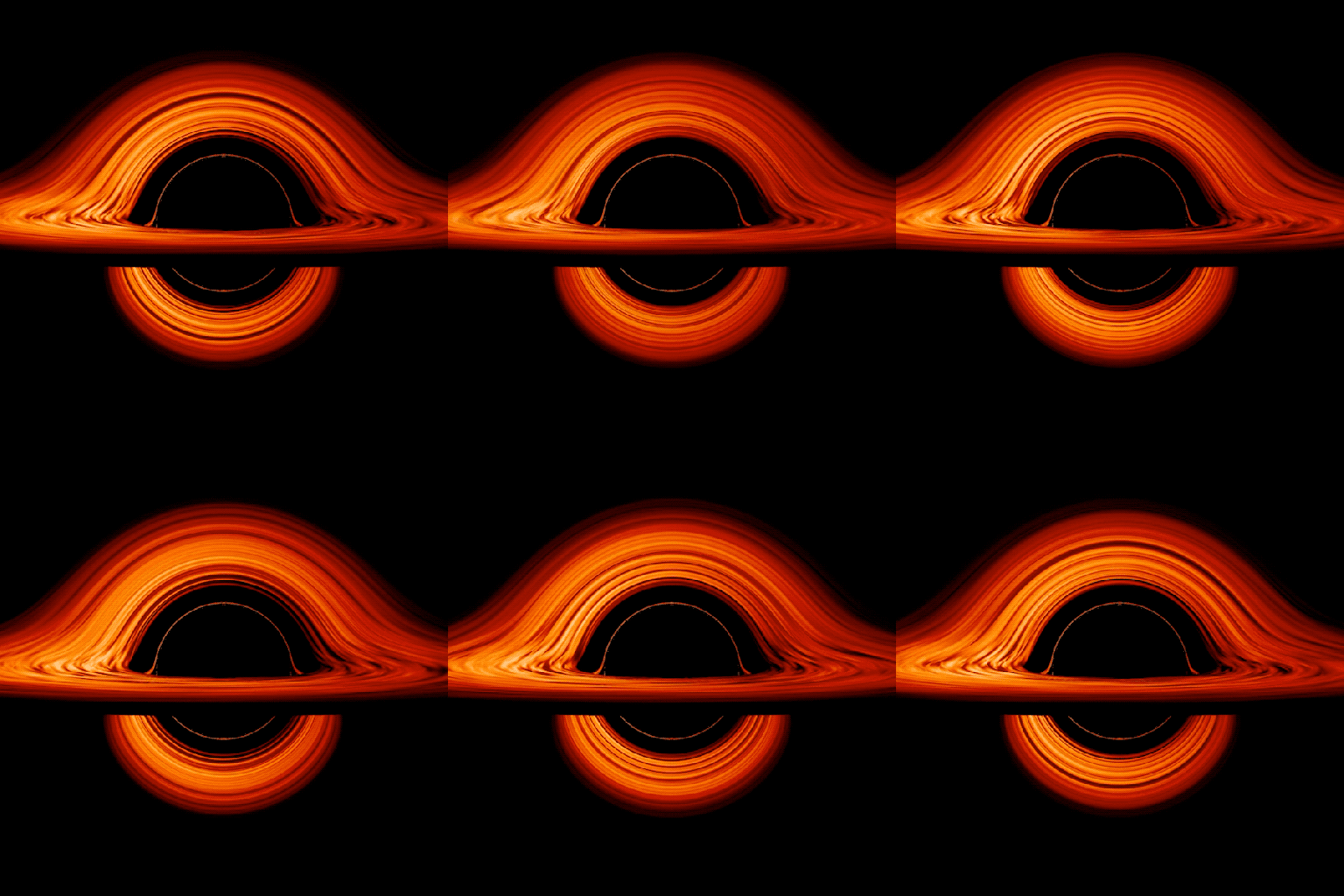
With two different black hole event horizons now directly imaged, we can see that they are, in fact, rings, not disks. But why?

When stars form, they emit energetic radiation that boils gas away. But it can't stop gravitational collapse from making even newer stars.

The James Webb Space Telescope (JWST) will study many dangerous cosmic phenomena, knowledge of which may help save humanity.

If you think you know how an astronomical nova works, buckle up. You're in for a ride like you never expected.

Earth is the Solar System's only known inhabited planet. Could Venus, if its phosphine signal is real, be our second world with life?

On July 12, 2022, NASA will release the first science images taken with the James Webb Space Telescope. Here's what to hope for.

The James Webb Space Telescope is about to begin science operations. Here's what astronomers are excited about.

Where did the “seed” magnetic field come from in the first place?

There's a whole lotta shakin' goin' on beneath the single plate of Mars.

In all of science, no figures have changed the world more than Einstein and Newton. Will anyone ever be as revolutionary again?

Preventing scurvy is not just a problem in the Antarctic.