




















Search
Astrophysics

The search for worlds outside our solar system has just turned up a planet, TOI-2257 b, with a truly extreme orbit.

We frequently say it's 2.725 K: from the light left over all the way from the Big Bang. But that's not all that's in the Universe.

The James Webb Space Telescope finally could answer the age-old question of whether we are alone in the universe.

There are two fundamentally different ways of measuring the Universe's expansion. They disagree. "Early dark energy" might save us.

The first supernova ever discovered through its X-rays has an enormously powerful engine at its core. It's unlike anything ever seen.

The Solar System isn't a vortex, but rather the sum of all our great cosmic motions. Here's how we move through space.

Some stars burn through their fuel as expected, and die of natural causes. But others, instead, get murdered. Here's their story.

Space missions in 2022 will include massive rockets and asteroid collisions. This is also the year space tourism starts to hit its stride.

A levitating vehicle might someday explore the moon, asteroids, and other airless planetary surfaces.

With advanced laser technology and an appropriate sail, we could accelerate objects to ~20% the speed of light. But would they survive?

New technology is helping physicists move forward in the search for the Theory of Everything.

In movies and TV shows, aliens look like pointy-eared humans. Is this realistic? If evolution is predictable, then it very well might be.

From before the Big Bang to the present day, the Universe goes through many eras. Dark energy heralds the final one.

Known as primordial black holes, they could thoroughly change our Universe's history. But the evidence is strongly against them.
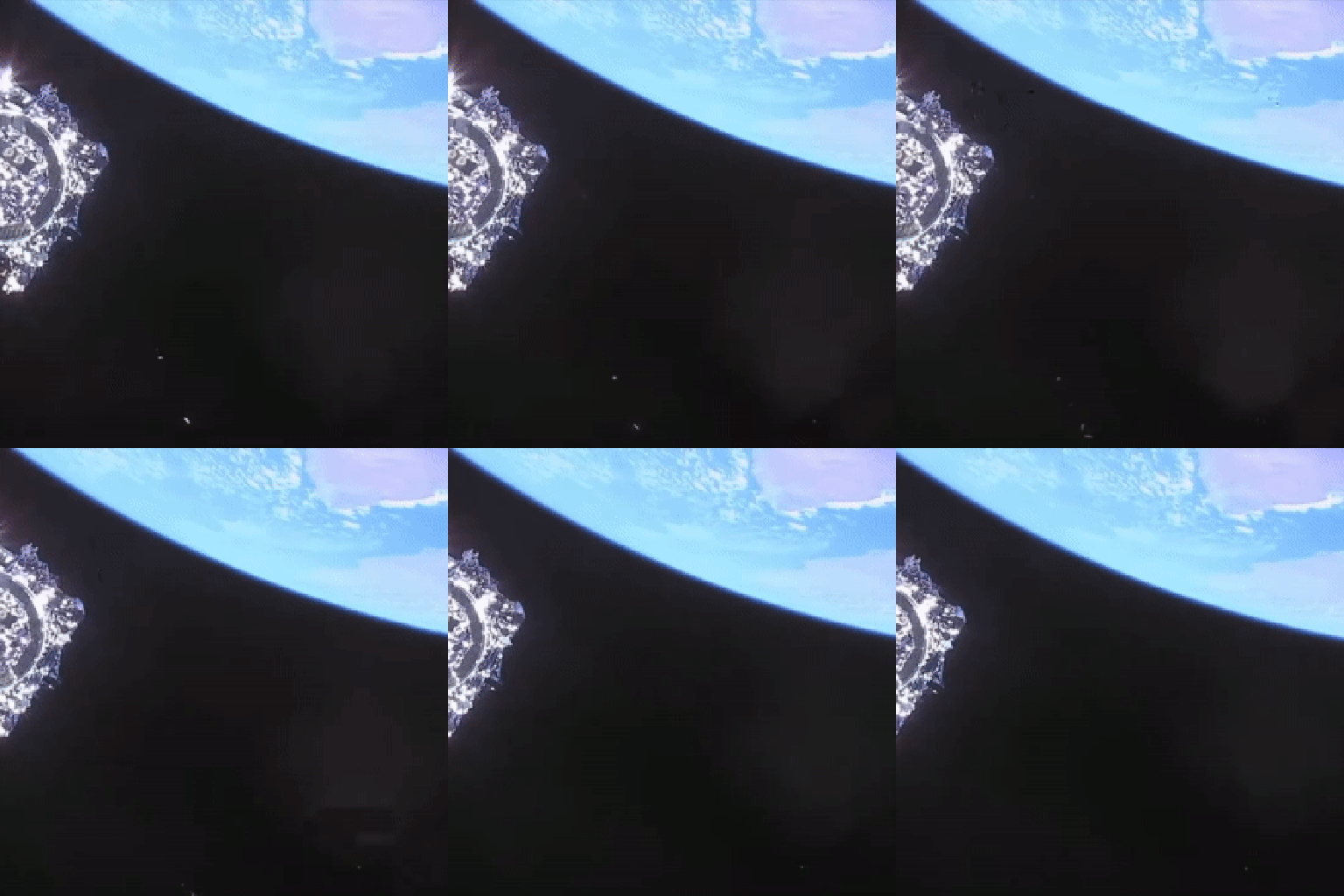
For many, it was just a successful launch like any other. But for scientists around the globe, it was a victory few dared to imagine.

Water on Mars is key for human survival on the Red Planet, not just for drinking but for growing food and making fuel and oxygen.
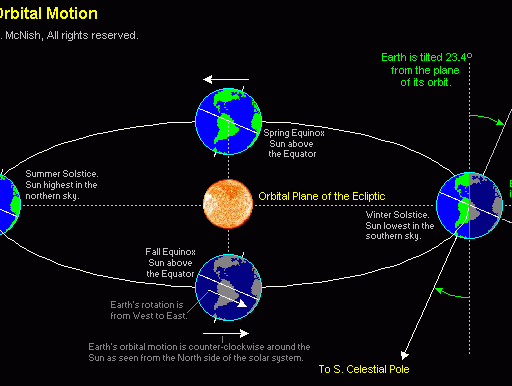
Even with leap years and long-term planning, our calendar won't be good forever. Here's why, and how to fix it.

A wild, compelling idea without a direct, practical test, the Multiverse is highly controversial. But its supporting pillars sure are stable.

We know it couldn't have began from a singularity. So how small could it have been at the absolute minimum?

The photometric filters for the Vera Rubin Observatory are complete and showcase why they are indispensable for astronomy.

The boiling new world, which zips around its star at ultraclose range, is among the lightest exoplanets found to date.

Whether NASA likes it or not, humans eventually will be having space sex.

Life arose on Earth very early on. After a few billion years, here we are: intelligent and technologically advanced. Where's everyone else?

How can you "touch the Sun" if you've always been inside the solar corona, yet will never reach the Sun's photosphere?

Astrophysicists once believed in a static Universe, containing only the Milky Way galaxy. Science definitively proved otherwise.

A newly discovered “ultrahot Jupiter” has the shortest orbit of any known gas giant.
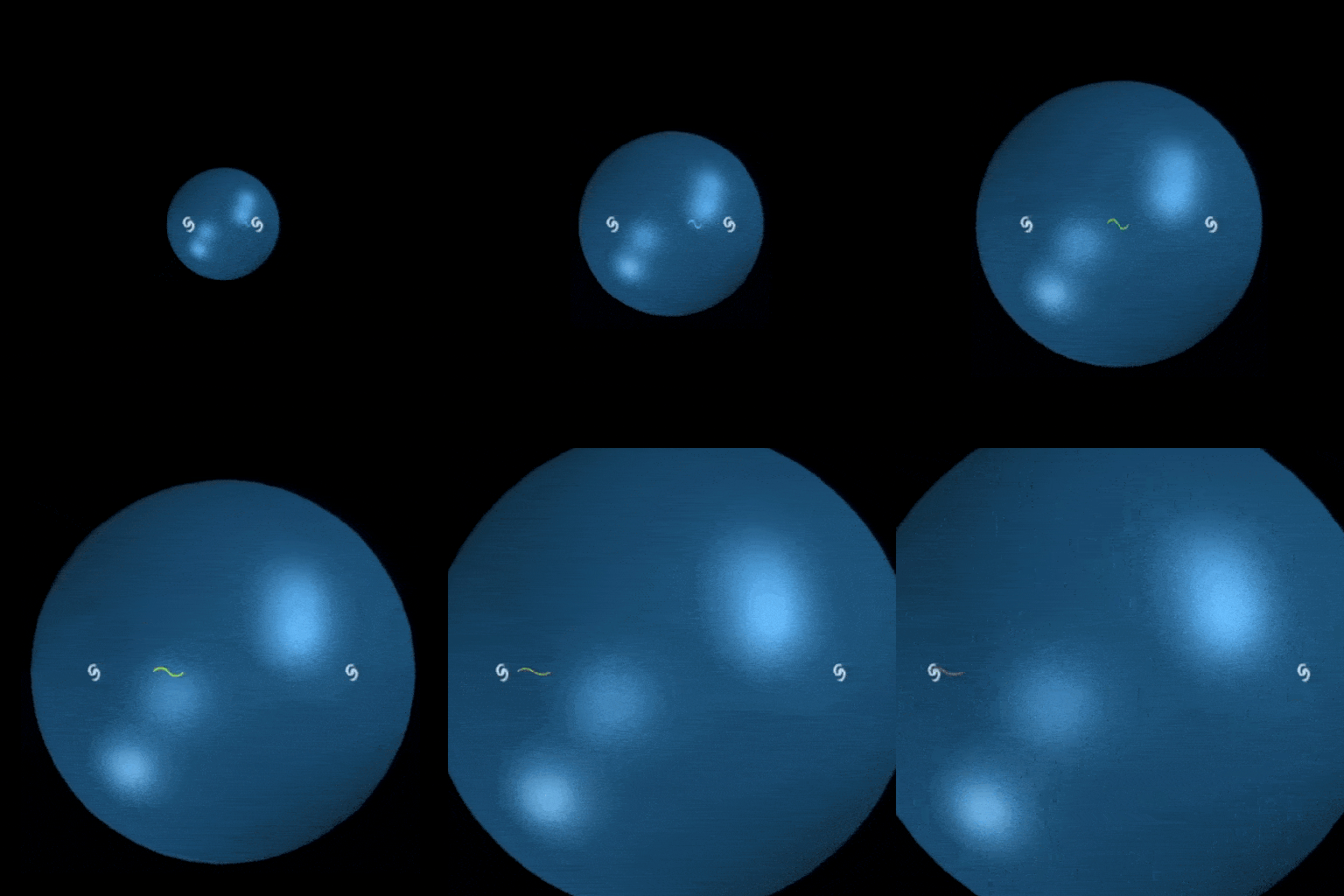
After more than two decades of precision measurements, we've now reached the "gold standard" for how the pieces don't fit.

After decades of development, whether NASA's Webb succeeds or fails all comes down to five critical milestones that are only days away.

The same (former) NASA engineer who previously claimed to violate Newton's laws is now claiming to have made a warp bubble. He didn't.

Every December, the Geminid meteor shower reaches its peak. Its 2021 show will be spectacular, but only if you do it right.