




















Search
Ecosystem Resilience

A growing movement shows that protecting the world’s forests — and the people who have safeguarded them for centuries — is one of the most powerful, and overlooked, tools in the fight against climate change.
Skoll Foundation

About six million years ago, the Mediterranean was sealed off from the Atlantic, and over centuries it ran dry. One megaflood reversed that.

Welcome to The Nightcrawler — a weekly newsletter from Eric Markowitz covering tech, innovation, and long-term thinking.

“Climate analog mapping” finds the place that is currently as warm as your city might be in 60 years.
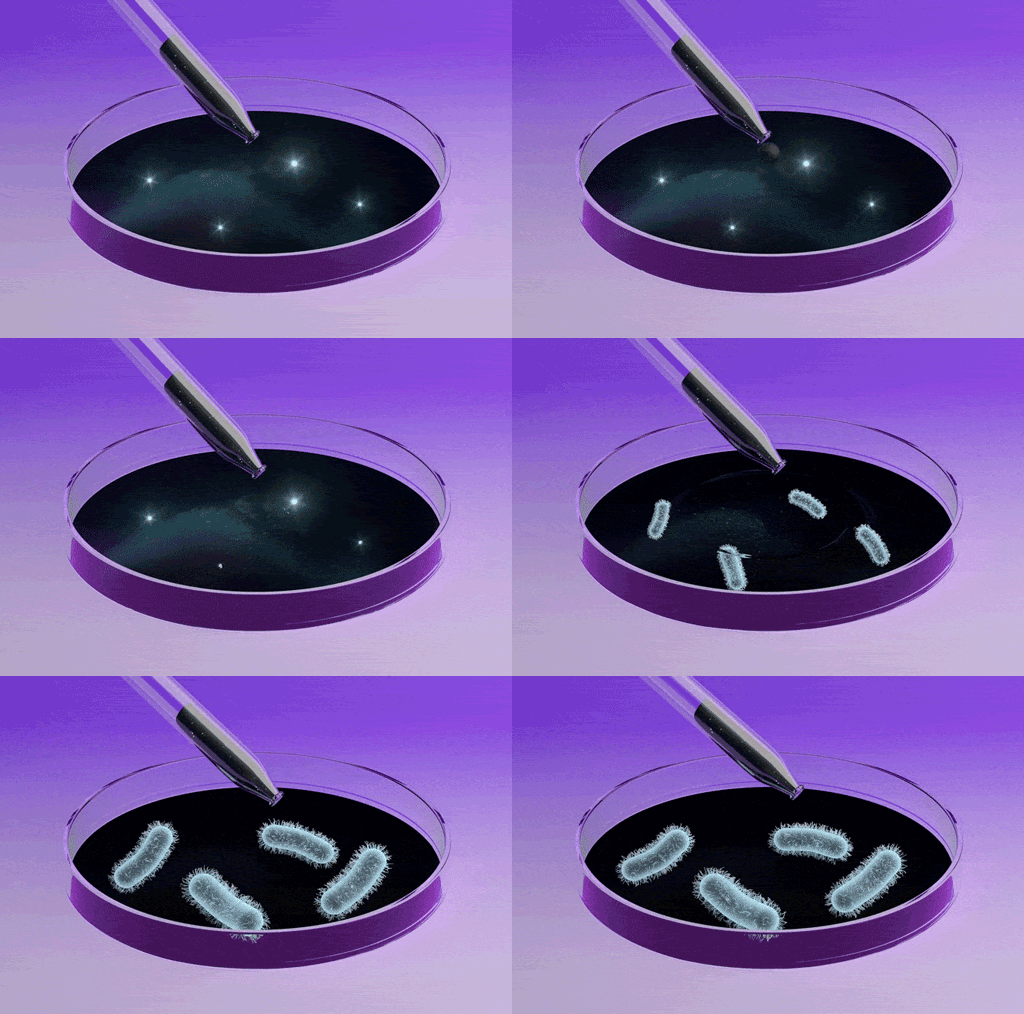
“I want to change the way we think about the past altogether,” says Dr. Betül Kaçar, an astrobiologist who studies the origin of life.

Retrofitting America's aging dams for hydropower — while removing ecologically harmful ones — may be a productive path forward.

Researchers are working nest by nest to limit the threat while developing better eradication methods.

As the world warms, trees in forests such as those in Minnesota will no longer be adapted to their local climates. That’s where assisted migration comes in.

Scientists are working to map out the risks of the permafrost thaw, which could expose millions of people to the invisible cancer-causing gas.

Do the benefits of plastics outweigh the costs?

The ominous cloud of acid rain hasn't vanished but rather drifted toward the developing world.

As wind power grows around the world, so does the threat the turbines pose to wildlife. From simple fixes to high-tech solutions, new approaches can help.

Pain relievers like acetaminophen and ibuprofen are made with chemicals derived from oil. Scientists have shown how to make them from trees.

Rich data on the global state of our feathered friends presents plenty of bad news — but also some bright spots.

Frozen adversity set the stage for an explosion of diversity.

The jail environment teaches the animals that approaching humans results in a boring and annoying experience.

At least one of Earth's creatures is able to survive the vacuum of space.

Left to their own devices, yeast cells will consume all available resources and poison themselves to death. Is humanity smarter than that?

The Black, Caspian, and Aral Seas are the last surviving fragments of a body of water that stretched from Austria to Turkmenistan.

Smoke taint from wildfires is gross, even to wine amateurs.

It’s an agricultural moonshot: Scientists hope to increase plant yields by hacking photosynthesis, the process that powers life on Earth.

It's on a 100,000-year timescale, though, so the next few centuries might not be so comfortable.

We want to fight invasive species. But to wage a war, you have to know who your enemy is.

Based on data since 2000 alone, global warming is still occurring at a whopping 7-sigma significance. How hot will planet Earth get?


Overwintering is profoundly stressful for trees. So why do they bother?

"Ghost gear" leads to hundreds of thousands of animal deaths.

Based on product labeling claims, scientists hypothesized that green cleaners were less toxic. They were wrong.

The crabs' blue blood contains an ancient immune defense mechanism that has helped save countless human lives.

This pup puts us one step closer to resurrecting extinct species.