




















Search
Energy Transition

As the global economy moves beyond oil, the strategic importance of the world’s most critical hydrocarbon chokepoint is likely to decline rapidly.

The famous framework ranks civilizations by energy use — but ignores a critical factor that can halt their progress.

A new generation of self-healing tools could make the U.S.'s aging power grid far more resilient against modern threats.

Barriers to energy abundance — and how to overcome them — were front and center at Progress Conference 2025.

Nuclear chemist Tim Gregory joins Big Think to make the case that nuclear energy can still transform the world for the better.

The cofounders of think tank RethinkX are convinced that humanity is undergoing civilizational phase change.

Welcome to The Nightcrawler — a weekly newsletter from Eric Markowitz covering tech, innovation, and long-term thinking.

A wave of innovation is coursing through the nuclear industry — but ingrained opposition is the biggest roadblock.

A new railway will switch the Baltic region's train gauge from Soviet to standard European — a megaproject with political, economic, and military dimensions.

Behind America's hunt for a superior semiconductor.

Around the world, biofuels, so-called green energy sources, are waving major red flags.

Electric vehicle sales are rising but public charging in cities is still lacking.

The US needs 28 million EV chargers by 2030. Here’s how it can get there.

We need more data centers for AI. Developers are getting creative about where to build them.

Cam Lawrence — CEO of international venture platform Newlab — joins Big Think Business to discuss his strategic vision for climate tech.

A look back at the rise of solar power in the US and what's next.

A radical proposal reimagines Europe as a carbon-neutral continent where national boundaries are replaced by regions defined by renewable energy capabilities.

Explore data on electric car sales and stocks worldwide.

A $30,000 electric vehicle with 400 miles of range that charges in under 10 minutes remains a pipe dream over the near future.

A new analysis suggests previous "total cost of ownership" studies overlooked key factors.
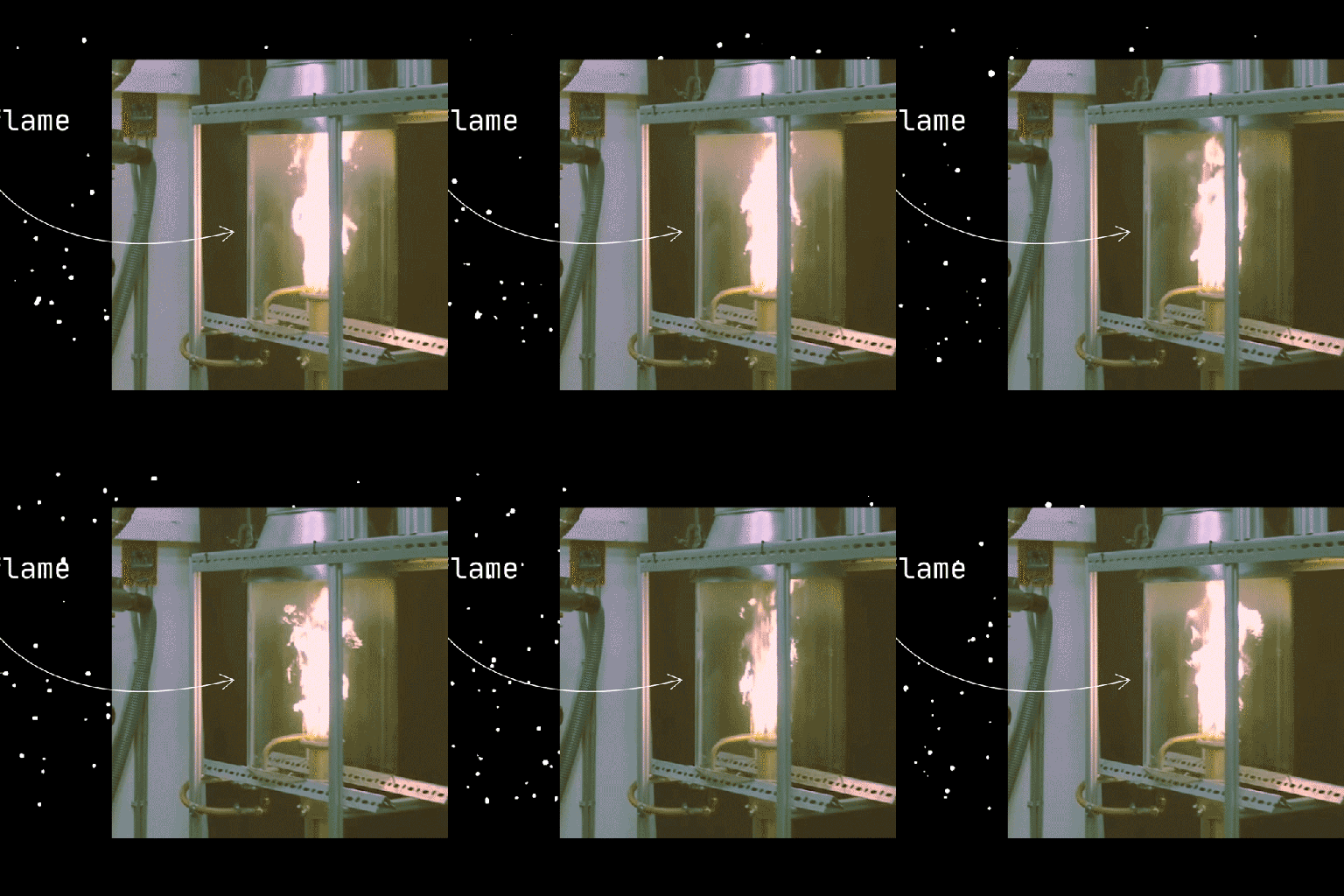
Experiments on suborbital rockets are revealing how to make a better iron furnace.

The National Ignition Facility just repeated, and improved upon, their earlier demonstration of nuclear fusion. Now, the true race begins.

We're separating the facts about EVs from the fiction.

There may be more energy in methane hydrates than in all the world’s oil, coal, and gas combined. It could be the perfect "bridge fuel" to a clean energy future.

The robot can drive heavy steal beams into the ground at a rate of 1 per 73 seconds, which will help expedite solar farm construction.

Wind farms seem less productive when scientists incorporate more realistic atmospheric models into their output predictions.

Steam cars hit the U.S. market in the 1890s but were largely extinct by the 1930s. Will technology bring them back?

Once water gets more than about 200 feet deep, building on the sea floor is out of the question.

Don't put all your eggs in one basket.

If you gave me $400 and I gave you $3.15, would you consider yourself wealthier? That's a financial analogy for the supposed fusion power "breakthrough."